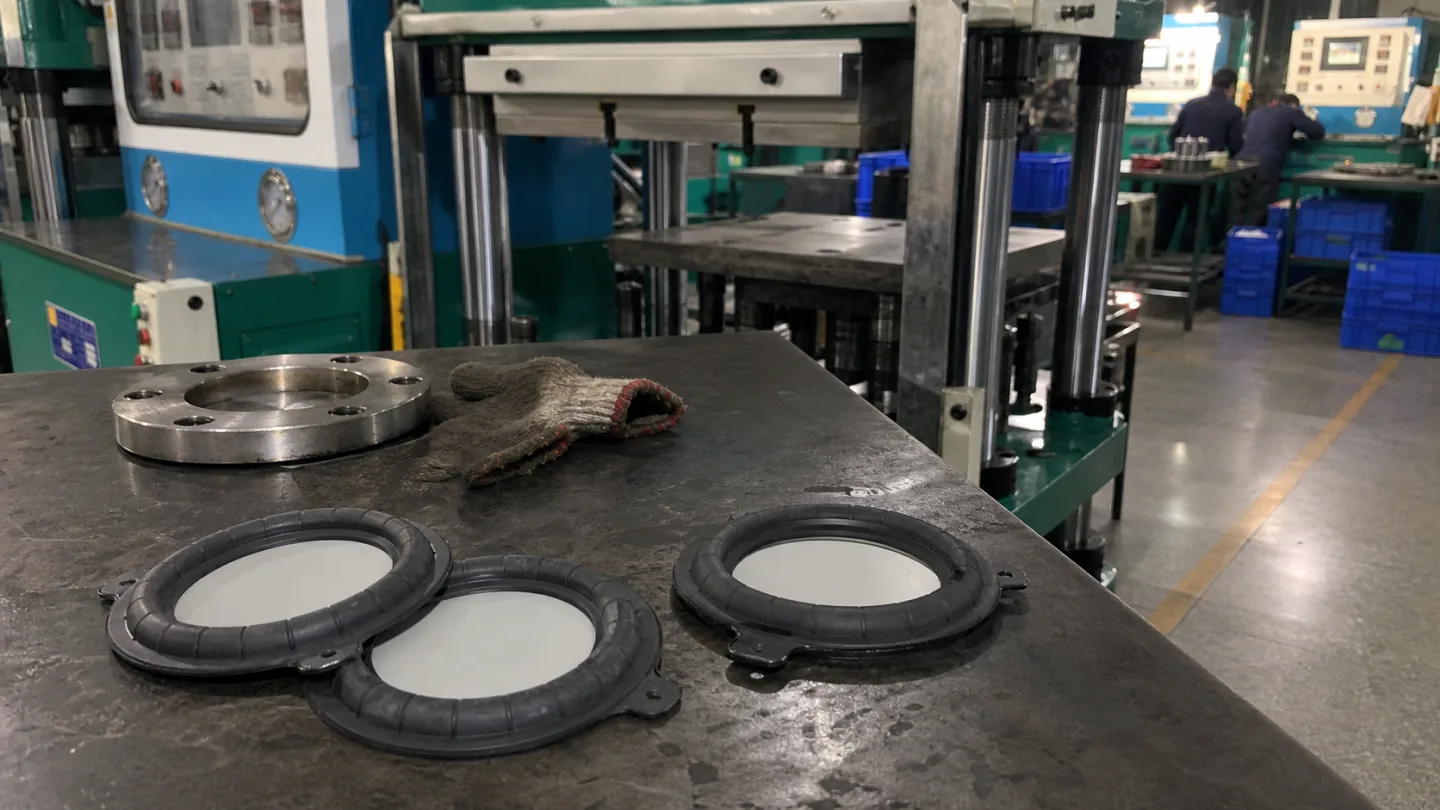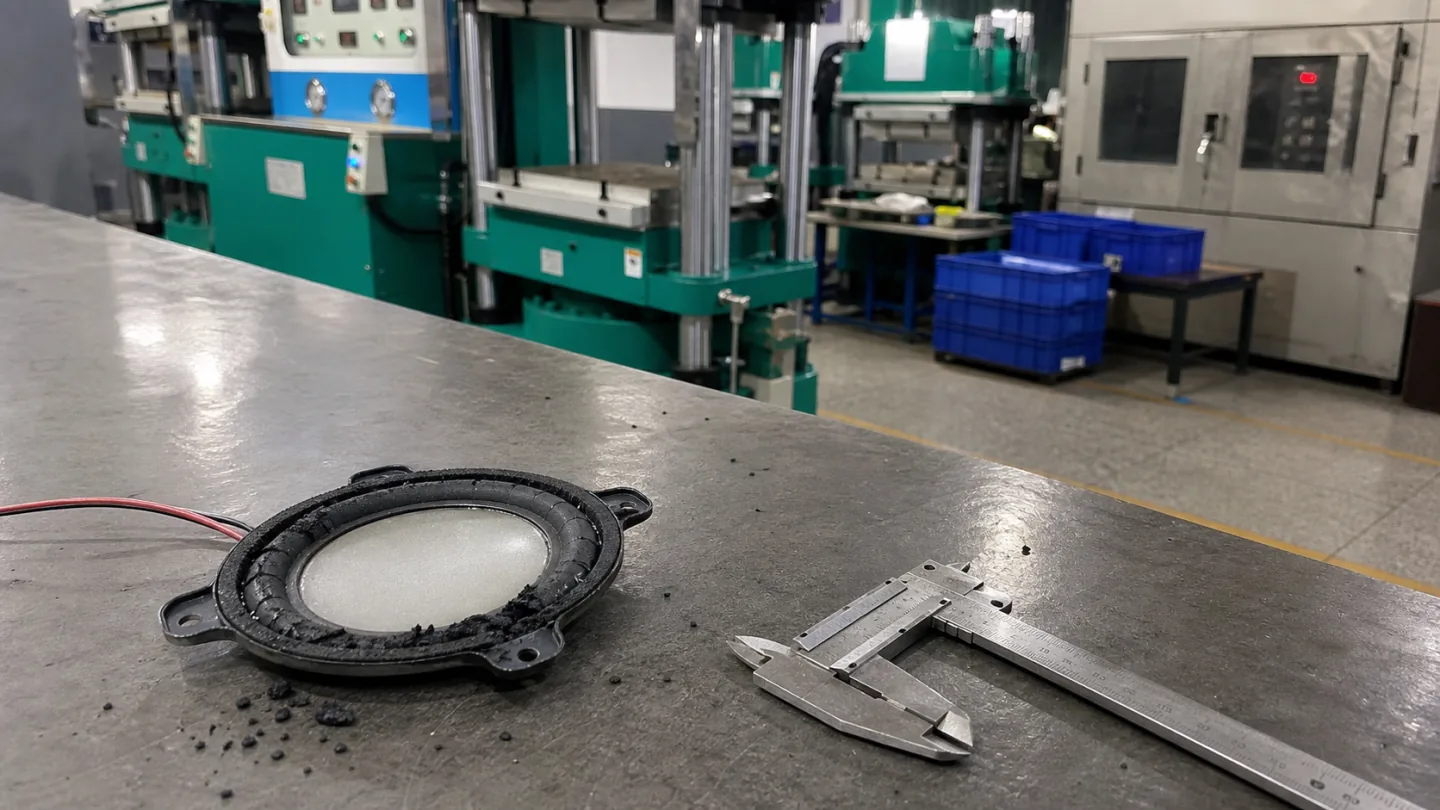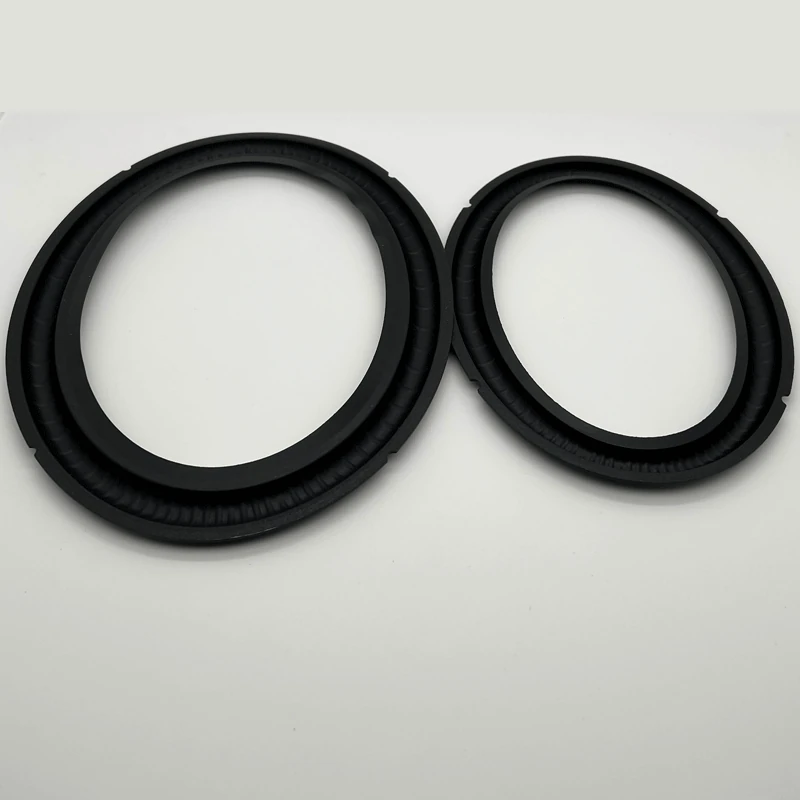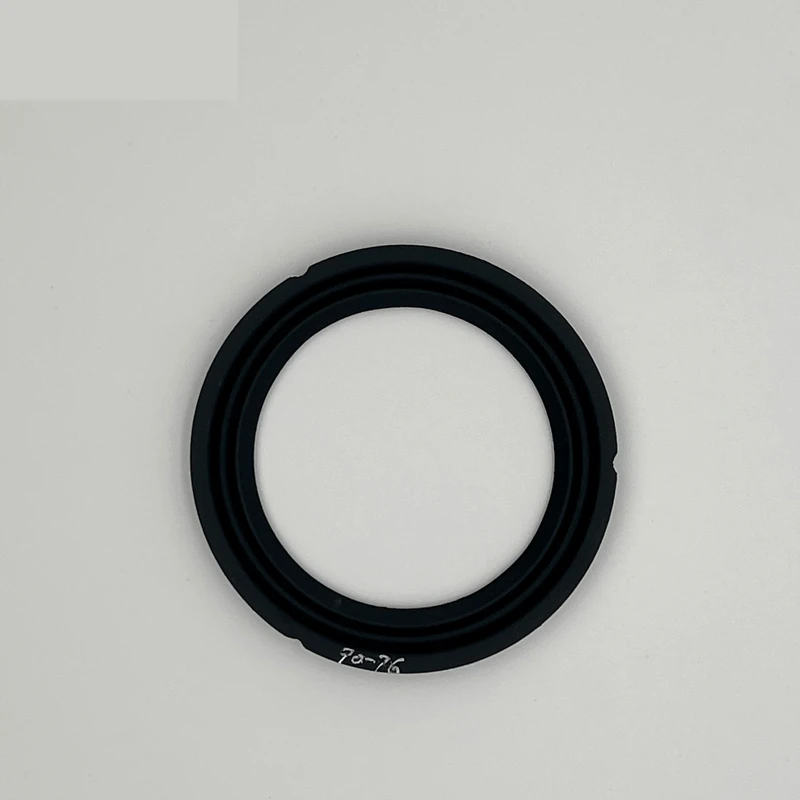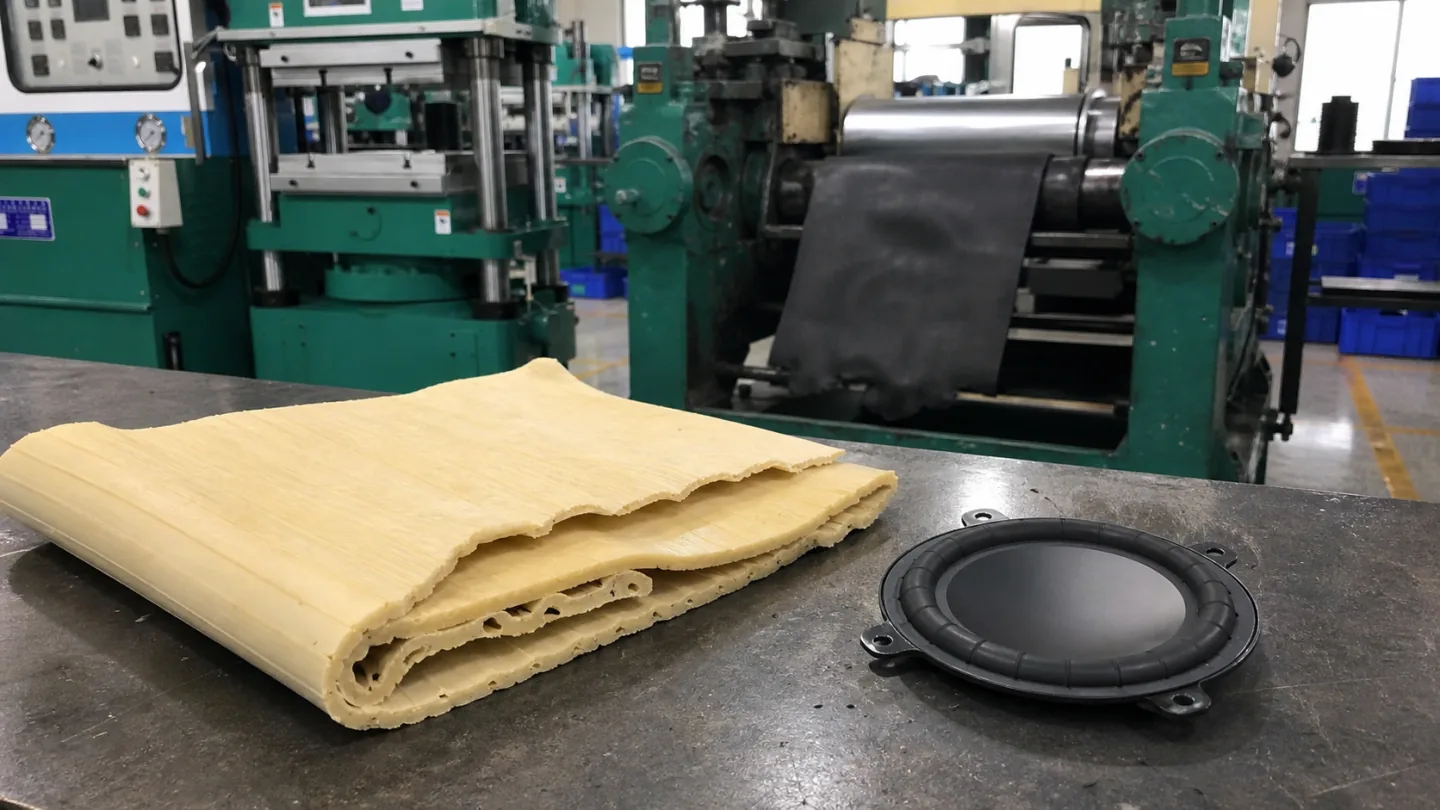
A purchasing manager called about a run of 8" woofer surrounds and asked, half apologetically, whether we could quote them in natural rubber. His reasoning was not silly: the brand was positioning the speaker as premium and sustainable, NR is renewable, tree-tapped and has a genuinely extraordinary property sheet, and it cost more than what we were quoting. Surely more expensive and more natural meant better. We asked him to leave a stretched rubber band on a sunny windowsill for a fortnight, then look closely.
Natural rubber is by several measures the finest elastomer on Earth — and it is disqualified from speaker surrounds by one flaw the surround's geometry amplifies rather than forgives. The same flaw explains why butyl and EPDM own the cone edge.
What natural rubber genuinely owns
Start with scale, because the received wisdom is wrong. People assume synthetics buried NR decades ago. They did not: global output runs roughly 14.5 million tonnes of natural rubber against about 15.5 million tonnes of all synthetics combined. The tree still holds about half the market. That is not nostalgia — it comes down to four properties.
- Tear strength. Once a cut starts in most rubbers, it runs. In NR it stalls.
- Green strength. Uncured NR holds together on its own — roughly 1.4 to 2 MPa before any vulcanisation, where uncured SBR is a fraction of that. Its chains entangle into a temporary network, which is why a radial truck tyre survives assembly from a dozen uncured layers on the way to the press.
- Resilience with low heat build-up. Flexed repeatedly, NR returns most of the energy instead of converting it to internal heat. A tyre carcass flexes millions of times without cooking itself.
- Strain-induced crystallisation. The interesting one. Stretch NR far enough — around 200 to 300% strain — and its chains, geometrically regular in a way most synthetics are not, line up and crystallise. The material reinforces itself where it is most stressed, then melts back on release. A self-healing safety margin, no filler required.
Those four are why NR still carries mining conveyor covers, truck tyre carcasses and the laminated bearings that let hospitals ride out earthquakes. Nothing synthetic does all four at once.
Why none of that reaches a cone edge
The NR backbone carries a carbon-carbon double bond in every repeat unit. That bond is the source of the resilience and the crystallisation — and it is also an open door. Ozone attacks double bonds, and not concentrated industrial ozone: the trace amounts in ordinary room air will do. The reaction splits the chain at the surface. On an unstressed part that leaves a dull, harmless skin. Under tensile strain it opens cracks perpendicular to the stretch that drive inward, because each fresh crack surface exposes new double bonds to the next ozone molecule. That is the windowsill rubber band — and why a stretched band dies in weeks while a coiled one in a drawer lasts years.
Now describe a surround. Thin section, large surface-to-volume ratio, bonded at both edges and held in tension for its entire service life — twenty years of it, in room air, often in sunlight. That is not rubber sitting in a drawer. It is the windowsill, permanently, by design.
The usual defence does not hold either. Outdoor NR parts survive on antiozonant waxes that bloom to the surface as a barrier. Strain cracks that film, so protection is weakest exactly where strain is highest — and you cannot bloom a waxy layer onto a precision-moulded acoustic part without changing its mass, damping and bonding surface. UV and heat pile on: sunlight breaks the same bonds, and NR's continuous service ceiling is only about 70 to 90 °C, which a sunlit cabinet or a car door in July is not comfortably below.
Butyl's backbone, by contrast, carries almost no double bonds — chemically there is nothing to attack. EPDM's reactive sites sit on side groups, off the main chain, so oxidation nicks the branches instead of cutting the rope. Neither is being brave. They simply lack the vulnerability.
Even if you solved ageing, NR would lose on acoustics. Its resilience — the virtue that keeps a tyre cool — hands energy back to the cone instead of eating it, and a surround's job is to kill edge resonance. NR fails the durability test and the damping test independently.
The three-way comparison, on surround terms
| NR (natural) | IIR (butyl) | EPDM | |
|---|---|---|---|
| Ozone resistance under strain | Poor — the disqualifier | Excellent | Excellent |
| UV / weathering | Poor without wax protection | Excellent | Excellent |
| Internal damping | Low — high rebound | Excellent — the benchmark | Moderate |
| Edge-resonance control | Poor — returns energy | Excellent | Good |
| Air retention (sealed box) | Moderate | Excellent | Good |
| Continuous service ceiling | ~70–90 °C | Higher | Highest of the three |
| Expected life on a cone edge | Years, with visible cracking | Decades | Decades |
| Tear / green strength | Class-leading | Moderate | Moderate |
| Where it belongs | Tyres, conveyor covers, seismic bearings | Speaker surrounds, sealed boxes | Outdoor / marine / automotive drivers |
So what should your driver actually use?
Work backwards from the failure you are avoiding.
- Cleanest bass, sealed enclosure, indoor life → butyl (IIR). Highest damping, lowest air permeability, effectively no ozone target.
- Weather, sun, marine, car door → EPDM. Trades a little damping for the best environmental resistance. The split between these two is its own decision: butyl vs EPDM surrounds.
- Oil, fuel or solvent anywhere near the part → NBR.
- Maximum efficiency, minimum moving mass, vintage-correct rebuilds → foam, with its own rot clock attached — laid out in rubber vs foam surrounds.
Earlier than that in the decision? Start with choosing a speaker surround material.
Ageing claims are the easiest thing in this industry to assert and the hardest to check, which is why they get tested rather than argued. UV ageing chambers, an outdoor weathering rack, constant temperature-humidity and salt spray sit on our floor precisely because the failure mode above is invisible on day one and obvious in year three. Bring a target response to our OEM/ODM team and we work back to a compound. It will not be natural rubber, and now you know why.
FAQ
Why is natural rubber not used for speaker surrounds?
Two independent reasons. Its backbone carries a double bond in every repeat unit, which trace atmospheric ozone and UV attack — and a surround is a thin part held under tension for its whole life, the exact condition that turns that attack into cracking. Separately, NR's high rebound returns energy to the cone instead of damping edge resonance. Butyl and EPDM fix both.
Is natural rubber better than synthetic rubber?
For tear strength, green strength, low heat build-up and strain-induced self-reinforcement, nothing synthetic has matched it — which is why roughly half of world rubber output is still tapped from trees. For ozone, UV, heat and oil resistance it loses to purpose-built synthetics. "Better" only means something once you name the job.
Would a natural rubber surround be more sustainable?
Not in the way it sounds. NR is renewable at the raw-material stage, but a surround that cracks in a few years and takes a driver with it costs more material and energy over the product's life than a butyl one that outlasts the speaker. The longest-lived part is usually the greenest.
Can antiozonants make natural rubber work for a surround?
No. Outdoor NR parts survive on waxes that bloom to the surface as a barrier, and strain cracks that film — protection fails where stress is highest, which on a surround is everywhere. A bloomed layer would also change the part's mass, damping and bond line. The chemistry is wrong at the backbone; a surface treatment cannot fix that.