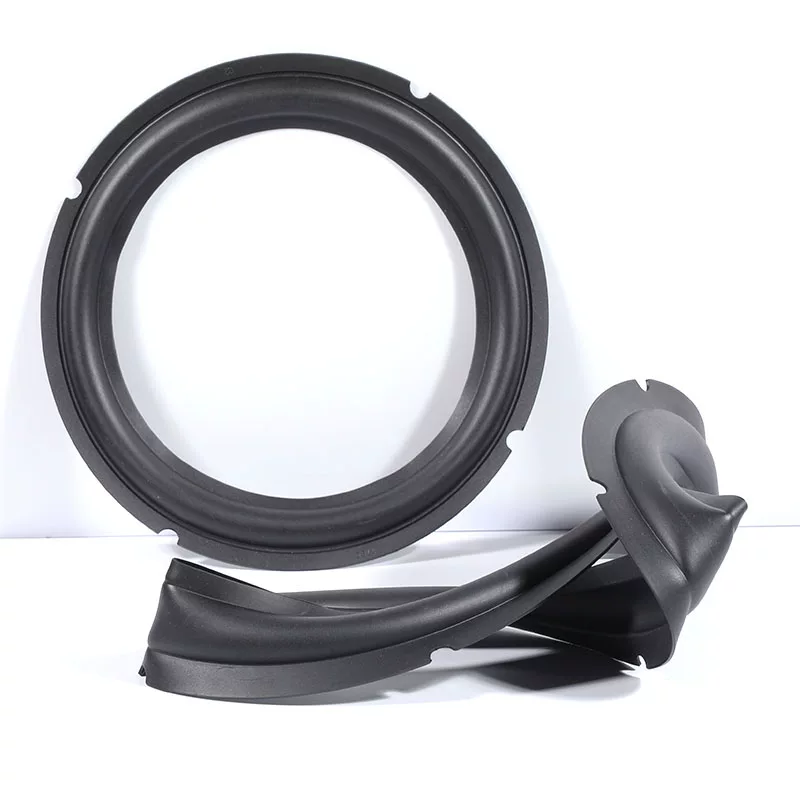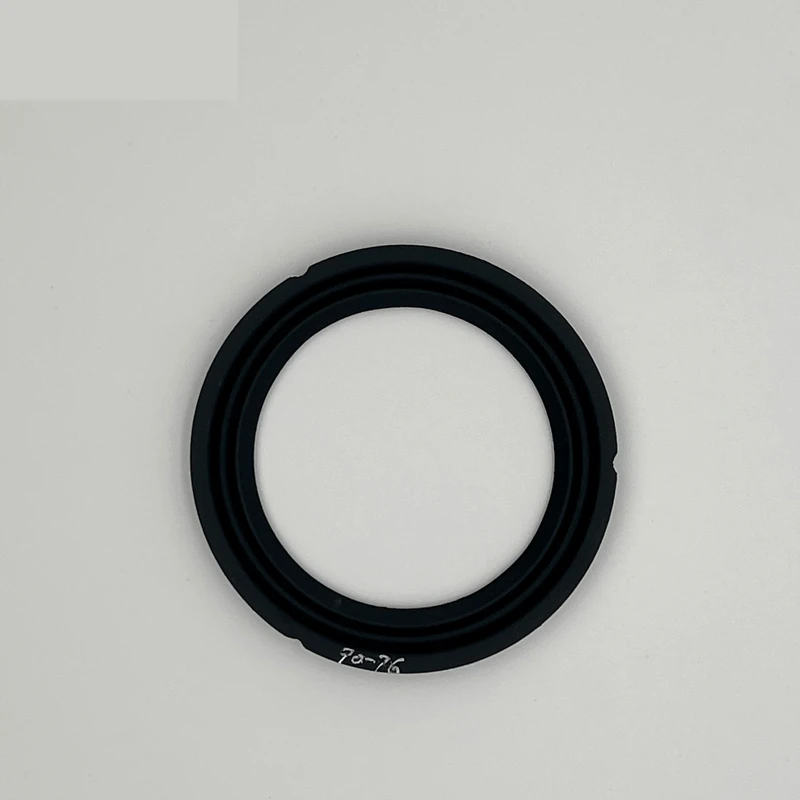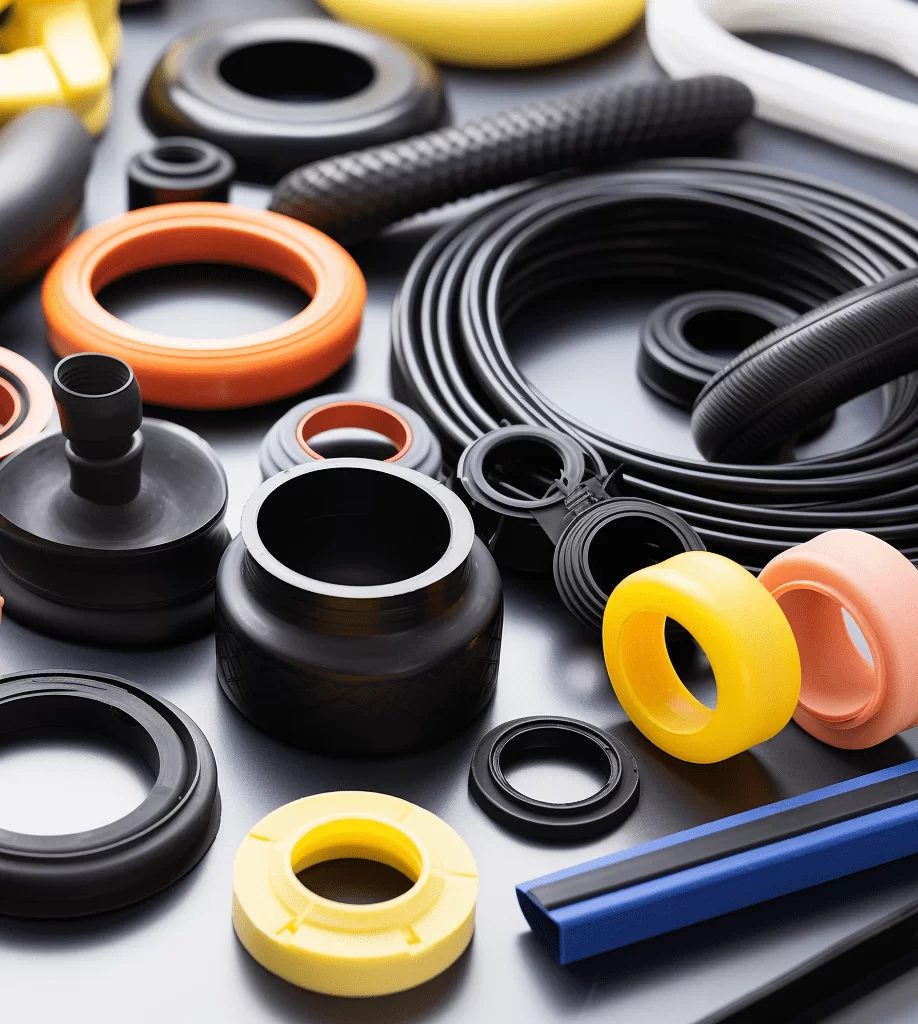
A client of ours once sent us a woofer that had aced every listening test and then cracked at the surround edge within a season on a coastal PA install. Nothing wrong with the driver. Wrong compound for the job — a general-purpose rubber asked to live outdoors near salt air. That is the whole game with surrounds: the material choice is a spec decision, not a finishing touch, and it has to be made before tooling, not after a field failure tells you.
Most buyers start by asking "rubber or foam" and stop there. That question matters, and we cover it in depth in rubber vs foam surrounds. But once you have settled on rubber, there is a second decision that gets skipped too often: which rubber. Butyl, EPDM, NBR and SBR behave differently enough that picking the wrong one inside the "rubber" bucket can undo the benefit of choosing rubber in the first place.
Start with the application, not the datasheet
Work backward from where the driver actually lives. A subwoofer built for a dedicated listening room has different priorities than a horn speaker bolted to a stadium roof or a driver going into a car door panel. Three questions do most of the sorting: What does it touch — sun, salt spray, oil, nothing? What does the designer want from the sound — tight controlled bass or open, high-excursion output? And what is the unit cost ceiling for the run? Answer those three before you look at a single spec sheet, and the compound list below narrows itself.
The five compounds, compared
These are the base compounds we run compound-to-finished, from our own mixing lines through to vulcanized parts — not a trading-company catalogue of things we source elsewhere.
| Compound | Best use | Key property |
|---|---|---|
| IIR (butyl) | Premium woofers, studio and hi-fi drivers | High internal damping, low air leakage — clean, controlled bass |
| EPDM | Outdoor, marine, automotive-exposed drivers | Strong ozone, UV and weathering resistance |
| NBR | Automotive and industrial audio near oil or fuel vapour | Oil and chemical resistance, cost-effective |
| SBR | General-purpose, high-volume consumer lines | Economical, stable, no special environment demanded |
| Foam (foaming rubber) | High-excursion subs, vintage restorations, weight-critical builds | Very light, high compliance |
Notice butyl and EPDM solve two different problems that both get lumped under "rubber is more durable than foam." Butyl is a sound-quality choice — it damps unwanted edge resonance so the cone behaves the way the designer modelled it. EPDM is a survival choice — it is what stops a surround from hardening and splitting after two summers on a boat or a rooftop horn. Specify the wrong one and you can get a surround that survives the weather but muddies the bass, or one that sounds excellent on day one and cracks by year two.
Hardness, thickness and the size range
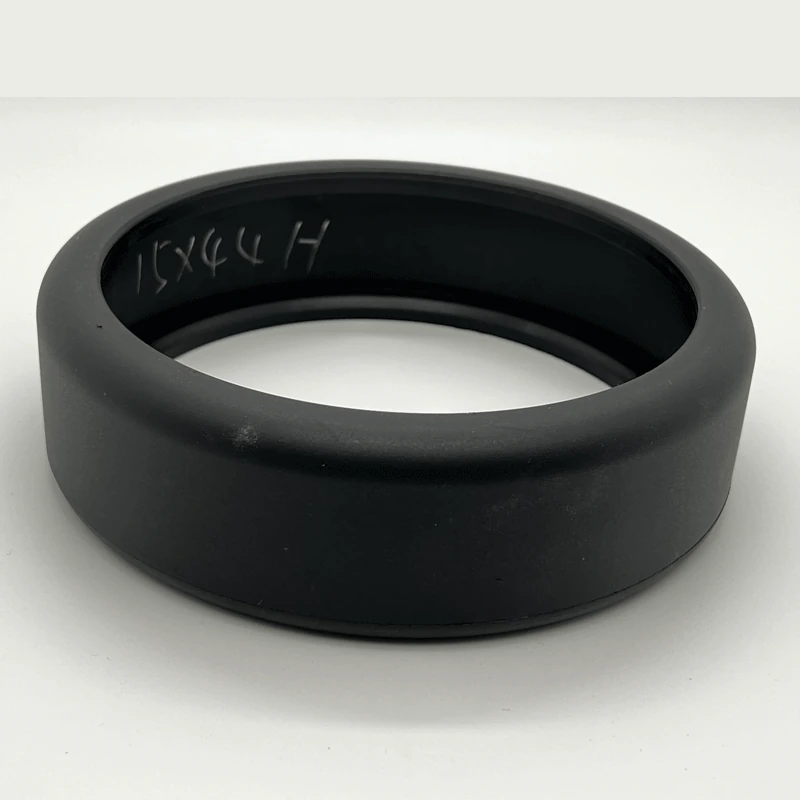
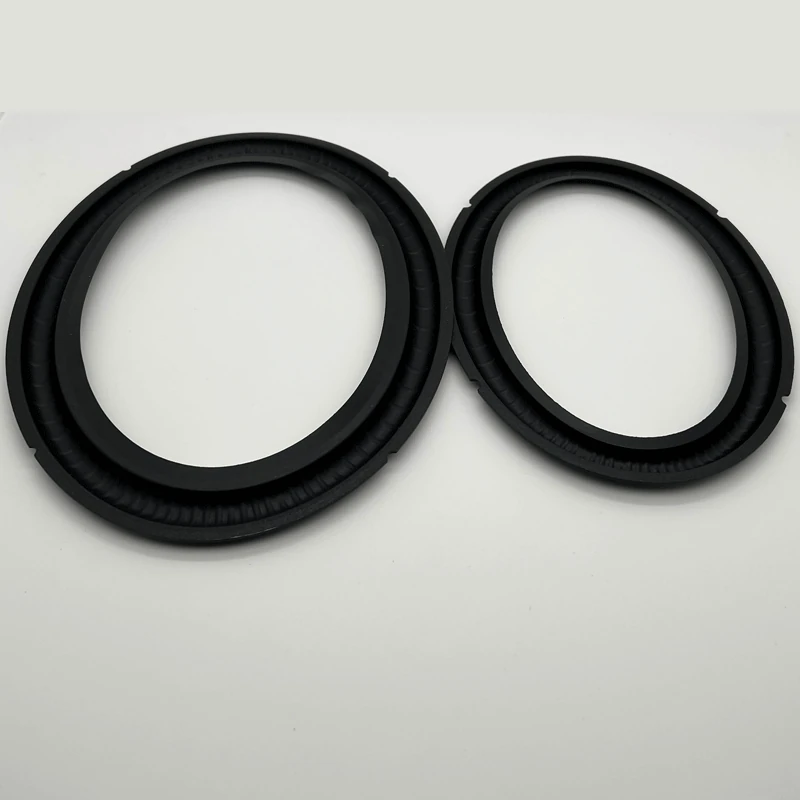
Once the compound is chosen, the surround still needs to be tuned to the driver, not just the material family. Shore A hardness changes how stiff the roll feels under excursion — softer for high-excursion or bass-heavy designs, firmer where you want tighter control — and we measure it on the bench with dedicated hardness meters as part of sign-off, not by feel. Thickness and roll profile shift compliance the same way spring rate does in a suspension. None of this is guesswork on our side: every batch goes through incoming, in-process and outgoing inspection, and our engineering team runs compound and sample development in-house, so a hardness or profile change is a documented adjustment, not a re-guess. We tool and produce across the full 2"–18" range, so the same compound decision scales from a compact automotive driver to an 18-inch subwoofer without switching suppliers mid-line.
When the standard compounds aren't enough
Some briefs need more than a stock rubber. We run custom compounds for flame-retardant surrounds where fire code applies, light-transmitting compounds for designs with backlit or visible drivers, and custom colour matching where the surround is part of the visible product, not hidden behind a grille. These are handled the same way as a standard compound order — sampled, tested, then produced at volume — just with an extra spec line at the front of the process. If your brief has one of these constraints, that is a conversation for our custom service team rather than a stock catalogue pick.
None of this replaces sending us the actual driver parameters. Compound, hardness and profile interact with the cone mass and motor strength in ways that are easy to get wrong from a spec sheet alone, which is why F0 resonance testing sits in our own QC line rather than being left to the customer to discover after the fact. Browse the base options on our products page, then talk specifics — we supply parts used by leading audio and automotive brands, and the same rigor applies whether the order is a thousand pieces or a container.
FAQ
What is the single most common surround-material mistake?
Picking a rubber for its durability reputation without matching the specific compound to the environment. A standard SBR or NBR surround built for an indoor consumer speaker will not survive years of UV and salt spray the way EPDM will — "rubber" is not one material.
Is butyl always the best choice for a subwoofer?
For controlled, low-distortion bass on a premium woofer, yes, butyl's high damping is usually the right call. For a high-excursion design where light moving mass matters more than damping, foam or a softer compound can outperform it — the goal decides the compound, not the other way round.
Can you match Shore A hardness and thickness to an existing driver?
Yes — send the current surround's dimensions and target hardness, and our engineering team develops and samples against it before a production run, with tensile and hardness testing confirming the match on the bench.
Do you handle non-standard requirements like flame-retardant or coloured surrounds?
Yes, these are custom compound runs — flame-retardant, light-transmitting and custom colour are all things we formulate and produce in-house rather than farm out. Bring the requirement to our custom service team early, since it affects compound selection from the start.