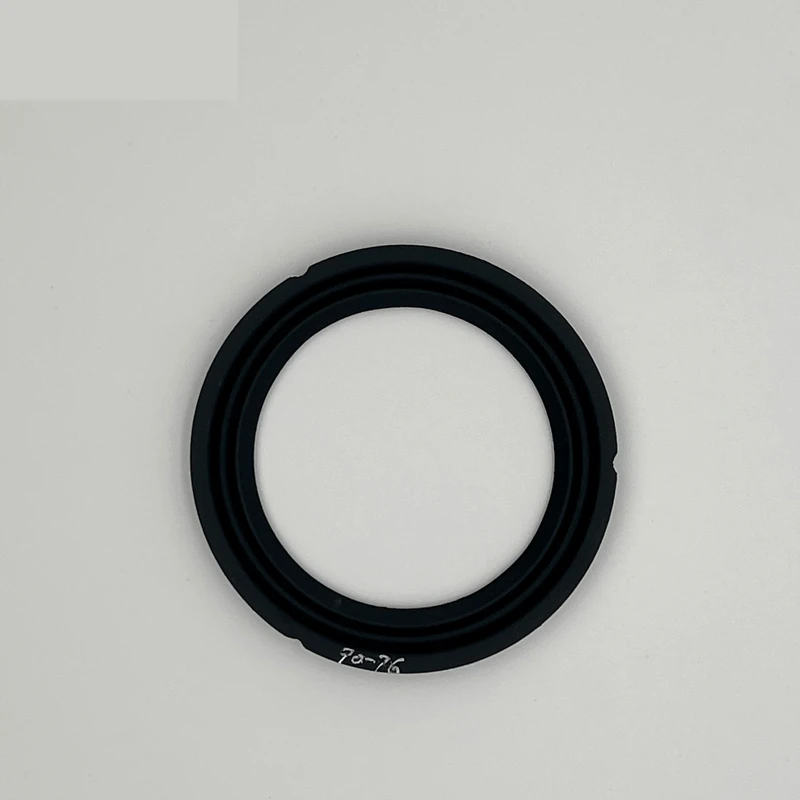
To match a replacement speaker surround, measure four things and match them in order: the cone's outer diameter, the surround's roll width, the frame (mounting) diameter, and the material. Get these right and the new surround glues on flat, centres the cone and restores the driver's original excursion. A surround that is even a few millimetres off will offset the cone or buckle the roll, so measure before you buy.
The four measurements that matter
| Measurement | What it is | How to take it |
|---|---|---|
| Cone OD | Outer diameter of the cone, where the surround's inner edge glues | Across the cone, inner glue lip to inner glue lip |
| Roll width | Width of the half-roll (the raised ring) | From the inner glue edge to the outer glue edge |
| Frame OD | Where the outer edge seats on the basket or gasket | Across the basket landing / mounting ring |
| Nominal size | The driver's labelled size (e.g. 6.5", 12") | From the driver spec or overall basket diameter |
Cone OD and roll width are the two that decide fit; frame OD and nominal size help you confirm you are in the right family.
Step by step
- Remove the old surround and clean the cone lip and frame landing so glue lines are clear.
- Measure the cone OD across the centre, lip to lip — this sets the surround's inner diameter.
- Measure the roll width; a wider roll allows more excursion, a narrower roll is stiffer.
- Measure the frame OD to confirm the outer edge lands correctly on the basket.
- Note the roll orientation (see below) and the material before ordering.
Roll direction and profile
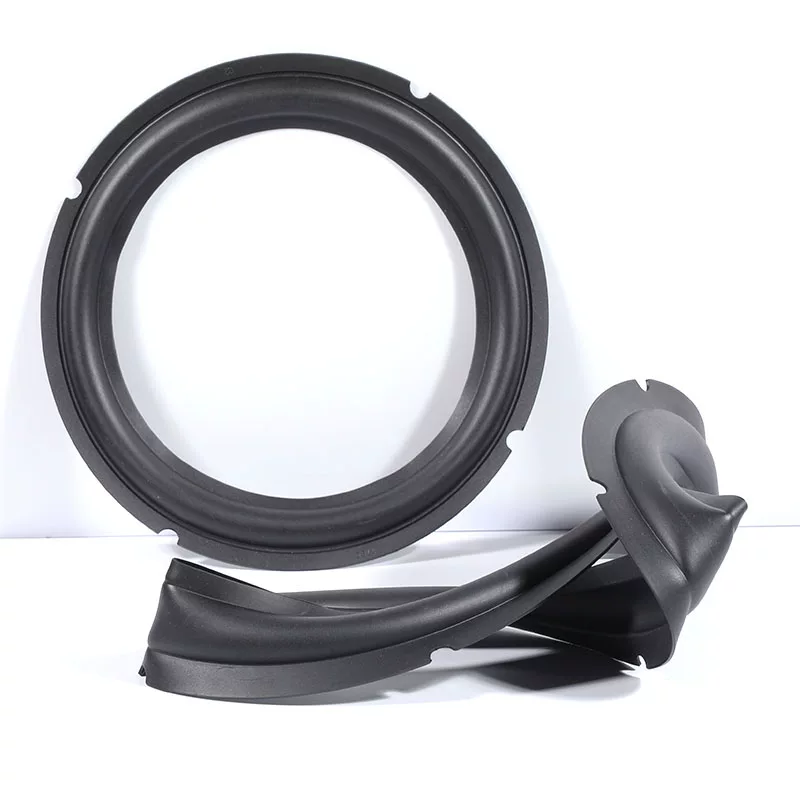
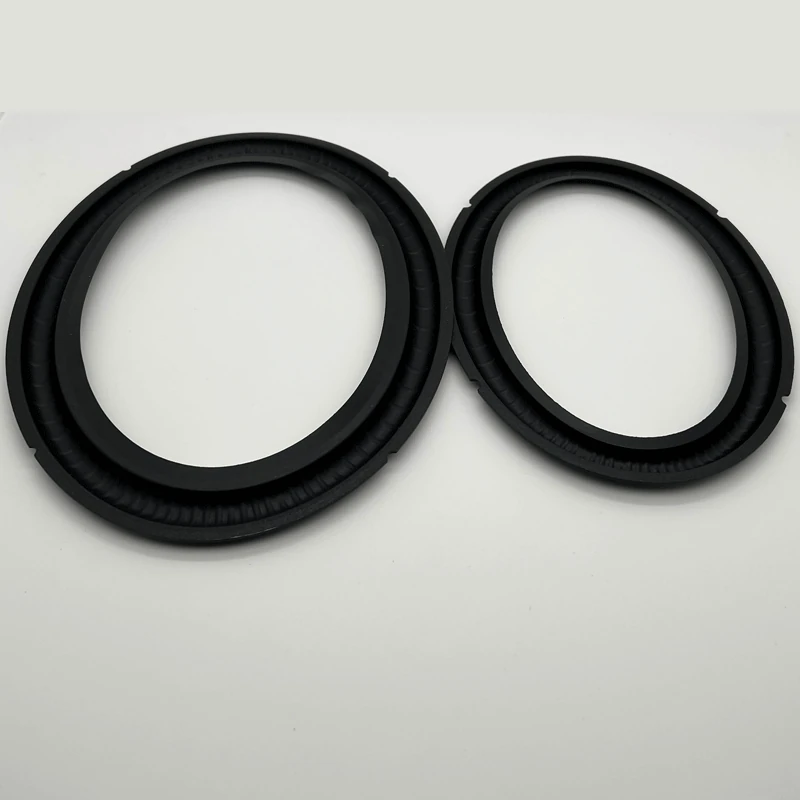
Surrounds are made with the half-roll facing up (out) or down (in). Match the original orientation: reversing it changes how the cone sits and can alter excursion and appearance. Profile matters too — a taller, wider roll gives more compliance, a shallower roll is firmer. If your driver's roll is unusual, a custom profile is often the only exact fit.
Match the material, not just the size
Once the dimensions fit, choose the material. Foam restores a vintage driver's original light, compliant feel; rubber (butyl/IIR for damping, EPDM for weather resistance, NBR for general use) adds durability and longer service life. Switching materials can subtly change the sound, so decide deliberately — our rubber vs foam comparison covers the trade-offs.
For one repair, use these measurements to select a compatible replacement kit. Repair shops, distributors and OEM buyers can browse surround families; if the profile is not available, send the old part, measurements, driver interface and quantity for a tooling review.
FAQ
How do I measure a speaker surround for replacement?
Measure the cone outer diameter (inner glue lip to inner glue lip), the roll width, and the frame diameter where the outer edge seats. Cone OD and roll width decide the fit; note the roll orientation before ordering.
What if my exact size is not listed?
A non-standard profile may require tooling. Send the measurements, clear photographs or a physical part, the mating driver, material target and quantity so existing-tool fit, modification or new-tool requirements can be reviewed.
Does roll direction (in vs out) matter?
Yes. Match the original orientation. Reversing the roll changes how the cone sits and can affect excursion and appearance, even when the diameter is correct.
Can I switch from foam to rubber when re-edging?
Often yes, if the size and profile match and the driver tolerates a slightly firmer compliance. Rubber improves durability; a high-excursion design tuned around foam may shift in response, so confirm the profile first.