Leave a natural-rubber band on a windowsill for a year and it comes back as brittle fragments. Leave an EPDM part beside it and it is still a rubber part — chalky on the surface maybe, flexible underneath. Same sun, same air, wildly different endings. EPDM survives ozone, UV and weather because its polymer backbone is saturated: the double bonds that ozone attacks were deliberately moved off the main chain and onto a side group, so an ozone hit breaks a branch instead of cutting the molecule in half. Everything else people like about EPDM follows from that one decision.
The chemistry, because it explains everything else
Ozone does not corrode rubber the way rust eats steel. It cleaves carbon-carbon double bonds. Natural rubber and SBR carry those bonds all the way down the main chain, so every ozone attack severs the backbone itself. Enough of them and the network is cut into short useless pieces — the cracks running perpendicular to a stretched surface are that process made visible.
EPDM's backbone is ethylene and propylene, both saturated — nothing for ozone to grab. A fully saturated chain has a practical problem, though: sulphur curing needs double bonds to build crosslinks. So a third monomer, a diene (ENB is the common one), is copolymerised in at low levels, and the trick is where it sits — the diene's unsaturation ends up on a pendant side group hanging off the chain, not in it.
The result is a rubber that can still be sulphur-cured while presenting ozone with only expendable targets. Attack a side group and you clip a twig. The trunk is untouched, the network holds, the part stays a part. That is why "EPDM is like butyl but better outdoors" understates it — butyl gets its ageing resistance from having few double bonds. EPDM gets its resistance from having them where breaking them costs nothing.
The same saturated backbone explains the rest of the datasheet. Non-polar, no reactive sites: hot water and steam do not hydrolyse it, humidity cycling does not soften it. It also explains the material's worst failure, which we will get to.
What that buys on a speaker surround
A surround outdoors sits under constant tension and flexes on every note — strain plus ozone, precisely the condition ozone cracking needs. On a general-purpose compound the cracks arrive at the fold line first, and a cracked surround finishes the driver regardless of how good the motor is.
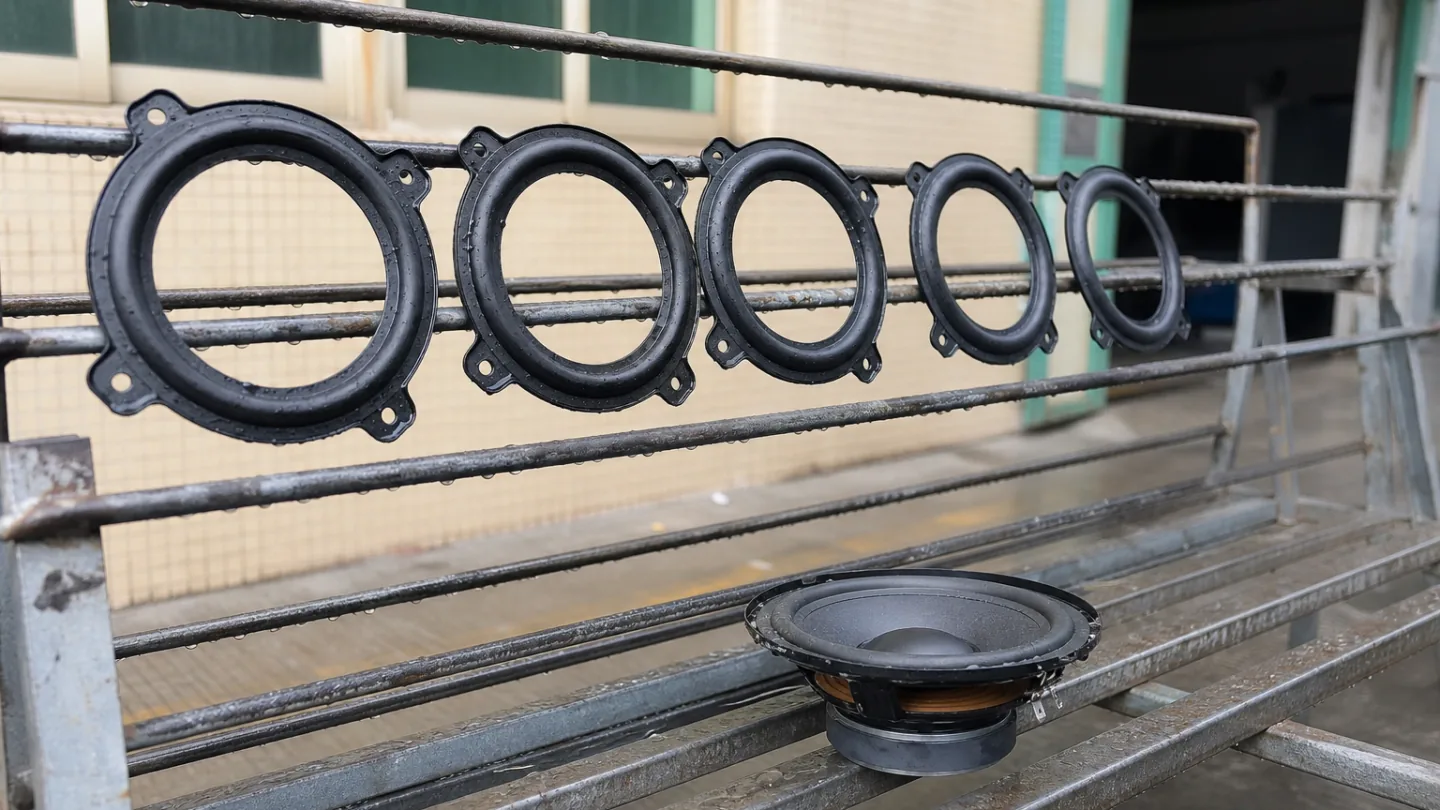
Put EPDM there and the failure clock stops being about the rubber. Marine tower speakers, dock and patio drivers, powersports audio on a roll cage, car-door woofers that bake and freeze weekly — EPDM's territory, and it usually outlives the enclosure. Rain, a hose or salt spray leaves it neither swollen nor soft. Application detail lives in surrounds for marine and outdoor speakers.
Two places EPDM is the wrong call
Damping. EPDM damps moderately. Butyl damps exceptionally. For an indoor hi-fi woofer, where the surround's job is to swallow cone-edge energy rather than reflect it, butyl stays the right answer and EPDM is a compromise nobody asked for — see butyl (IIR) rubber. When the decision is genuinely between the two, butyl vs EPDM surrounds is the tiebreaker.
Oil. The classic trap. EPDM's non-polar hydrocarbon backbone is chemically similar to mineral oil, and like dissolves like — put it against petroleum oil, fuel or hydrocarbon grease and it swells dramatically, softens and loses its geometry. Not degradation over years; visible growth. Engineers who have only used EPDM outdoors get caught the first time a part goes near an engine bay. Oil contact means NBR, full stop.
| Surround requirement | EPDM | Butyl (IIR) | NBR |
|---|---|---|---|
| Ozone / UV / weathering | Excellent — the reason to choose it | Good | Moderate |
| Internal damping | Moderate | High — the benchmark | Moderate |
| Oil and fuel contact | Poor — swells badly | Poor | Excellent |
| Water, steam, humidity | Excellent | Good | Good |
| Sealed-box air retention | Good | Excellent | Good |
| Best fit | Marine, outdoor, automotive | Indoor hi-fi woofers | Oil-exposed environments |
Sulphur or peroxide: one line on the spec that changes the part
Because the diene gives EPDM just enough unsaturation, it can be sulphur-cured — cheaper, faster, well understood. It can also be peroxide-cured, which builds direct carbon-carbon crosslinks instead of sulphur bridges. Those are more thermally stable, so a peroxide-cured EPDM holds up better at sustained heat and takes less compression set under long-term load. The trade is cost and cure time. For a patio speaker, sulphur is fine; for a driver behind a car door panel through a decade of summers, peroxide earns its premium. Name the cure system on the spec.
Two rubbers both honestly called EPDM
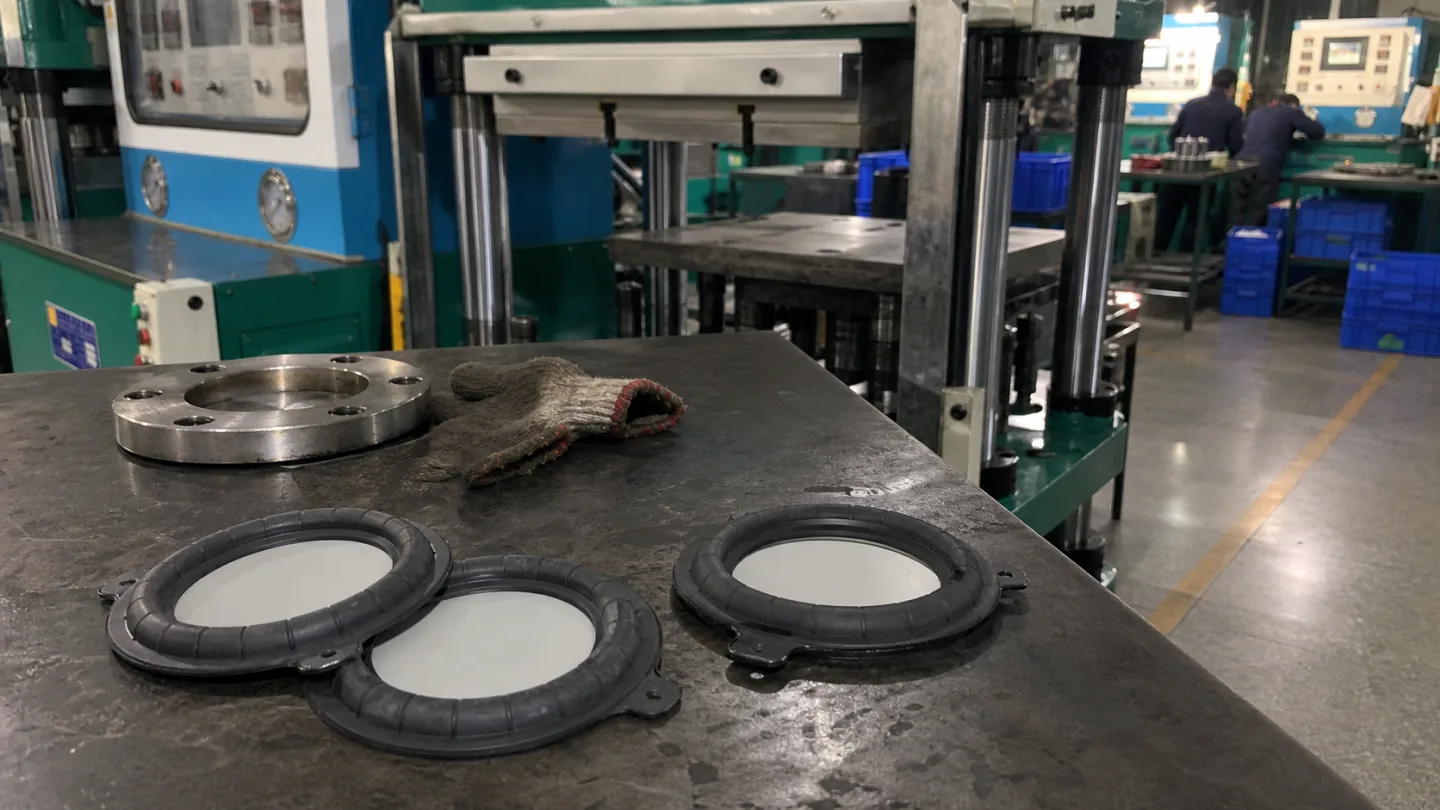
Ethylene ratio, diene level, filler loading, oil extension, cure system — move any of them and hardness, damping, tear strength and heat ageing move with it. The material name is not the specification. That is why compound development and validation sit on the same floor here: rubber is mixed in-house across three compounding lines, so a formulation change is a process step, not a supplier negotiation.
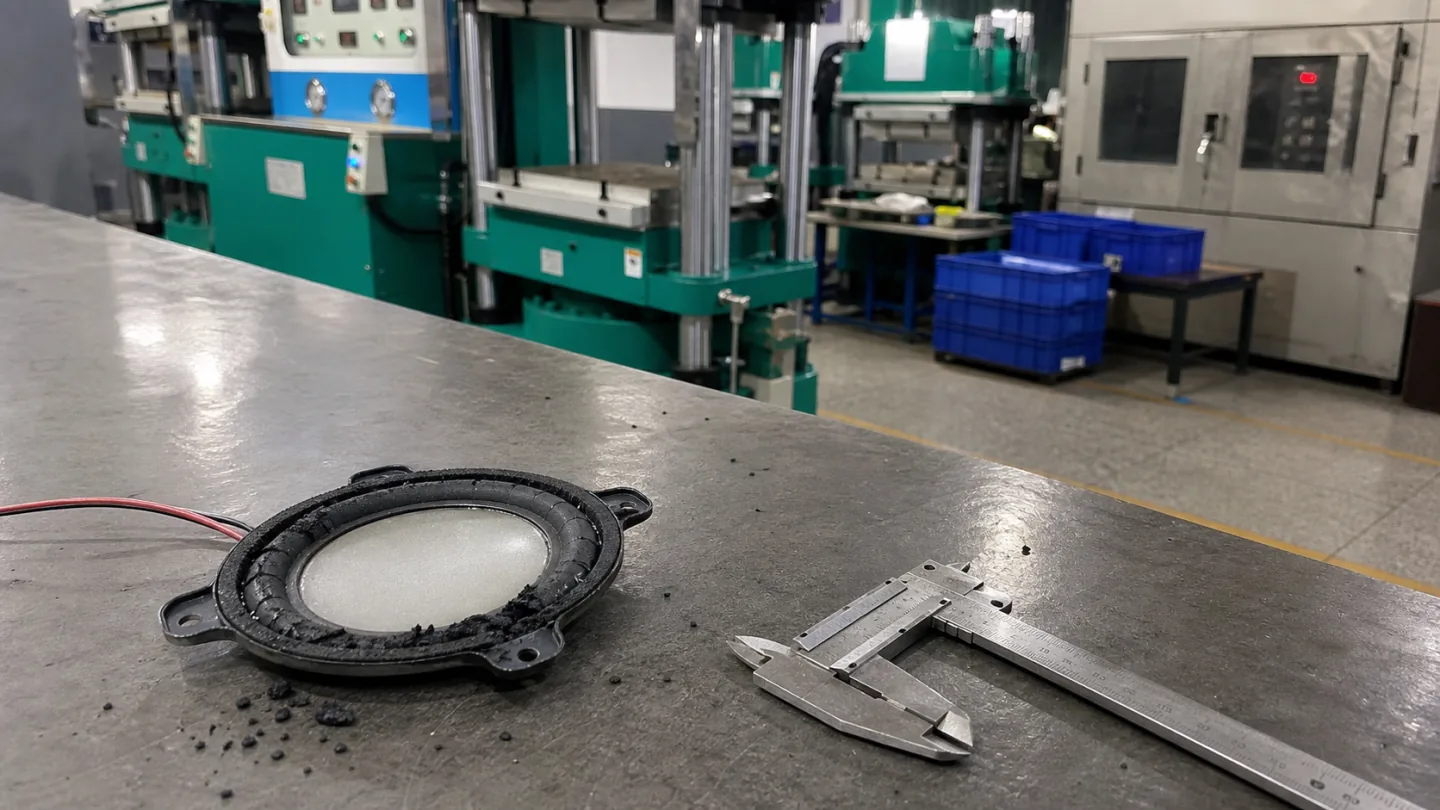
For EPDM the validation stack is the point. UV aging and the outdoor weathering rack confirm the ozone story holds for the actual compound, not just the polymer class; salt spray and constant temperature-humidity cover the marine half; Shore A hardness and tensile before and after ageing show whether the part stiffened. An F0 resonance tester across the batch confirms a surround built to survive weather still lands on the resonance the driver was designed around — durability that quietly retunes the speaker is not a win. Roll geometry goes on a 2D optical measurement system. Incoming, in-process and outgoing, every batch.
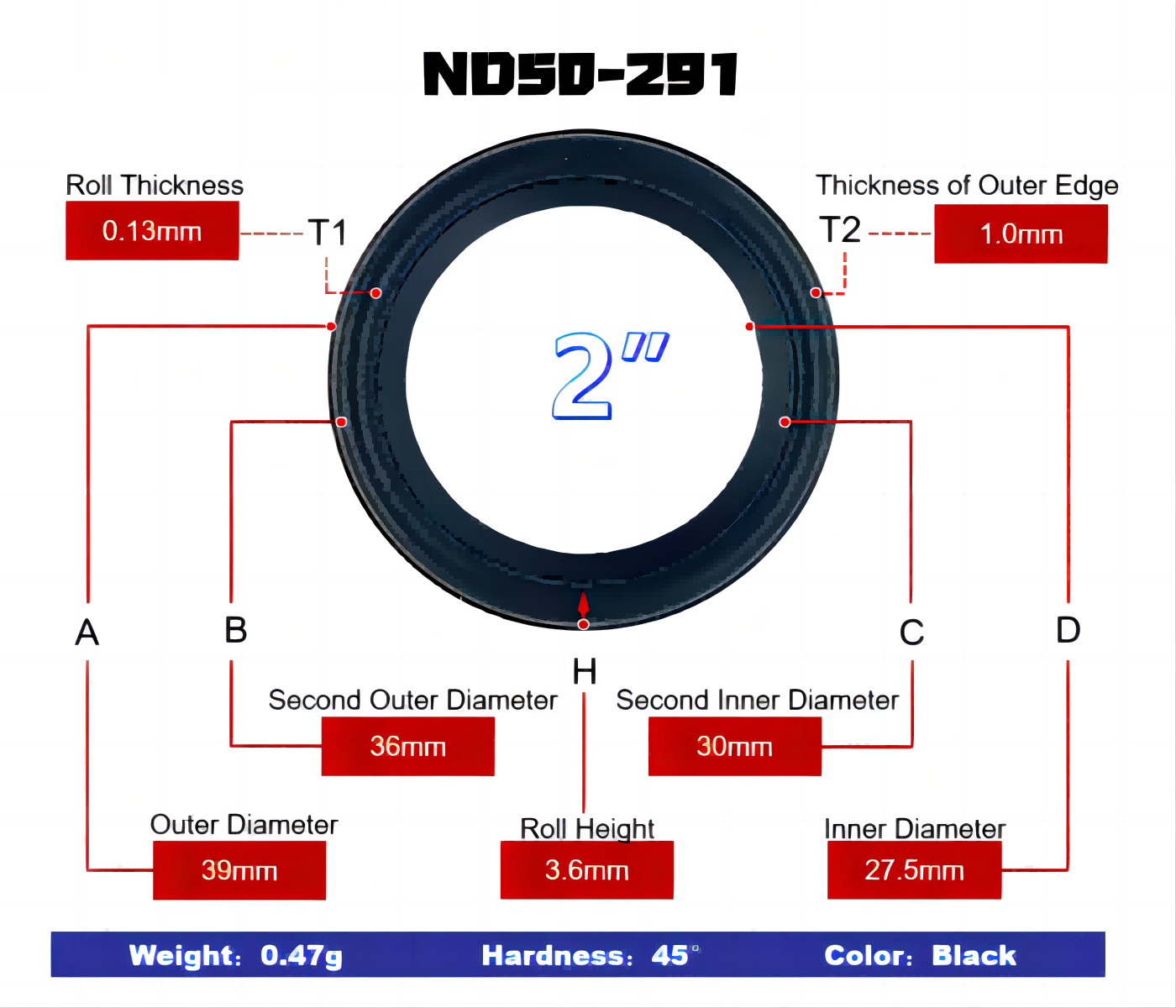
Stock EPDM surrounds cover the common sizes, custom tooling runs to 18", and flame-retardant or custom-colour variants are available if flagged at sampling. Bring the exposure conditions and a target response; the OEM/ODM team works back to a compound and a cure system.
FAQ
Why is EPDM so much better than natural rubber in sunlight?
Ozone and UV attack carbon-carbon double bonds. Natural rubber carries those bonds along its main chain, so every attack cuts the molecule and the material eventually cracks apart. EPDM's main chain is saturated and its double bonds sit on a small side group, so an attack breaks a branch and leaves the backbone intact.
Can EPDM be used near oil or fuel?
No. EPDM swells severely in petroleum oils, fuels and hydrocarbon greases because its non-polar backbone is chemically similar to them. This is its single biggest weakness and it is not a matter of degree — parts distort within a short exposure. For oil contact, NBR is the correct compound.
Is EPDM or butyl better for a speaker surround?
Depends where the speaker lives. Butyl damps the cone edge better, so it stays the pick for indoor hi-fi woofers. EPDM resists ozone, UV and salt far better, so it is the pick for marine, outdoor and automotive drivers. Neither is a downgrade from the other.
Does the cure system really matter on an EPDM surround?
For heat and long-term compression set, yes. Peroxide-cured EPDM forms more thermally stable crosslinks and holds its shape better under sustained load and temperature; sulphur curing is cheaper and adequate for milder duty. Specify it rather than assuming it.