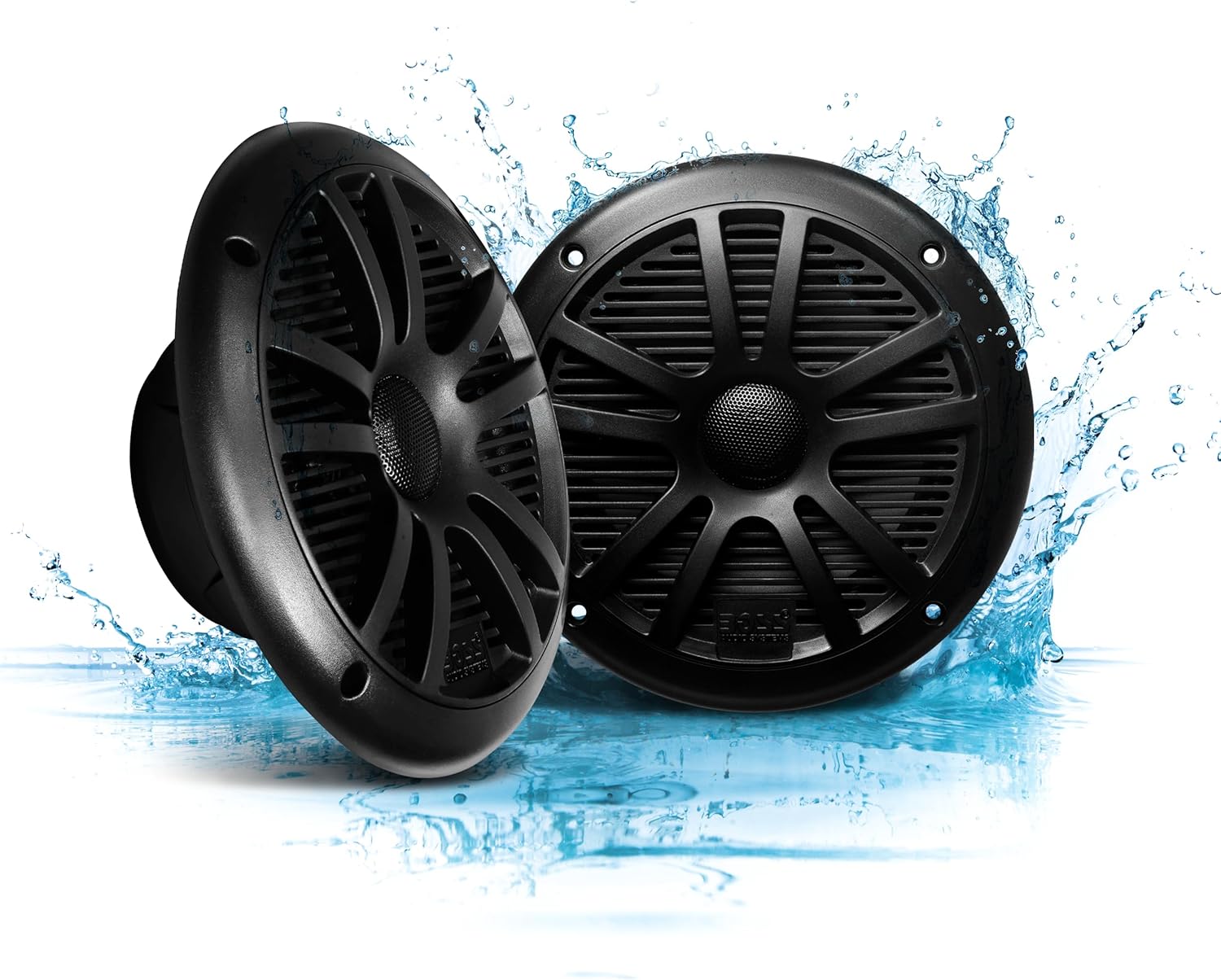
Pull a marine speaker off a boat that has spent three summers on a lift and the surround tells you everything the owner won't say out loud: a chalky white bloom across black rubber, a spiderweb of hairline cracks radiating out from the basket, a soft tacky patch low on one side where salt spray pooled every time it rained. None of that is bad luck. It is exactly what UV, ozone, salt and heat cycling do to a surround that was speced for a living room, not a hull.
Outdoor and marine speakers get sold on frequency response and a nice grille, and the surround — the part actually exposed to the weather — gets almost no attention until it fails. That's backwards. On a boat, a dock speaker, a powersports rack or a patio pair left out through July, the surround is usually the first component to give up, years before the magnet underneath it.
What actually kills a surround outdoors
Four things do the damage, and they rarely act alone.
- UV breaks down the polymer at the surface, which is why an old surround chalks and stiffens before it visibly cracks.
- Ozone attacks rubber under any flex or tension — the fine cracking that runs parallel to a fold line is classic ozone cracking, and a surround flexes on every note it plays.
- Salt spray accelerates both of the above and works into any pinhole or seam in the compound, which is why marine failures often look worse than UV-only failures at the same age.
- Heat cycling — a hot deck all day, cool spray at night, repeated for a season — expands and contracts the compound enough to fatigue it faster than steady heat alone would.
A surround that only had to survive one of these would probably be fine on a cheap compound. Marine and outdoor duty asks for all four at once, and that's a materials question, not a design question.
Why EPDM is the default answer
EPDM earns its place in outdoor audio because its chemistry resists exactly the failure modes above — the polymer backbone lacks the double bonds that ozone attacks, and it holds up to UV and weathering far longer than general-purpose compounds. That's why EPDM gets specified for outdoor and marine surrounds before butyl, NBR or SBR come up.
| Compound | Outdoor/marine behaviour | Where it fits |
|---|---|---|
| EPDM | Excellent UV, ozone and weather resistance | Default for marine, outdoor, powersports |
| Butyl (IIR) | High damping, moderate weather resistance | Covered or semi-outdoor, damping-critical woofers |
| NBR | Good oil resistance, moderate weather resistance | Engine bays, powersports where oil exposure outranks salt |
| SBR | Economical, general purpose | Indoor / cost-driven builds, not sustained UV or salt |
| Foam | Not weather-stable — dries and crumbles with age | Indoor and protected environments only |
None of this means EPDM is the only material worth discussing on an outdoor line — a helm speaker tucked under a bimini sees a fraction of the UV a flybridge speaker takes on — but if the brief says "boat," "dock" or "left outside all season," EPDM is where the conversation should start.
Testing that actually proves it, not just claims it
Anyone can print "marine grade" on a spec sheet. What separates that claim from reality is whether the compound and the finished surround were actually run through accelerated aging before the tooling was approved.


An outdoor-duty project may call for salt-spray exposure, a UV aging cycle, controlled temperature and humidity, or outdoor weathering. Shore A hardness and tensile testing before and after aging can show whether the compound stiffened or lost strength. On acoustic parts, an F0 resonance comparison can reveal whether environmental exposure shifted functional behaviour. These are project-level tests: the method, duration and acceptance criteria should be written into the requirement rather than inferred from an equipment list.
A surround that survives salt spray but shifts F0 by a noticeable margin has traded one problem for another.
Colour, finish and the UV question buyers forget
Marine and outdoor lines lean hard on black, white and grey to match hull and deck colour, and a custom colour is a reasonable ask for a boat builder matching a gelcoat shade. What's worth checking before approving that colour is whether the pigment was aged alongside the base compound — some pigments fade or chalk under UV faster than the rubber underneath them, turning a matched colour into a mismatched one after a season at the dock. A finish that hasn't been through the same UV aging as the compound is a finish nobody has actually tested.
What to spec when you order
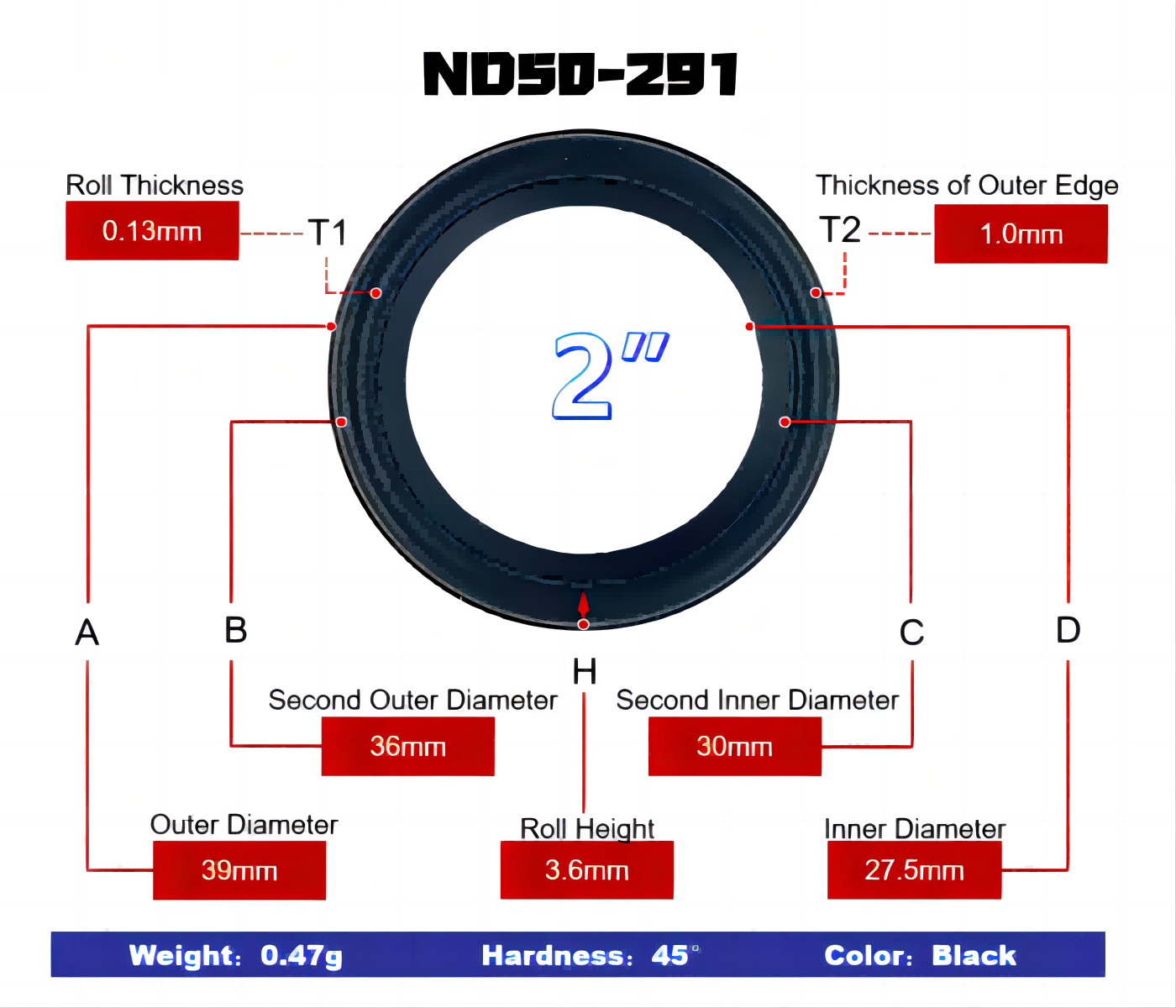
For a marine or outdoor line, hand over more than a diameter: sun exposure (open deck vs under cover), expected salt exposure (offshore vs freshwater vs coastal spray only), the roll profile and compliance target from the driver, and whether colour needs to match an existing part. Surrounds and passive radiator diaphragms both run 2"–18" in EPDM, butyl, NBR or SBR; sample turnaround is typically 3–7 days once the spec is locked, and production runs 15–30 days after sample approval and deposit. Still weighing material families in general, not just for outdoor duty? The breakdown in choosing a speaker surround material is a useful stop before narrowing to EPDM.
Full material and size ranges are on the surrounds and components page, and if the application is unusual enough that catalog sizes don't cover it — a non-standard diameter, a custom colour match, a combined UV-and-salt-spray spec — that's exactly what the custom OEM/ODM service is for.
FAQ
Why do foam surrounds fail faster outdoors than rubber ones?
Foam isn't weather-stable the way rubber compounds are — it dries out and crumbles with age even indoors, and UV, ozone and salt speed that breakdown up considerably. For any speaker that lives outside or on a boat, a rubber compound like EPDM is the safer starting point.
Is EPDM the only compound that works for marine speakers?
It's the default for direct sun and salt exposure because of its ozone and weathering resistance, but a covered or semi-protected application can sometimes use butyl or NBR if damping or oil resistance matters more than raw UV exposure. Share the exposure conditions and a supplier can recommend the compound.
How is UV and salt resistance actually verified before a run?
Through accelerated testing — a salt-spray chamber, a UV aging chamber and a weathering rack — followed by Shore A hardness and tensile checks on the aged samples, plus an F0 resonance check to confirm the acoustic behaviour didn't shift along with the physical properties.
Can outdoor surrounds be custom coloured to match a boat or enclosure?
Yes — custom colour is a normal request for marine and outdoor lines, but the colour and pigment should be aged through the same UV testing as the base compound so the finish holds up as long as the rubber does.