A marine-audio designer emails a drawing for an 8" woofer that will live on an open flybridge. Salt spray, twelve hours of sun a day, no grille worth the name. The surround spec line reads "Hypalon or equivalent." He is not being careless — somewhere he learned that Hypalon is what you reach for when the weather is trying to kill your part. He is right about the material and wrong about the application.
Short version: CSM (chlorosulfonated polyethylene) is a superb weathering rubber that stopped being a sensible surround choice years before he wrote that line — the brand was discontinued in 2010, and EPDM already does the weathering job on a surround for a fraction of the trouble.
What CSM is genuinely great at
The chemistry explains everything else. CSM begins as ordinary polyethylene — a saturated chain with no double bonds in the backbone. Chlorine and sulfonyl chloride groups get hung onto that chain, which makes it curable and gives it polarity, but the backbone stays saturated. Ozone and UV attack double bonds. CSM barely has any. Nothing there to break.
The result is a material that sits outdoors and refuses to age. CSM-coated architectural membranes hold service far past their design life in brutal sun. Chemical tank linings take acids and alkalis in alternating duty for years. Cable jackets resist flame rather than feeding it. And unlike most rubbers, CSM holds a white or light colour without yellowing — which is exactly why it ended up on roofs.
That reputation was earned over decades of ugly service. The question is whether any of it matters on the edge of a cone.
Why your surround will never see it
Three reasons, and the first one settles the argument on its own.
It was discontinued. DuPont announced the end of Hypalon in 2009 and shut production down in 2010. The driver was not competition — that story got repeated until it sounded true. The real cause was regulatory: manufacture depended on carbon tetrachloride as a process solvent, and CCl₄ is an ozone-depleting substance phased out under the Montreal Protocol. The solvent went, the process went with it. Generic CSM still exists, but the supply base and grade choice narrowed, and a spec reading "Hypalon" points at a product nobody has made for over a decade.
The damping is wrong. A surround is not a weather seal. Its acoustic job is to absorb cone-edge resonance and convert it to heat instead of reflecting it back as smear. That is why butyl owns the category — a butyl offcut dropped on a bench thuds. CSM was never optimised for that. It was optimised to survive. Different design targets, and a rubber tuned for one is not accidentally good at the other.
EPDM already covers the requirement. EPDM's backbone is also essentially saturated — the same structural reason CSM shrugs off ozone and UV applies to EPDM too. For a surround facing sun, salt and ozone, EPDM delivers the weathering you were buying CSM for, at commodity cost, with a mature supply base and acoustic behaviour tuned for drivers. Otherwise you pay a premium for chemical resistance a speaker never meets. No woofer is immersed in caustic soda.
CSM vs EPDM vs butyl, for a surround
| Requirement | CSM (Hypalon) | EPDM | Butyl (IIR) |
|---|---|---|---|
| Ozone / UV / weathering | Outstanding | Excellent — enough for any surround | Excellent |
| Salt spray, marine exposure | Outstanding | Excellent | Good |
| Internal damping (the acoustic job) | Not its design target | Good | Excellent — the benchmark |
| Sealed-box air retention | Moderate | Good | Excellent |
| Oil and fuel contact | Moderate — better than EPDM, well short of NBR | Poor | Poor |
| Supply and grade availability | Narrow since 2010 | Broad, commodity | Broad, commodity |
| Cost for a surround | Premium, for resistance you will not use | Low | Moderate |
So what should your driver use?
Work backwards from where the speaker lives.
- Outdoor, marine, car door, anything that meets weather — EPDM surrounds. The case CSM gets mistakenly specified for, and EPDM answers it. Longer version: surrounds for marine and outdoor speakers.
- Indoor hi-fi, sealed boxes, low distortion — butyl (IIR), for damping and air retention. Trade-off set out in butyl vs EPDM surrounds.
- Oil, fuel or hydrocarbon contact — NBR — the one requirement where "CSM resists chemicals" does not transfer.
- Still upstream of the compound — start at choosing a speaker surround material.
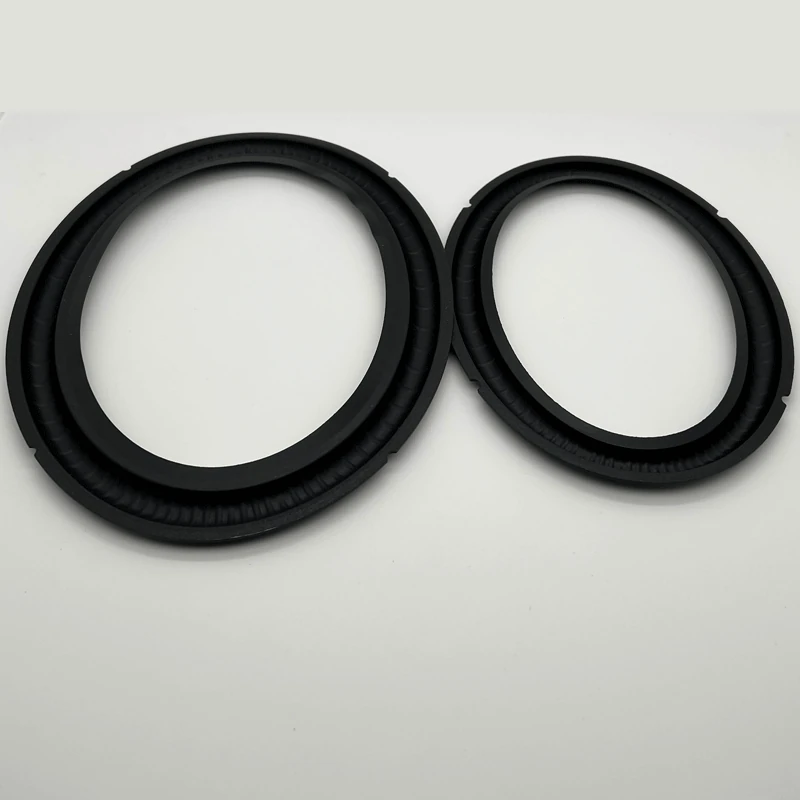
Plainly: we do not make CSM parts. We make rubber and foam surrounds, passive radiator diaphragms, gaskets and moulded rubber components, in NBR, SBR, butyl, EPDM and foam. If your application really needs chlorosulfonated polyethylene, it is not a speaker part and we are the wrong shop.
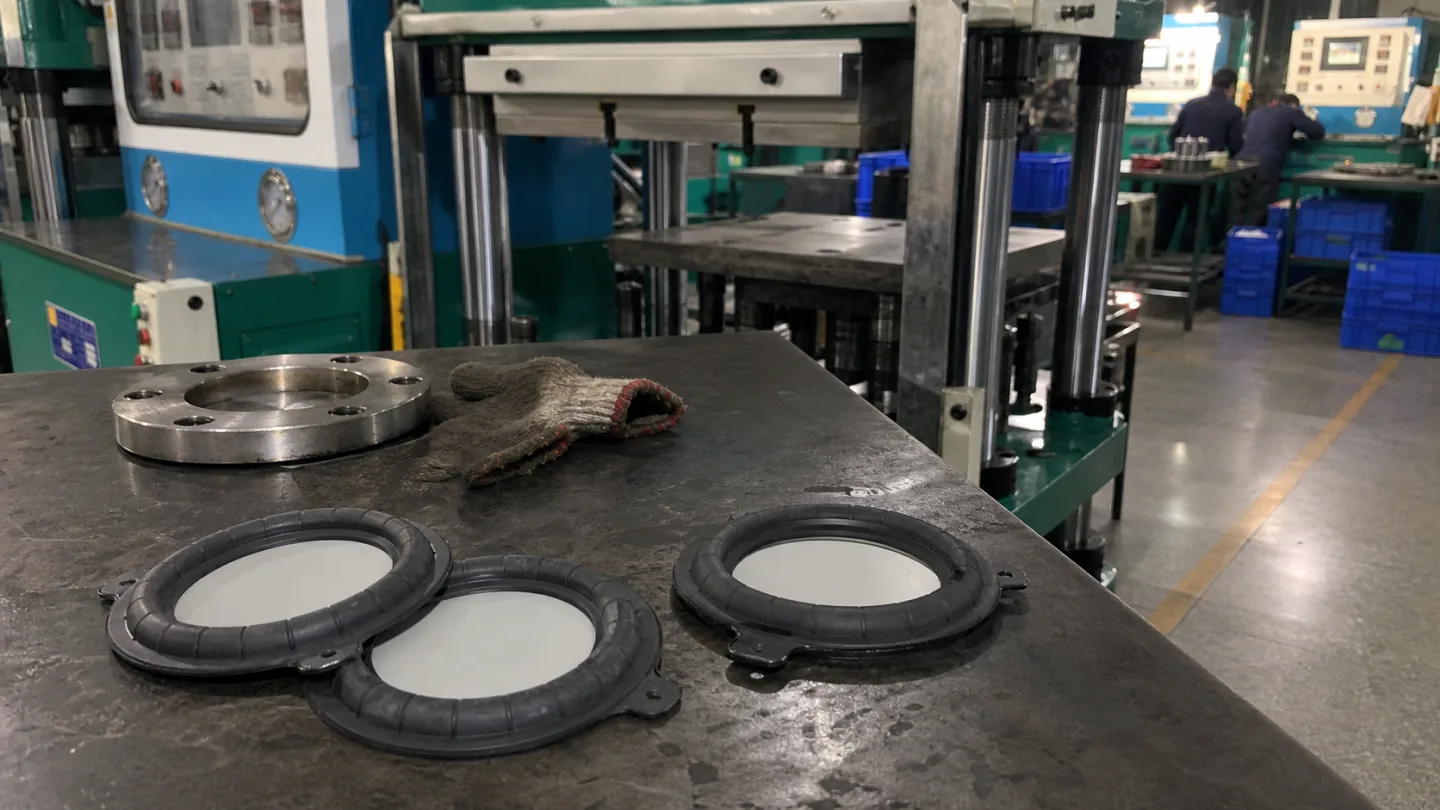
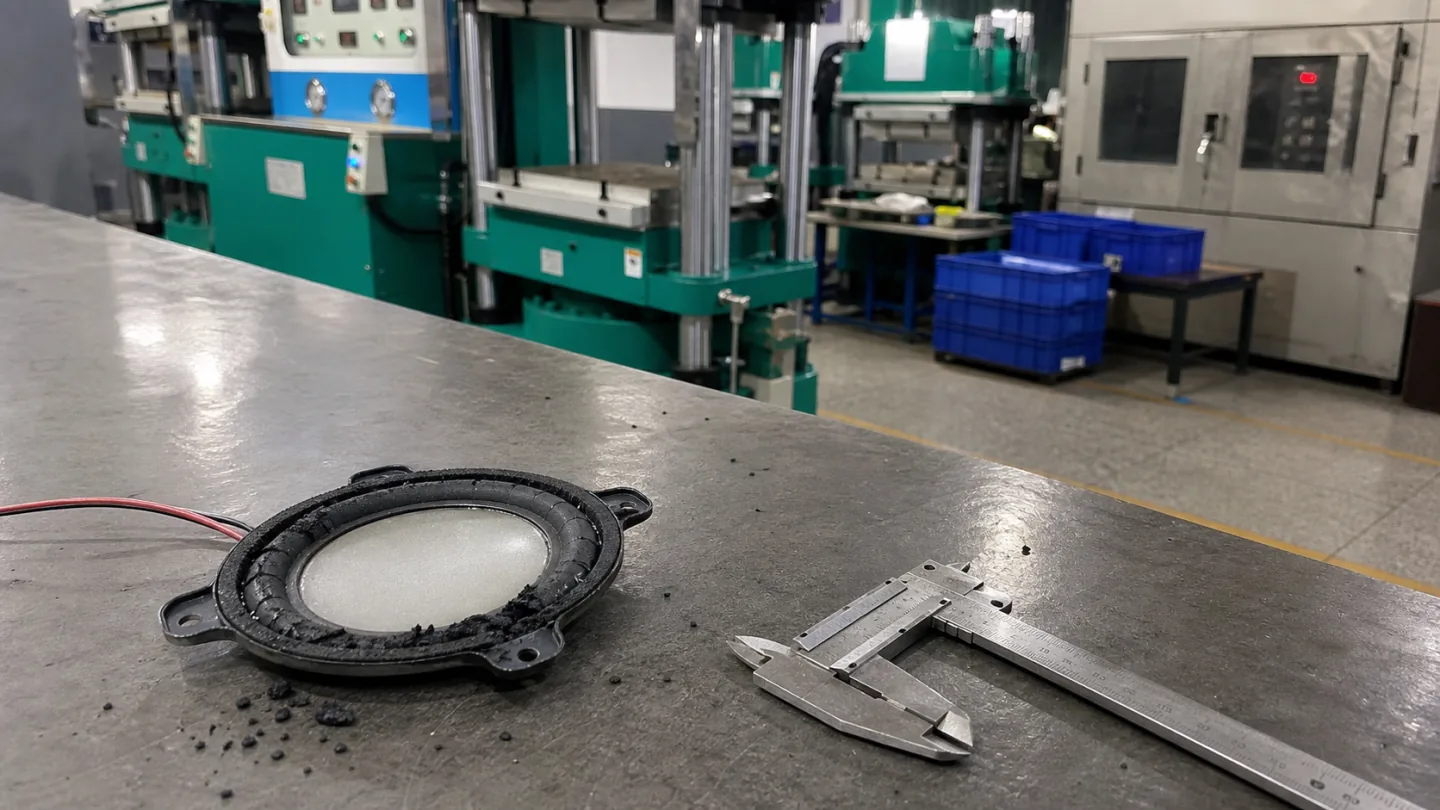
Where we can settle the argument is the weathering claim itself. Our lab runs UV ageing, salt spray, constant temperature and humidity and an outdoor weathering rack — the tests that built CSM's reputation, pointed at the EPDM compound we would actually ship you. Add F0 resonance testing for driver-to-driver consistency and 2D optical measurement for roll profile, plus Shore A and tensile across incoming, in-process and outgoing inspection. Send the flybridge brief to our OEM/ODM team and you get a compound with weathering data behind it instead of a legacy brand name.
FAQ
Is Hypalon discontinued?
Yes. DuPont announced the end of Hypalon in 2009 and stopped production in 2010. The cause was regulatory rather than commercial — the process relied on carbon tetrachloride, an ozone-depleting solvent phased out under the Montreal Protocol. Generic CSM is still produced by other manufacturers, but with a narrower supply base and fewer grades than the original range.
Can CSM be used for speaker surrounds?
It can be moulded into one, but nobody sensible does. It is not tuned for internal damping, the surround's core job; it carries a premium for chemical resistance a speaker never meets; and supply has been constrained since 2010. EPDM gives the weathering benefit at commodity cost with acoustics developed for drivers.
Is CSM better than EPDM outdoors?
On paper CSM edges ahead, and on a roof membrane that margin is worth paying for. On a surround it is margin you cannot use — EPDM already survives sun, ozone and salt spray for the driver's full service life. Buying more weathering resistance than the part will ever consume is just cost.
What replaces Hypalon in an old specification?
Depends what the spec was really buying. Weathering, EPDM. Oil or fuel resistance, NBR. Damping, butyl. If the part genuinely needs CSM's full chemical breadth, source generic chlorosulfonated polyethylene and re-qualify — but on a speaker component, one of the first three is almost always the real requirement.