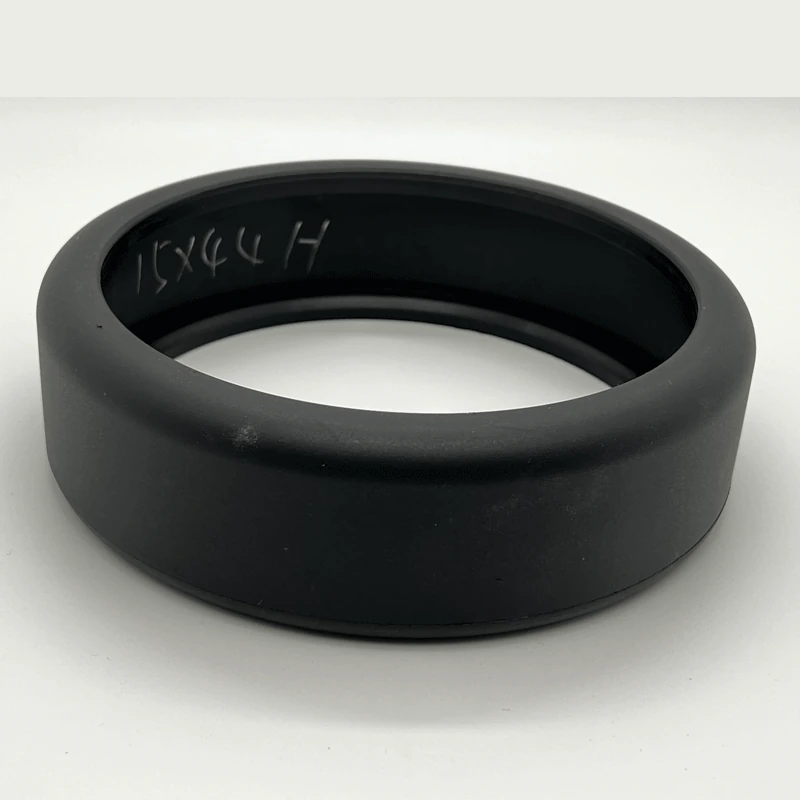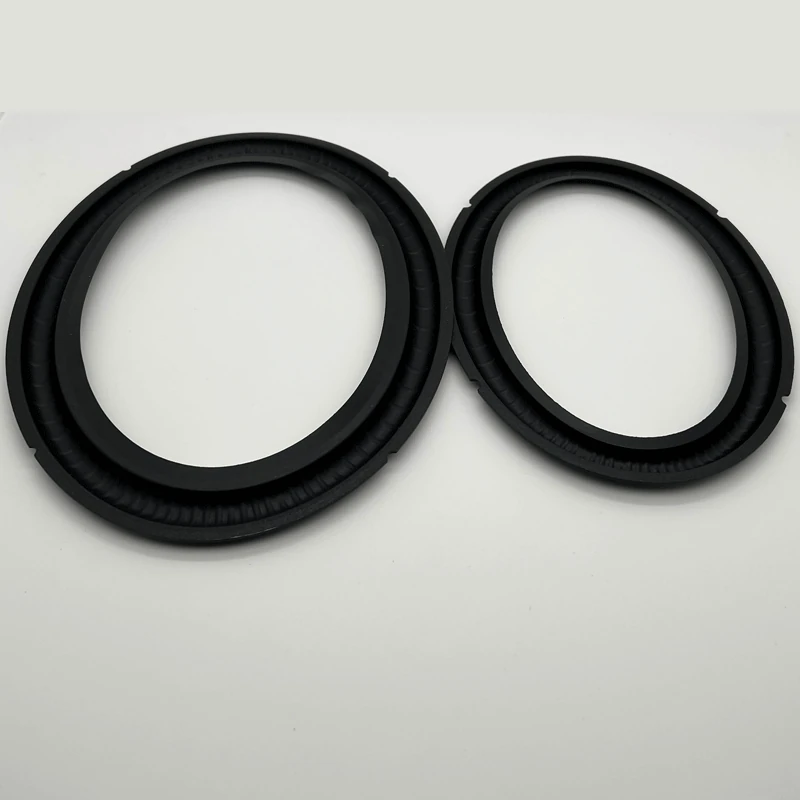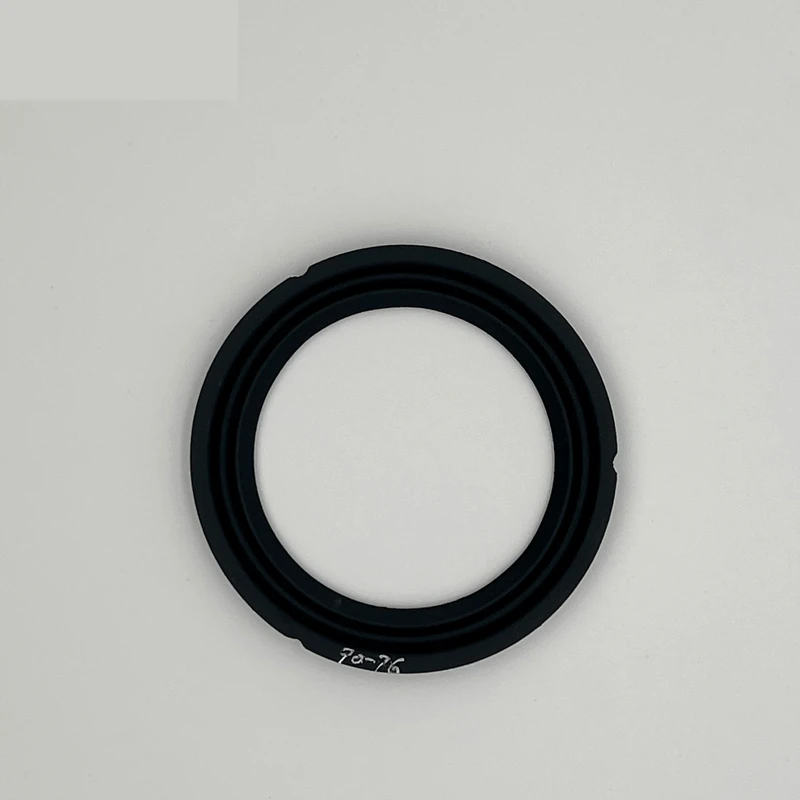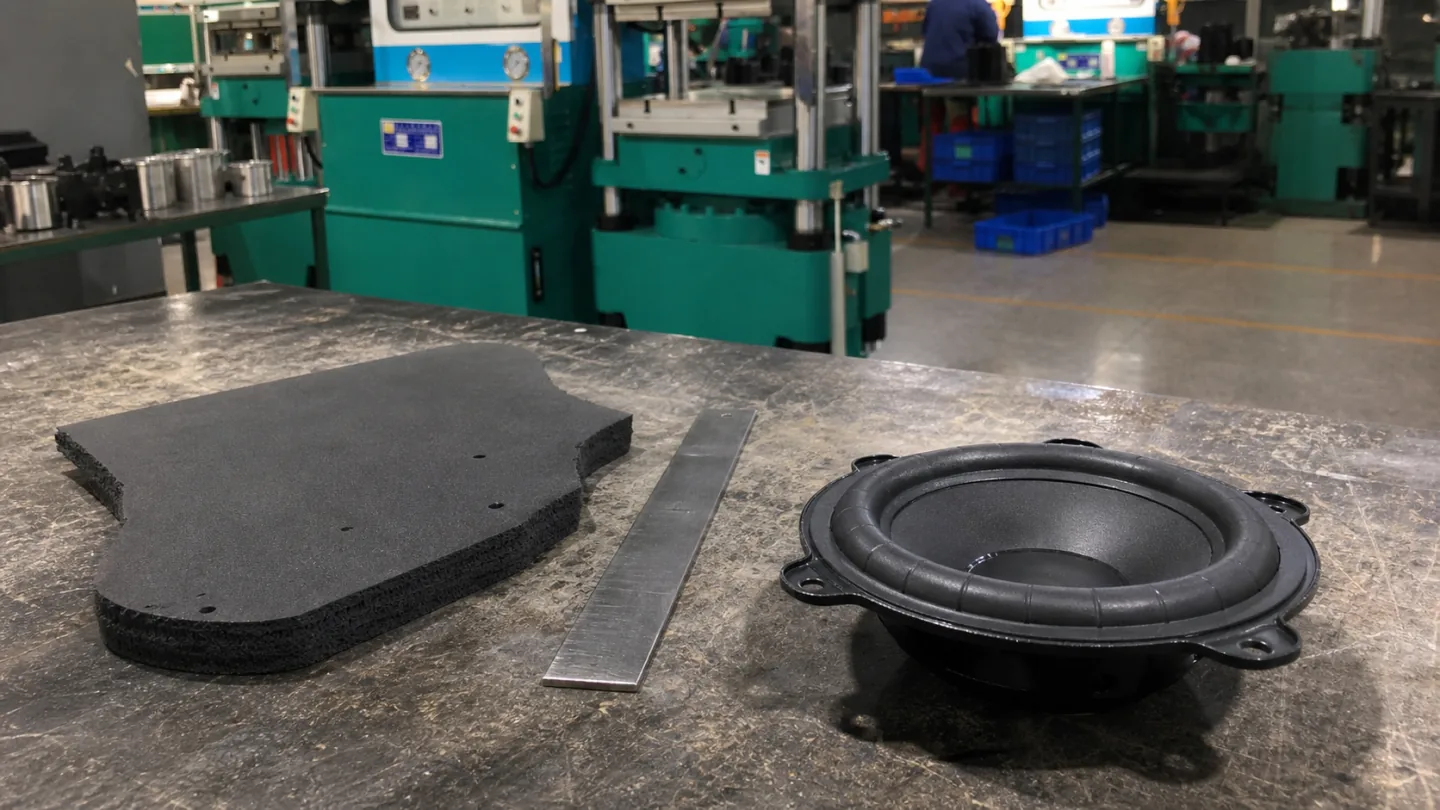
A customer once sent us a ring pulled off a marine driver and asked for the same compound on a home subwoofer. The ring was chloroprene — not a bad part, and chosen on purpose. But the purpose was hose-and-jacket thinking carried into an acoustic component. CR is one of the most usefully balanced elastomers ever made, and that balance is exactly why it loses on a speaker surround: butyl beats it on damping, EPDM beats it on weather, and it costs more than either. It is the closest real competitor to EPDM in this conversation, so it deserves a straight comparison rather than a dismissal.
What CR is actually good at
The chlorine atom on the polymer backbone does most of the work. It makes the chain polar, which buys moderate oil resistance. It blocks the sites ozone likes to attack, which buys weathering life. And it is why CR self-extinguishes once the flame is removed, without the additives other compounds need bolted on.
None of those is class-leading. All of them arrive at once, in the same compound. That is rare, and it explains where CR ends up:
- Wetsuits — CR foam blown into a closed-cell sponge: flexible at body temperature, unbothered by saltwater and UV, tolerant of endless compression cycles.
- Cable jacketing — flame retardance, weather life and abrasion resistance in one jacket, for decades outdoors.
- Bridge bearings — pads carrying a beam and absorbing thermal movement across a design life measured in decades.
- Contact adhesives — a huge share of CR production never becomes a moulded part. Its reversible crystallinity gives enormous instant tack: shoe soles, laminate countertops and dashboard trim are held on by polychloroprene cement.
Elongation at break spans roughly 100–800% depending on compound — a wide range, because "CR" names a family, not a recipe. Continuous service is about 80–100°C, with short excursions near 120°C. Past that you are shopping for a different polymer.
Two families, and a persistent myth about curing
CR splits into sulphur-modified (G-type) and non-sulphur (W-type) grades. The sulphur in a G-type is not contamination or leftover catalyst — it is deliberately copolymerised in, with a thiuram regulating chain length. That built-in sulphur gives G-types their fast crystallisation and high tack, which is why adhesive grades are usually G-type. W-types process cleaner and stay more consistent for moulded goods.
You will still read that you must never cure CR with sulphur. Overstated. Metal oxides — zinc and magnesium — do the primary crosslinking, and ETU (ethylene thiourea) was the classic accelerator for decades, though its toxicology has pushed many shops toward substitutes. Sulphur turns up legitimately in CR compounding, and a G-type has sulphur in the polymer before anyone opens a bag of curatives.
Why the surround job goes elsewhere
A surround has three jobs at once: swallow cone-edge resonance, hold air in a sealed box, survive years without hardening. CR is competent at all three and best at none.
Damping is the killer. Butyl converts mechanical energy to heat unusually well — that dead, no-rebound feel is the whole reason it dominates. CR rebounds noticeably more, so edge resonances get reflected back into the cone rather than absorbed, and the smear butyl removes stays in the output.
Weather is the second loss. CR resists ozone and UV well. EPDM resists them better, for less money. If a driver lives outdoors, EPDM is the answer — see surrounds for marine and outdoor speakers.
Cost removes the tiebreak. CR sits above both. And its headline advantages — self-extinguishing, moderate oil resistance, adhesive tack — are not things a surround is asked for. Where flame retardance is genuinely required, it gets specified into a foam or rubber compound as a property, not by switching the base polymer to CR.
CR vs butyl vs EPDM, on a surround
| Surround requirement | CR (chloroprene) | Butyl (IIR) | EPDM |
|---|---|---|---|
| Internal damping | Moderate | Excellent | Moderate |
| Sealed-box air retention | Moderate | Excellent | Good |
| Ozone / UV / weather | Good | Good | Excellent |
| Continuous outdoor / marine | Good | Fair | Excellent |
| Oil contact | Moderate | Poor | Poor |
| Flame self-extinguishing | Inherent | Needs additives | Needs additives |
| Unit cost | Highest of the three | Moderate | Moderate |
Read the damping row, then the cost row. That is the whole argument: CR is two-thirds of a butyl surround and two-thirds of an EPDM surround, at a higher price.
So what should your driver use?
Indoor hi-fi where distortion is the enemy: butyl (IIR). Outdoor, marine, car door — anything meeting sun and salt: EPDM. Real oil or fuel contact: NBR. Maximum efficiency and compliance, accepting a shorter life: foam, which we also compound flame-retardant, light-transmitting or in custom colours. Cost-driven volume: SBR. Still upstream of all of it? Start at choosing a speaker surround material, then settle the real fight in butyl vs EPDM surrounds.
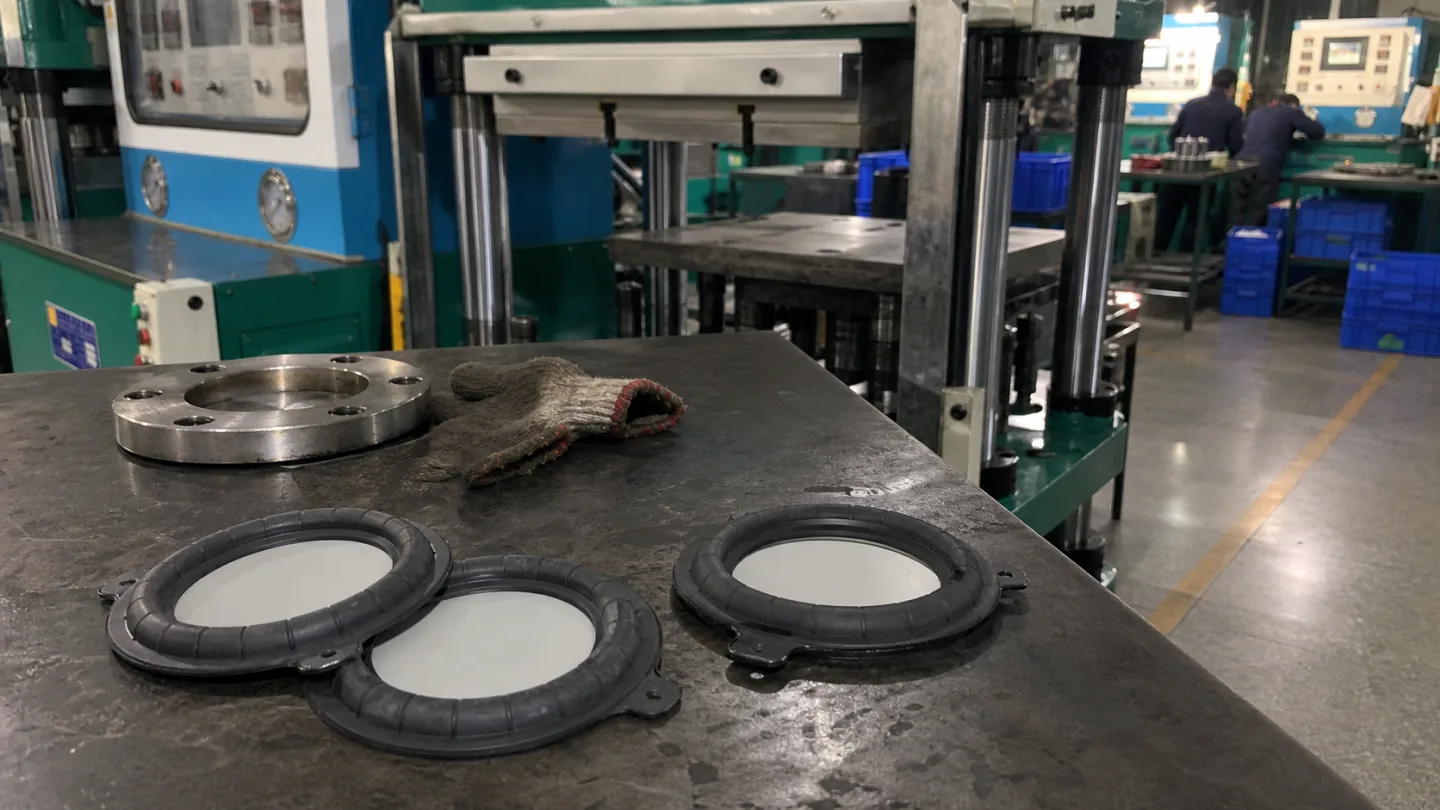
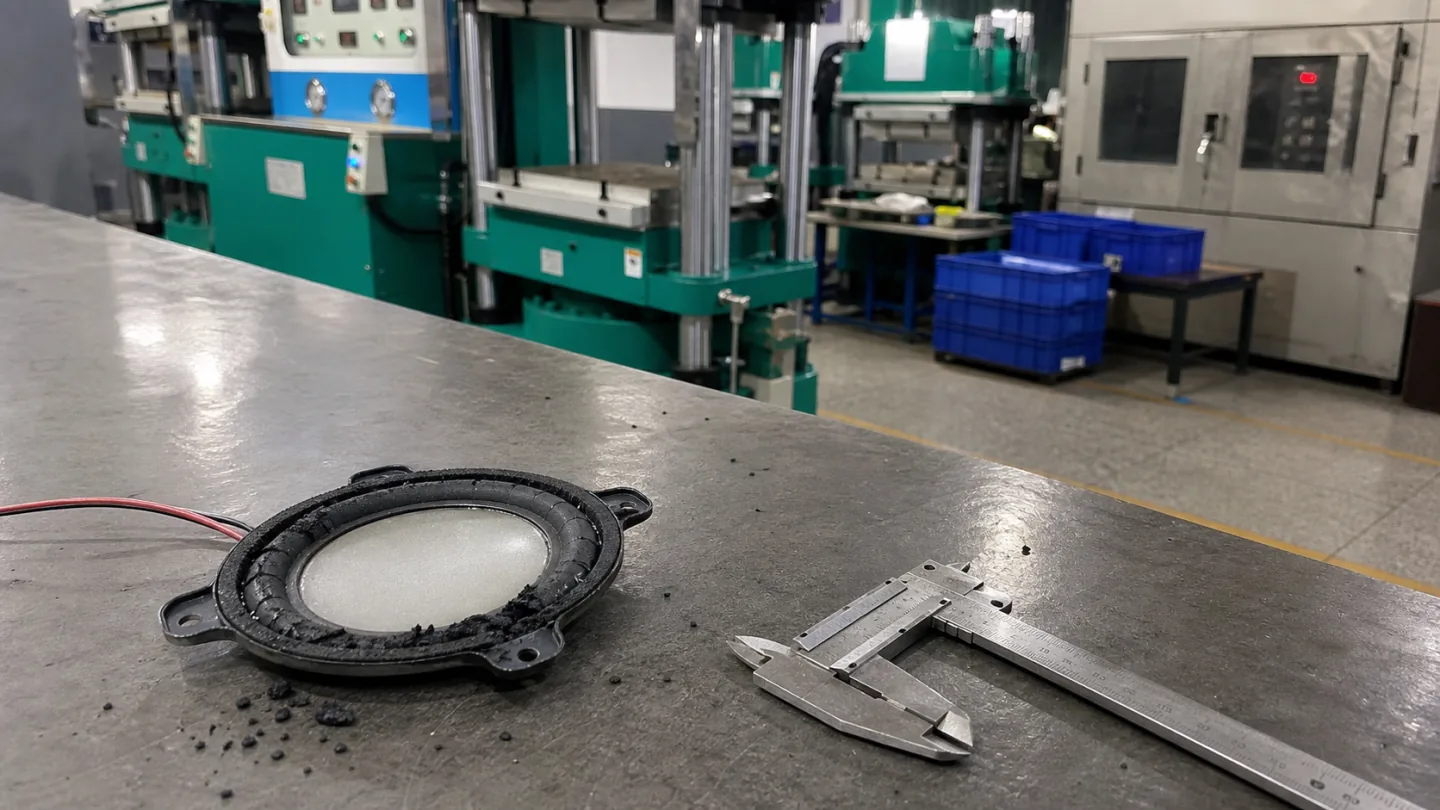
Whichever polymer wins, the compound is the specification, not the name on the datasheet. Rubber is mixed in-house here across three compounding lines, so a formulation change is a process step. Every surround batch goes on an F0 resonance-frequency tester — unit 500 has to sit on the same resonance as unit 1, which is what consistent damping means in production. Roll geometry goes on a 2D optical measurement system, because 0.2 mm off profile is a different spring. Shore A, tensile and UV ageing sit across incoming, in-process and outgoing inspection. Bring a driver and a target curve to our OEM/ODM team and the compound gets worked back from there.
FAQ
Is Neoprene the same thing as CR?
Yes. Neoprene is a trade name that entered general speech the way Kleenex did; CR is the generic ASTM designation for polychloroprene. If someone quotes "Neoprene" for an acoustic part, ask which grade and what compound — the name alone specifies almost nothing.
Can a CR surround work at all?
It will function — a CR surround moves a cone, survives weather, lasts years. It just gives up damping to butyl and weathering to EPDM while costing more than either, so it only wins when a project has a hard constraint the other two cannot meet.
How does CR handle solvents and chemicals?
Unevenly, and the summaries oversell it. CR holds up reasonably against dilute acids and mild alkalis; aliphatic hydrocarbons such as petrol are tolerable rather than good. Ketones — acetone, MEK — attack it, as do chlorinated solvents and strong aromatics. For real exposure, test the actual compound against the actual fluid rather than trusting a table.
What temperature can CR take?
Roughly 80–100°C continuous, with short excursions near 120°C. Sustained heat beyond that hardens it and shortens its life; the answer at that point is a higher-temperature polymer, not a reformulated CR.