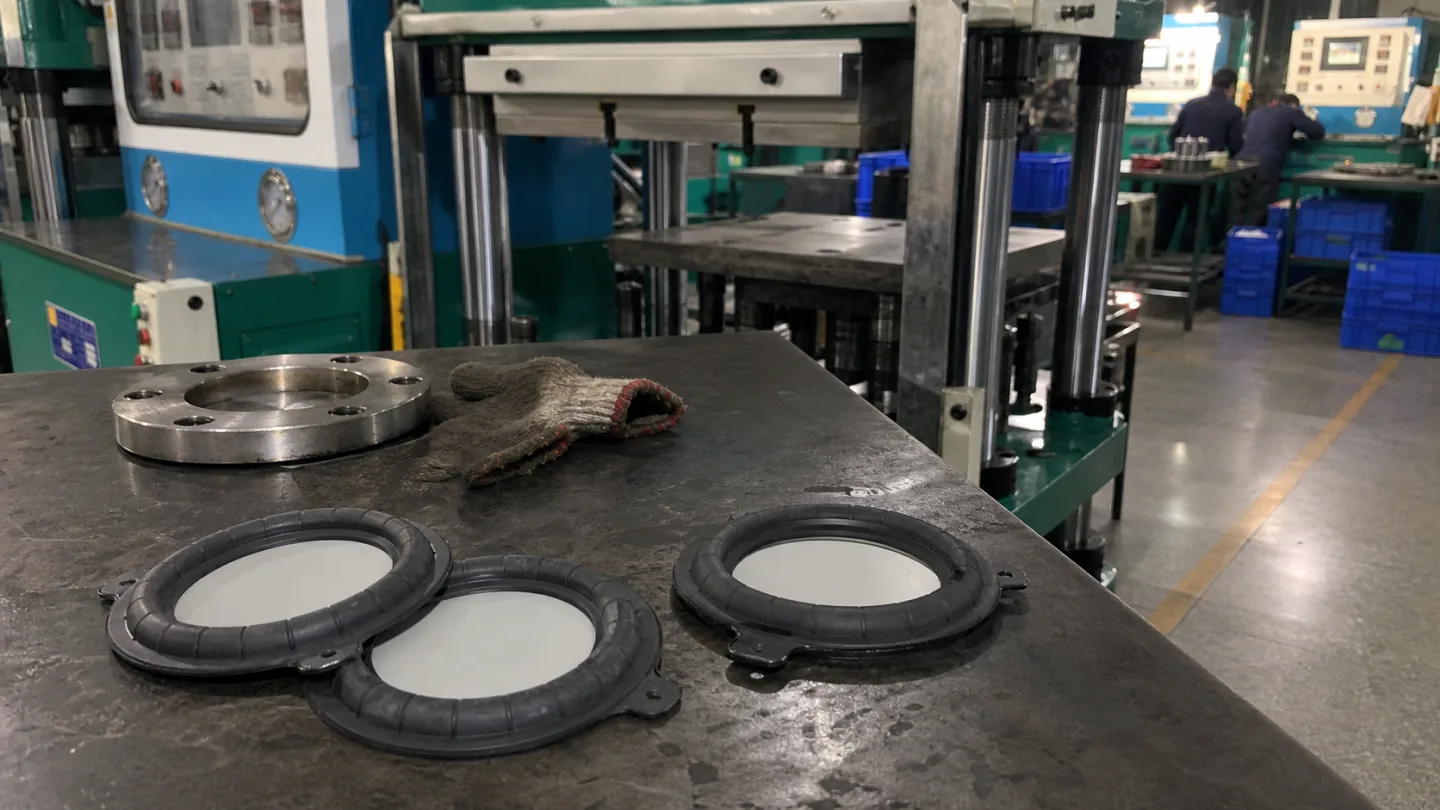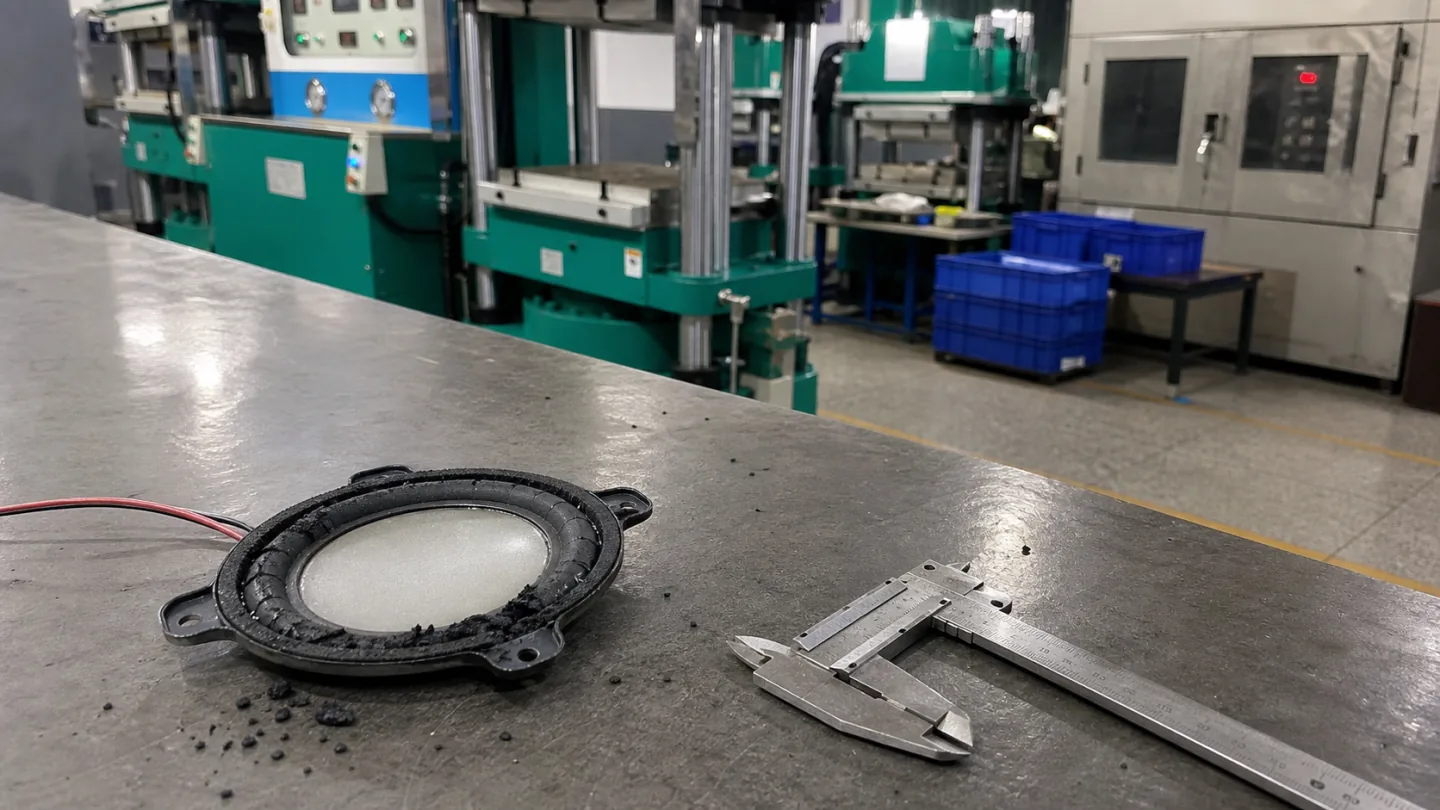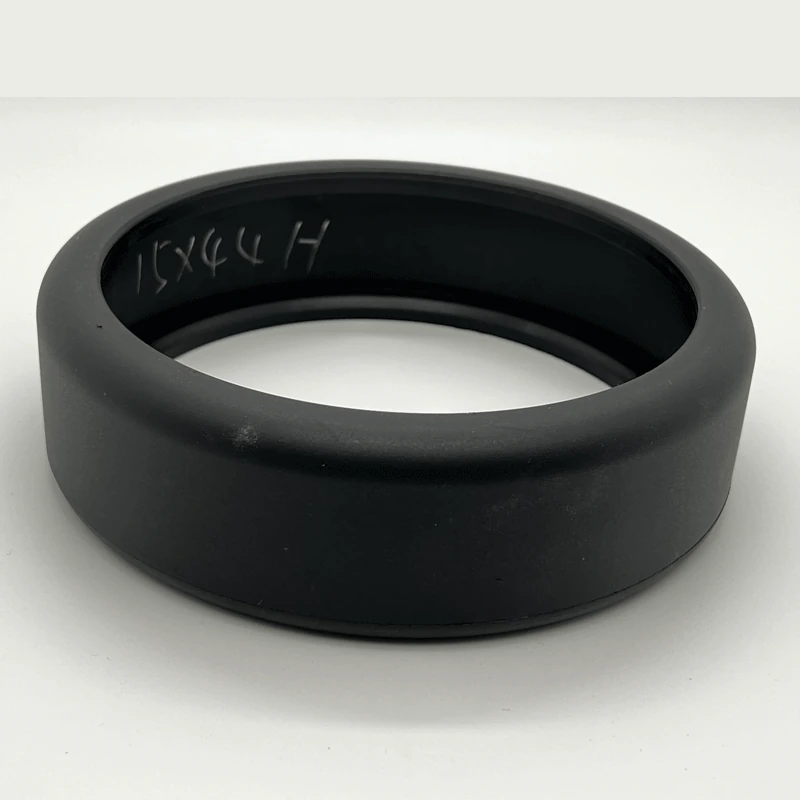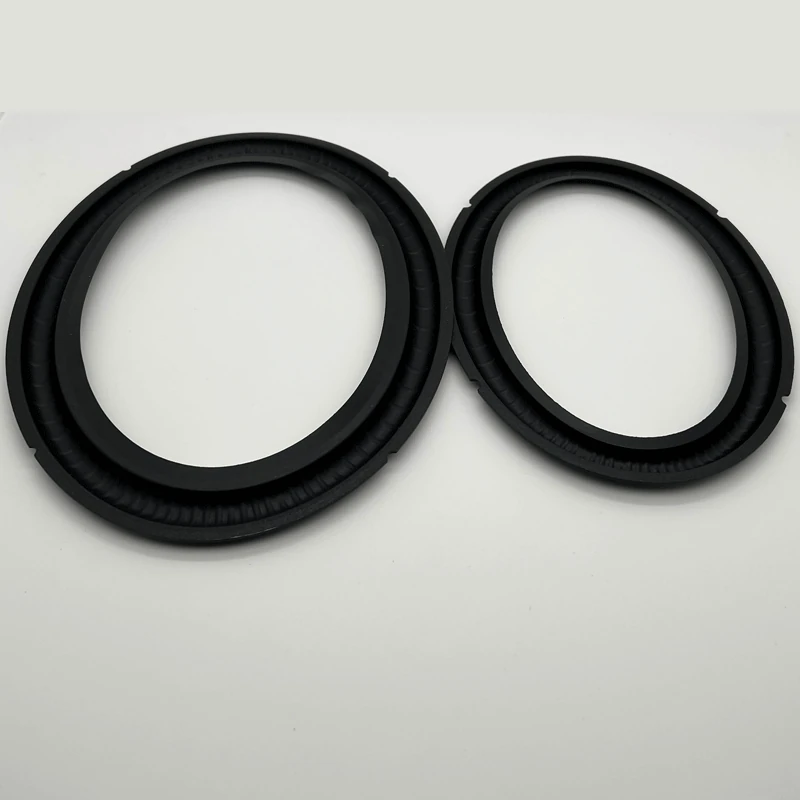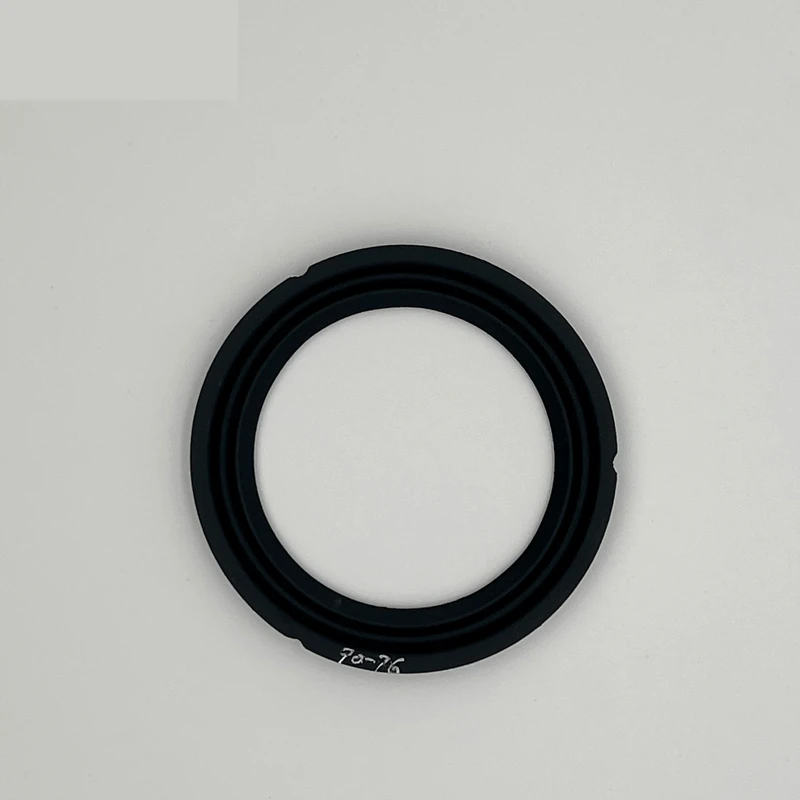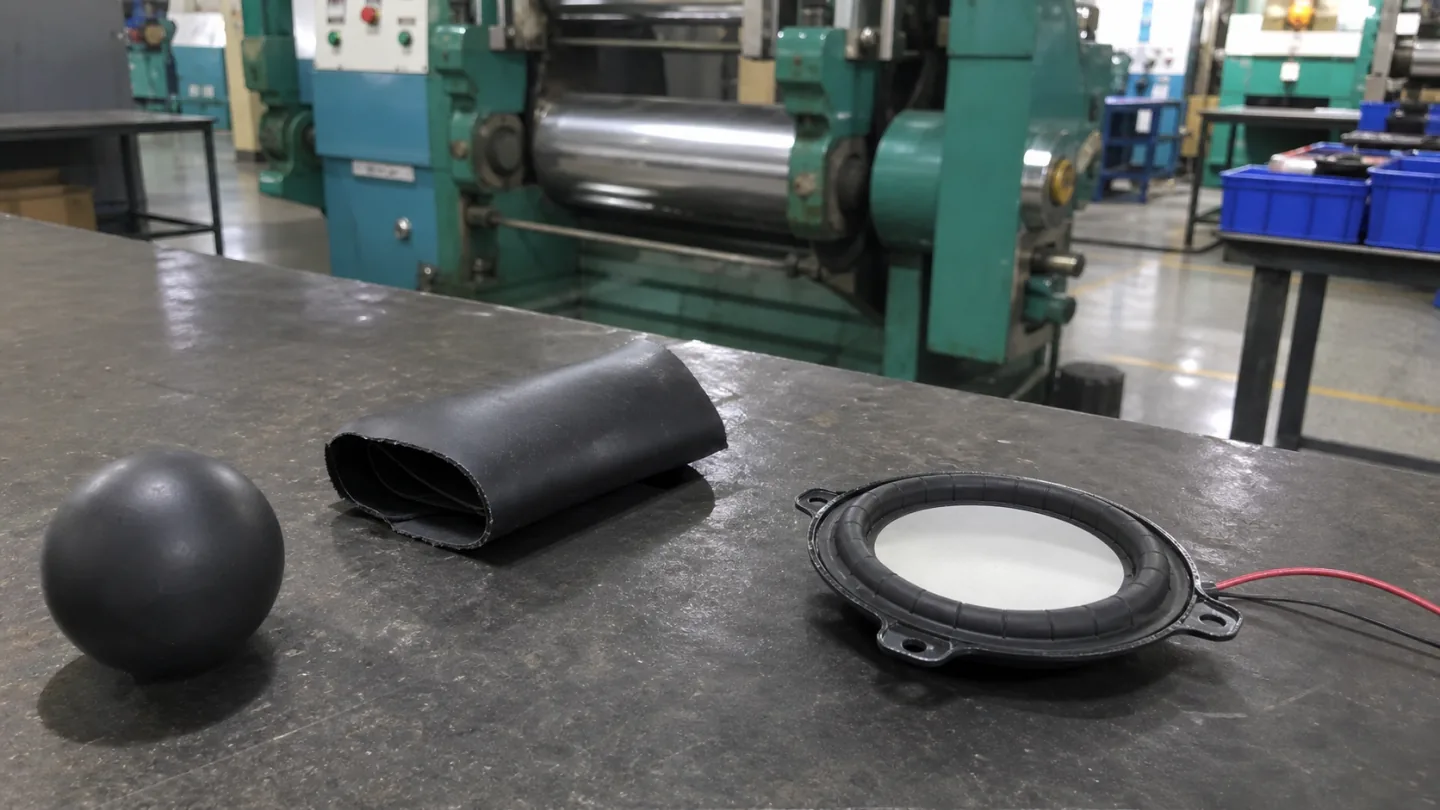
A design engineer sent us a drawing last spring for a 6.5" mid-bass surround, with a note on it: compound: BR or equivalent, high resilience. Sound reasoning on paper — the driver needed long, fast excursion, and BR is the highest-rebound rubber in general use. We asked one question back: what do you want the surround to do with the energy that reaches the rim? The drawing came back the next week specifying butyl.
That exchange is this whole article. BR (butadiene rubber) is an outstanding material that is wrong for speaker surrounds, and it is wrong for the same reason it is right for a tyre tread: it gives energy back instead of eating it.
What BR is actually great at
Polybutadiene is a pure hydrocarbon chain — carbon and hydrogen, nothing else. Three properties fall out of that simplicity, and all three are class-leading.
Rebound resilience. BR returns more of the energy you put into it than any other general-purpose rubber. A ball of it dropped on concrete comes back up like it resents gravity — hence golf ball cores, hence lively running shoe outsoles.
Glass transition. BR's Tg sits far below every other common rubber, deep into the region where NBR has long since gone stiff and glassy. A BR part stays springy where most elastomers behave like a hockey puck.
Abrasion resistance and low heat build-up. Under repeated flexing it generates less internal heat than its peers, and it wears slowly. Add the resilience and you have the workhorse of tyre treads and sidewalls.
All real advantages. None of them is what a surround needs.
Why a surround never gets moulded in BR
Three separate problems, and they stack.
It is almost never used alone. Uncured BR has poor green strength — a sheet can tear under its own handling — and it processes badly on the mill and out of the mould. In practice BR is a blend component, mixed into NR or SBR to lend resilience to a compound that supplies the backbone. A surround is a thin, precisely profiled roll that has to demould cleanly and hold its geometry. That is not a job you hand to the weakest link in the compound cabinet.
Its weathering is poor. That hydrocarbon backbone is loaded with double bonds, and double bonds are what ozone and UV attack. BR needs heavy carbon black loading plus antiozonants just to survive outdoors — while surrounds live for decades in sunlit rooms, hot car doors and humid garages. Butyl and EPDM shrug that off without chemical help; it is in their backbone chemistry. See butyl vs EPDM surrounds.
And the one that ends the conversation: BR's damping is low. A cone is not a rigid piston. Drive it hard and the outer edge develops its own modes — waves running around the rim that arrive at your ear as smear. The surround is where those waves are supposed to die. High damping converts that energy into heat and the resonance stops. High rebound stores it and hands it back to the cone. BR's headline property is exactly the property a surround must not have. You would be moulding the rim of the driver out of a trampoline.
The three-way comparison, on surround terms
| BR (butadiene) | IIR (butyl) | EPDM | |
|---|---|---|---|
| Internal damping | Very low — highest rebound in class | Excellent — the surround benchmark | Moderate |
| Edge-resonance control | Poor — returns energy to the cone | Excellent | Good |
| Ozone / UV / weathering | Poor without heavy protection | Excellent | Excellent |
| Air retention (sealed box) | Moderate | Excellent | Good |
| Cold flexibility | Outstanding — lowest Tg of the three | Good | Good |
| Usable on its own | No — blend component only | Yes | Yes |
| Where it belongs | Tyre treads, golf ball cores, shoe soles | Speaker surrounds, sealed boxes | Outdoor / marine / automotive drivers |
So what should your driver actually use?
Work backwards from the failure you want to avoid.
- Cleanest bass, sealed enclosure, indoor life → butyl (IIR). Highest damping, lowest air permeability, ages for decades.
- Outdoor, marine, car door, anything that sees weather → EPDM. Trades a little damping for the best environmental resistance.
- Oil, fuel or solvent contact near the part → NBR.
- Maximum efficiency, minimum moving mass, vintage-correct rebuilds → foam. Lighter and more compliant, with a rot clock attached — the trade is laid out in rubber vs foam surrounds.
- Cost-driven, undemanding, indoor → SBR.
If you are earlier than that in the decision, start with choosing a speaker surround material.
Damping is not a datasheet line you can trust across a production run, which is why the F0 resonance tester matters more here than any spec table: it tells you whether unit 500 sits on the same resonance as unit 1. Roll geometry goes on the 2D optical measurement system — a profile 0.2 mm off design is a different spring. Both sit inside incoming, in-process and outgoing inspection. Bring us a target response and our OEM/ODM team works back from it to a compound — and it will not be BR.
FAQ
Can BR be used for speaker surrounds at all?
Not sensibly. Poor green strength and difficult processing mean it is blended into NR or SBR rather than moulded on its own, its ozone and UV resistance is weak without heavy protective loading, and its damping is the lowest of any general-purpose rubber. A surround needs high damping. BR's defining strength is the opposite of the requirement.
What is BR actually best at?
Rebound resilience, a very low glass transition temperature, abrasion resistance and low heat build-up under flexing. That combination is why it goes into tyre treads and sidewalls, golf ball cores and athletic outsoles, and why it toughens rigid plastics as an impact modifier.
If BR has the lowest Tg, is it right for very cold environments?
For a bulk part that only needs to stay flexible, it is a strong candidate. For a surround, no — cold flex is one requirement among several, and BR fails the damping and weathering ones outright. Butyl already stays flexible well below freezing, which covers unheated rooms, garages and car doors. Flag an extreme sustained-cold spec at design stage and the butyl compound can be tuned for it.
Why is BR everywhere in tyres but nowhere in speakers?
A tyre wants to give energy back — that is rolling efficiency, and returned energy is fuel you do not burn. A surround wants to absorb energy, because returned energy is edge resonance you can hear. Same property, opposite sign. The material did not change; the job did.