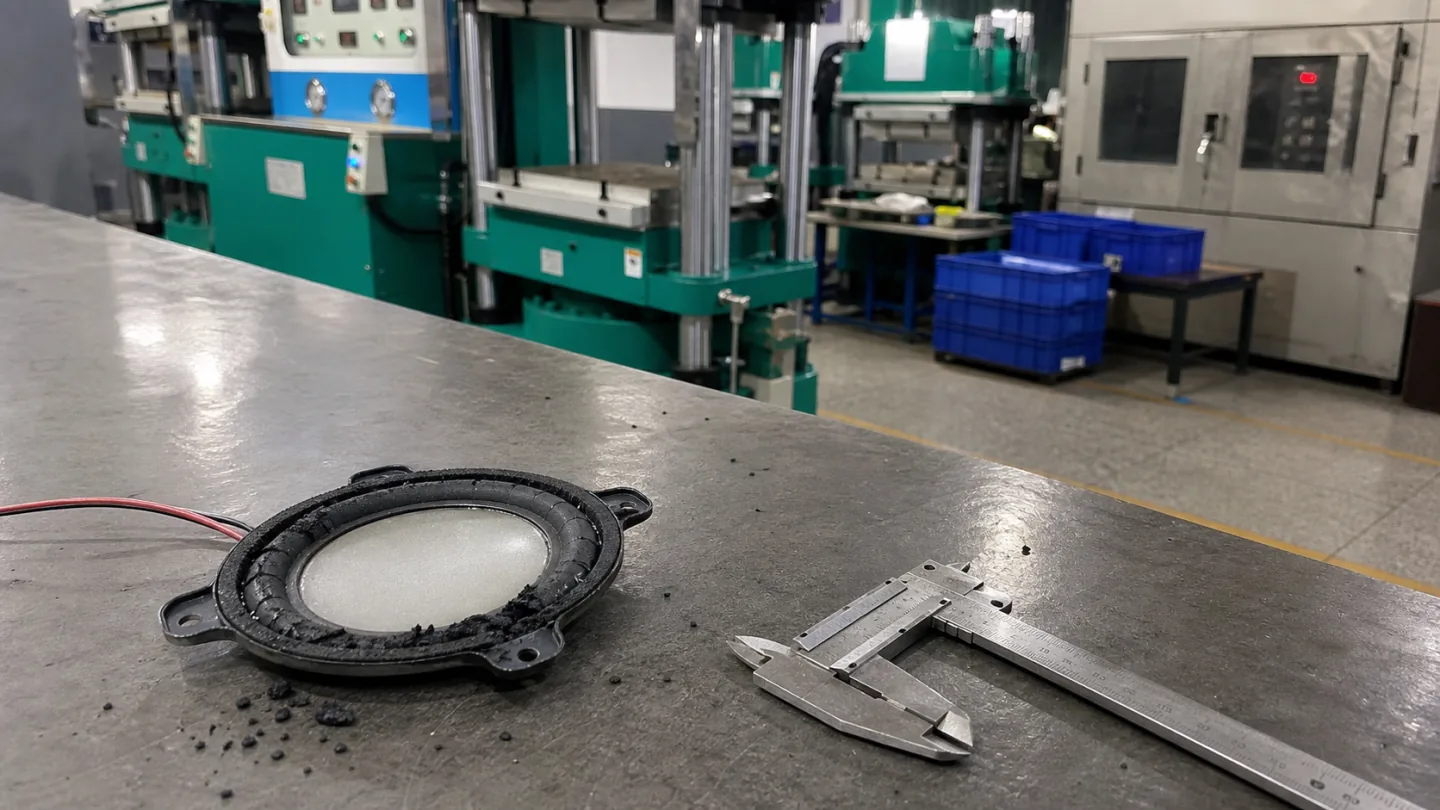
You press a finger against the edge of a woofer that has sat in a cupboard since 2009, and the surround gives way like wet paper. Black crumbs on your fingertip. Cone, coil, magnet — all fine. Only the ring failed. The short answer: foam surrounds are polyurethane, and the common polyester-based type (AU) is chemically attacked by water, so humid air breaks it apart from the inside over years. Polyether-based PU (EU) resists that same attack, and rubber surrounds — butyl, EPDM — have no vulnerable bond to attack at all. That single difference explains most of what people call "speaker rot".
The bond that lets water in
Polyurethane is a family, not one material. What varies is the soft segment — the flexible backbone between the rigid bits. In polyester PU it is built from ester linkages; in polyether PU, from ether linkages.
That is the whole story. An ester bond is reversible in the presence of water: given moisture, warmth, and time, it splits back into an acid and an alcohol. This is hydrolysis, and it is not surface corrosion — it is the polymer chain shortening throughout the bulk of the material. Long chains give foam its stretch and cohesion. As they cut themselves into shorter pieces, the foam stops being elastic and starts being powder. It does not tear or perish visibly from the outside first; it simply loses the ability to hold itself together, and one day your finger goes through it.
The ether bond has no such trick. Water does not cleave it. That is why a same-looking grey ring can survive far longer in the same room — the chemistry underneath is different, and nothing on the outside tells you so.
Why the timeline is so unpredictable
Owners compare notes and get confused: one pair crumbles at six years, an identical model in another house is fine at twenty. Neither owner is lying. Hydrolysis is a reaction, and reactions obey conditions.
- Humidity is the reagent. A coastal flat, a basement, an unheated garage — a continuous supply of what the reaction needs. Dry inland air starves it.
- Temperature is the accelerator. Warm and damp together is far worse than either alone; a speaker in a sunlit room or sat on an amplifier lives hotter than its twin on a cool shelf.
- Pollutants and UV pile on, opening degradation paths that run alongside hydrolysis rather than instead of it.
- Storage beats use. Speakers played regularly in a dry living room routinely outlive identical ones boxed in a damp loft. The reaction does not care whether you are listening.
So "how long does foam last" has no honest number attached to it. The direction is what can be said: polyester PU in warm damp air is on a clock, polyether PU is on a much slower one, and rubber is not really on that clock at all.
PU vs PU vs rubber
| Property | Polyester PU (AU) foam | Polyether PU (EU) foam | Rubber (butyl / EPDM) |
|---|---|---|---|
| Hydrolysis resistance | Poor — ester bond cleaves in moist air | Good — ether bond is not attacked by water | Not applicable — no hydrolysable bond |
| Typical failure mode | Crumbles to powder from within | Slow stiffening, eventual cracking | Outlives the rest of the driver |
| Damp / coastal service | Worst case | Workable | Best (EPDM for weather and ozone) |
| Mass | Very light | Very light | Heavier |
| Compliance | High | High | Firmer, more damped |
| Mechanical strength | Higher (the reason it gets specified) | Slightly lower | High |
Note the last row — it explains why anyone chose the vulnerable one. Polyester PU is not a mistake or a cost-cut; it is genuinely tougher, and in a dry application it is the better engineering answer. Speaker surrounds just happen to be where "sits in room air for two decades" outranks every other requirement.
Foam is not the villain
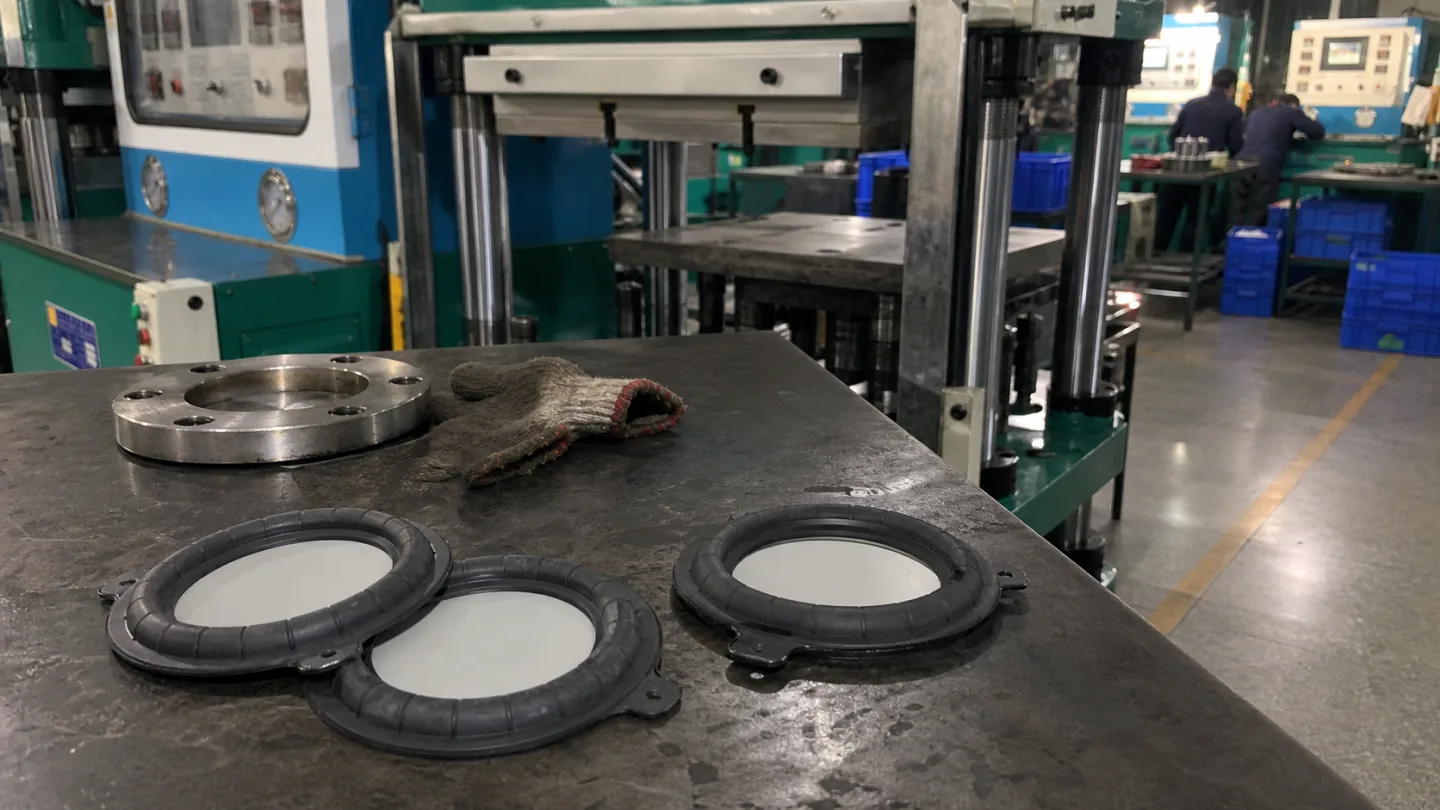
It would be easy to read all this as "foam bad, rubber good", and that is wrong. Foam surrounds are extremely light and very compliant — exactly what a high-excursion driver wants: low moving mass, a cone free to travel. We make foaming-rubber surrounds from 2" to 18" for that reason. On a vintage restoration, matching the original foam spec is the correct call, not a compromise. It is a trade, not a hierarchy; the full version is in rubber vs foam surrounds.
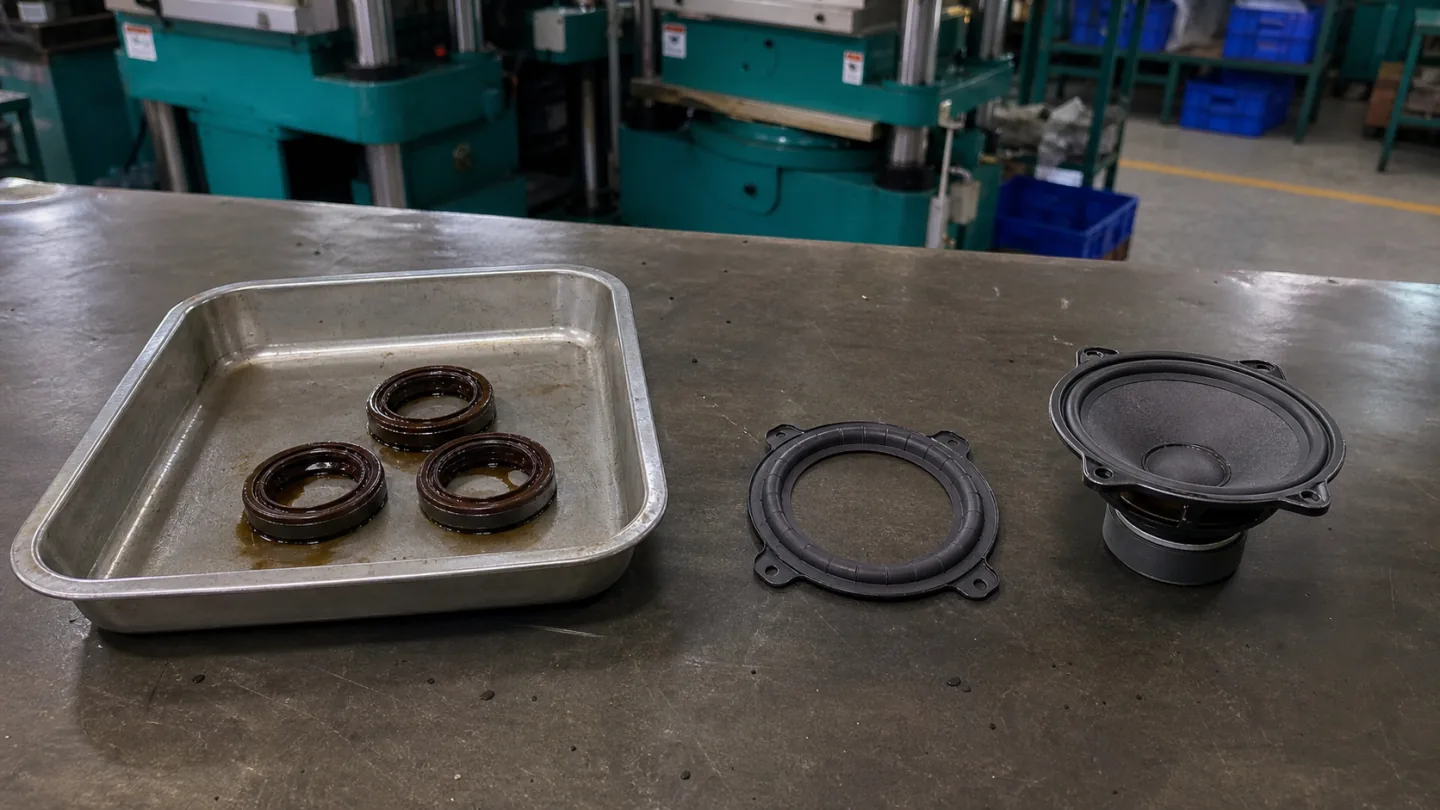
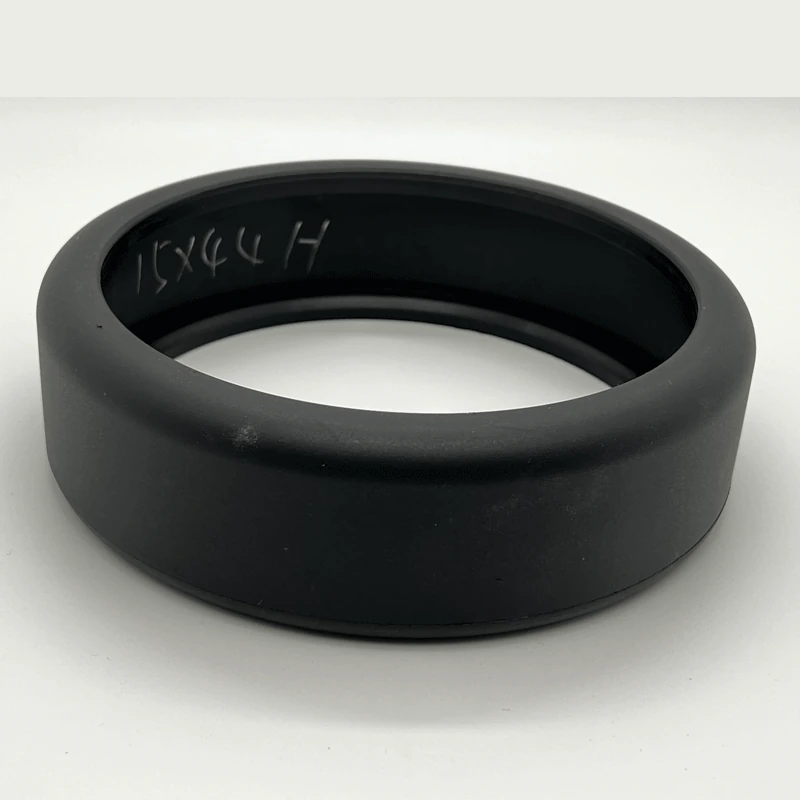
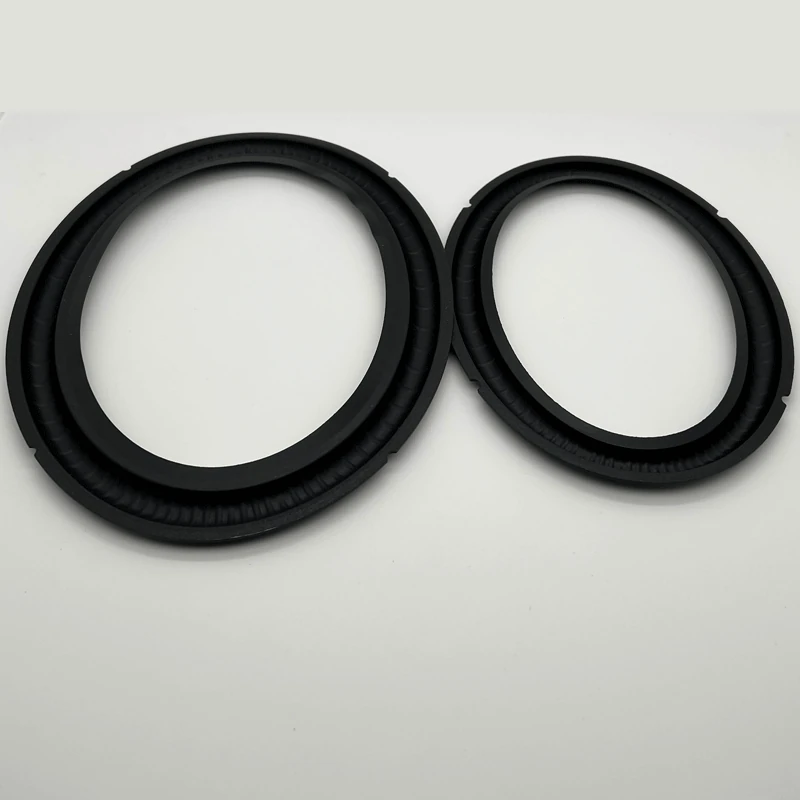
What foam does not do is age quietly. Rubber does. Butyl has high internal damping and no bond for water to break; EPDM adds weather and ozone resistance for outdoor and marine work. Neither has a hydrolysis clock ticking behind the cone.
How ageing gets tested rather than guessed
Nobody sensible ships a compound and waits fifteen years to find out. Ageing is forced. A constant temperature and humidity chamber supplies exactly the two things hydrolysis needs, at levels a living room never reaches, so a compound shows its behaviour in weeks instead of decades. UV aging and an outdoor weathering rack cover the sunlight and real-atmosphere paths. Tensile and Shore A hardness before and after say what the exposure cost — a compound that has lost its stretch has told you something specific, not just "looks tired". That, plus three-stage inspection, is the difference between a specified surround and a hopeful one.
Diagnosing a driver right now? Start with whether the surround is actually the failure — plenty of buzzes are not. If it is, re-foaming at home is a two-hour job. Replacements come in both directions: foam surrounds when you want the original compliance back, butyl surrounds when you would rather not do this again in fifteen years. If you are specifying parts rather than fixing a pair, our OEM/ODM team matches compound and roll profile to the driver and the environment it will actually live in.
FAQ
Why did my speaker surround turn to black dust?
Almost certainly polyester-based polyurethane foam that has hydrolysed. Moisture in the air slowly cleaves the ester bonds in the polymer chain, shortening the chains until the foam can no longer hold together. It fails from within, which is why it powders instead of tearing.
Why did one pair of speakers rot in five years and another last twenty?
Two reasons, usually. The foam chemistry may differ — polyether PU resists hydrolysis far better than polyester PU, and you cannot tell them apart by looking. And conditions differ: warm, humid storage accelerates the reaction dramatically, while cool dry air slows it down.
Can a rotted surround be repaired, or does it have to be replaced?
Replaced. Hydrolysis has already broken the polymer chains throughout the material — there is nothing left to glue back together, and a patch just fails next to the patch. The expensive parts (cone, coil, magnet) are usually untouched, so a new surround restores the driver.
Will a rubber surround stop this happening again?
For the hydrolysis mechanism, yes — butyl and EPDM have no ester bond for water to attack, and EPDM adds ozone and weather resistance. The trade is a slightly heavier, firmer, better-damped surround: fine for most woofers, though it may shift the response of a design tuned tightly around foam compliance.