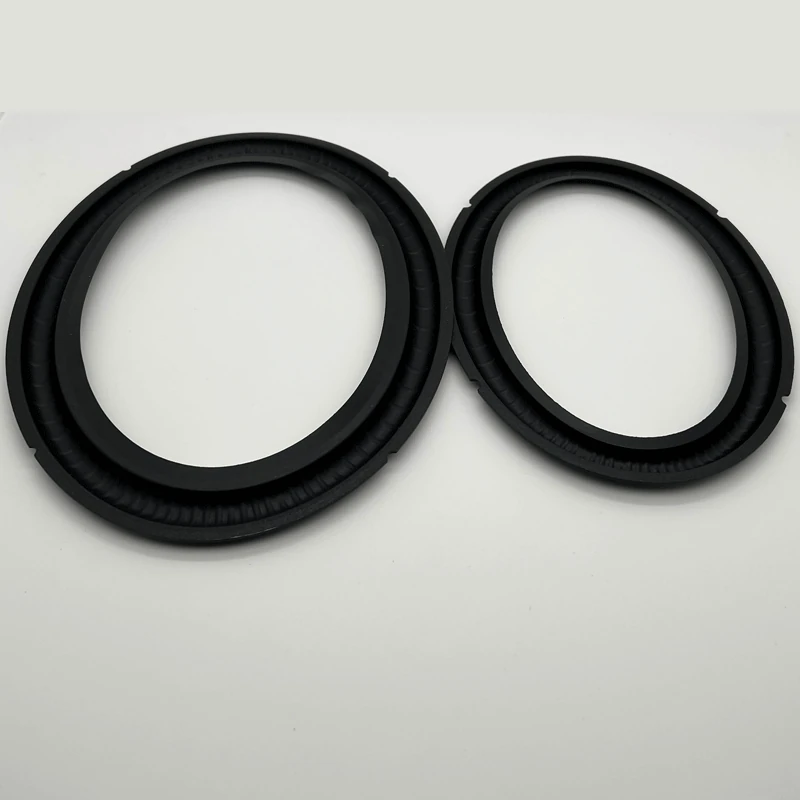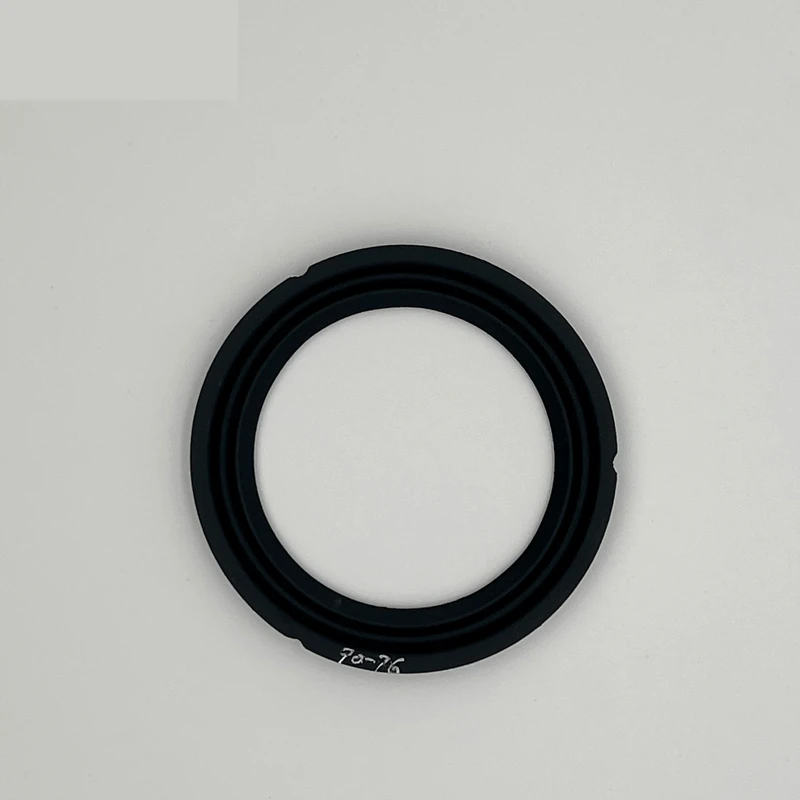
The old bookshelf speaker in the corner had been getting quieter for a year, though I kept telling myself it was the room. Then one rainy evening I put on a record I knew by heart, and the bass simply wasn't there — not softer, just absent, as if someone had reached in and turned the bottom of the music off. I pressed a fingertip to the edge of the cone, and where there should have been a firm, springy little ring, there was something crumbly and tired. That ring is the surround. And when it goes, the speaker doesn't break so much as lose its voice.
Most people never learn the word. The surround is the flexible band — rubber or foam — that joins the moving cone to the rigid metal frame. It is not glamorous. It has no wattage, no gold connector, nothing to put on a box. But it is the hinge the whole voice swings on, and I only understood that properly the first time I stood at a factory bench with one in my hand.
The part that lets a speaker breathe
A cone doesn't push air by magic. It moves — in and out, thousands of times a second — and something has to let it move freely while pulling it dead-centre every single time. That is the surround's whole job. Together with the spider behind the cone, it sets the driver's compliance: how easily the cone travels. Change the surround and you change the speaker's free-air resonance, its F0 — the low note where the whole moving system wants to sing. Too stiff and the bass goes tight and shy. Too loose and it flaps and distorts. The music you feel in your chest lives inside a few millimetres of rubber deciding how far the cone is allowed to go.
That was the thing that stayed with me. On the bench there was a small instrument that plays a driver a sweeping tone and reads back its F0 — an acoustic test most rubber shops don't own. Two surrounds can look identical and measure differently, and you can hear it: one driver lands its resonance where the designer wanted, the other sits a few hertz off and sounds subtly wrong in a way you can't name. Nobody in a living room will ever see the surround. They will only ever hear it.
Not every rubber sounds the same
The material is a voice of its own. A softer foam surround lets the cone travel further for the same power, which is why high-excursion subs and a lot of vintage drivers used it — light, open, generous in the low end. A firmer rubber surround holds the cone more honestly; butyl in particular has high internal damping, which quietly swallows the little edge resonances that read as harshness. It isn't that one is better. It's that each has a temperament.
| Surround | Character | At home in |
|---|---|---|
| Foam | Light, compliant, open low end | High-excursion subs, vintage drivers |
| IIR (butyl) | High damping, clean and controlled | Premium woofers, low-distortion designs |
| EPDM | Weather- and ozone-resistant | Outdoor and marine speakers |
| NBR / SBR | Durable, cost-effective, all-round | Everyday drivers, repair batches |
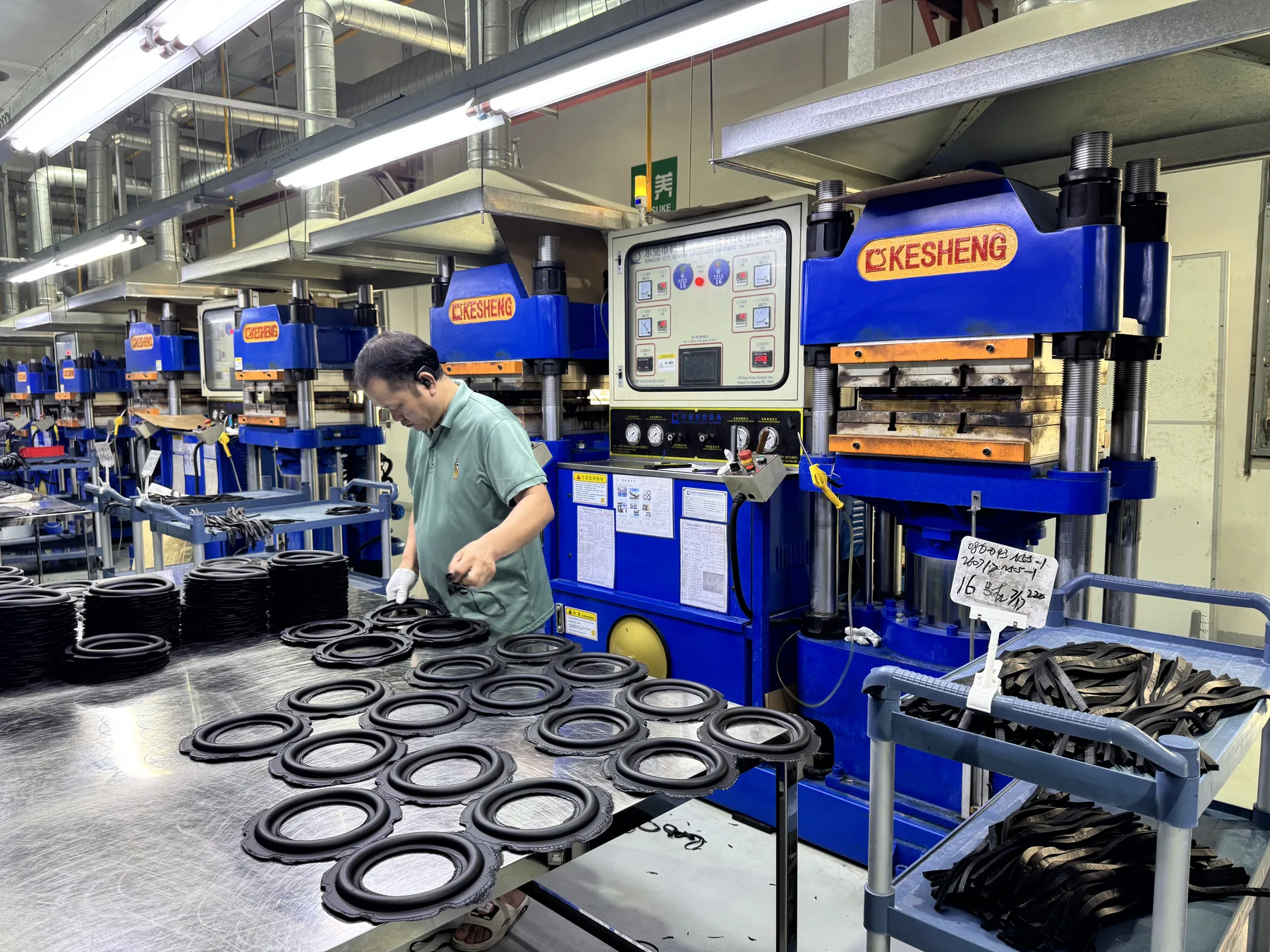
Sizes run from little 2-inch mid-bass rings up to 18-inch woofer edges, and the honest ones are moulded, not stamped from sheet — the roll of the surround, its exact thickness, the width of that little half-round profile, all of it is shaped on purpose because all of it ends up in the sound.
Why they die, and why that's good news
Foam is the one that breaks your heart. Give it a decade or so and it dries, cracks and crumbles to grey dust — the classic rot that takes out a whole generation of otherwise-perfect speakers. Rubber lasts far longer; a good compound shrugs off UV, ozone and humidity and usually outlives the rest of the driver. But here is the kind part: the expensive things underneath — the magnet, the voice coil, the cone — are almost always fine. What died is the cheapest part in the whole speaker. A five-dollar ring of rubber is often all that stands between a silent box and a speaker that plays like it did the day it was made.
I found that out the good way. I peeled the tired surround off my bookshelf driver, cleaned the rim, and set a new rubber one in its place — the trade-offs of which material to pick are laid out plainly in our rubber vs foam surrounds guide, and if you want to try it yourself, re-foaming a woofer at home walks the whole nervous job start to finish. The next morning I cued the same record. The bass came back — not reduced, back — with a body I'd forgotten those speakers had.
What the spec sheet leaves out
We are trained to buy speakers by numbers: watts, frequency range, driver count. None of those numbers is the surround, and yet the surround is where a good half of the feeling comes from. It doesn't make the music louder or the battery last longer. It just holds the cone, patiently, a few thousand times a second, so the thing can sing at all. There's a whole quiet craft in getting a ring of rubber exactly right — the compounding, the moulding, the three passes of inspection, the F0 tester most people will never hear about — and none of it shows. It's only ever felt.
So if a speaker you love has gone thin and tired, don't be so quick to replace the whole thing. Kneel down, press the edge, and listen to what it's telling you. If you're building or repairing a line and need surrounds cut to a driver instead of a catalogue, that's what our components page and custom service are for. A speaker doesn't ask for much. Sometimes it just wants its voice back.
FAQ
What is a speaker surround and why does it matter so much?
It's the flexible ring — rubber or foam — that joins the cone to the frame. With the spider, it sets the driver's compliance and its low-frequency resonance (F0), so it directly shapes how tight, deep and clean the bass sounds, even though you never see it.
Why do old speakers lose their bass or go quiet?
Usually the surround has aged. Foam surrounds dry out and crumble after a decade or so; a rotted or hardened surround stops controlling the cone properly, so the low end goes thin or distorted. The parts underneath are usually still fine.
Should I replace a foam surround with rubber?
Often, yes. Rubber resists UV, ozone and humidity and lasts far longer than foam, so it won't rot on you again in fifteen years. Foam keeps a vintage driver's original feel and higher compliance — the full trade-offs are in our rubber vs foam surrounds guide.
Does the surround material really change the sound?
Yes. Foam is light and compliant for open, high-excursion bass; butyl (IIR) damps edge resonances for cleaner, lower-distortion output; EPDM handles weather for outdoor use. The right choice depends on the driver, the environment and the target sound.