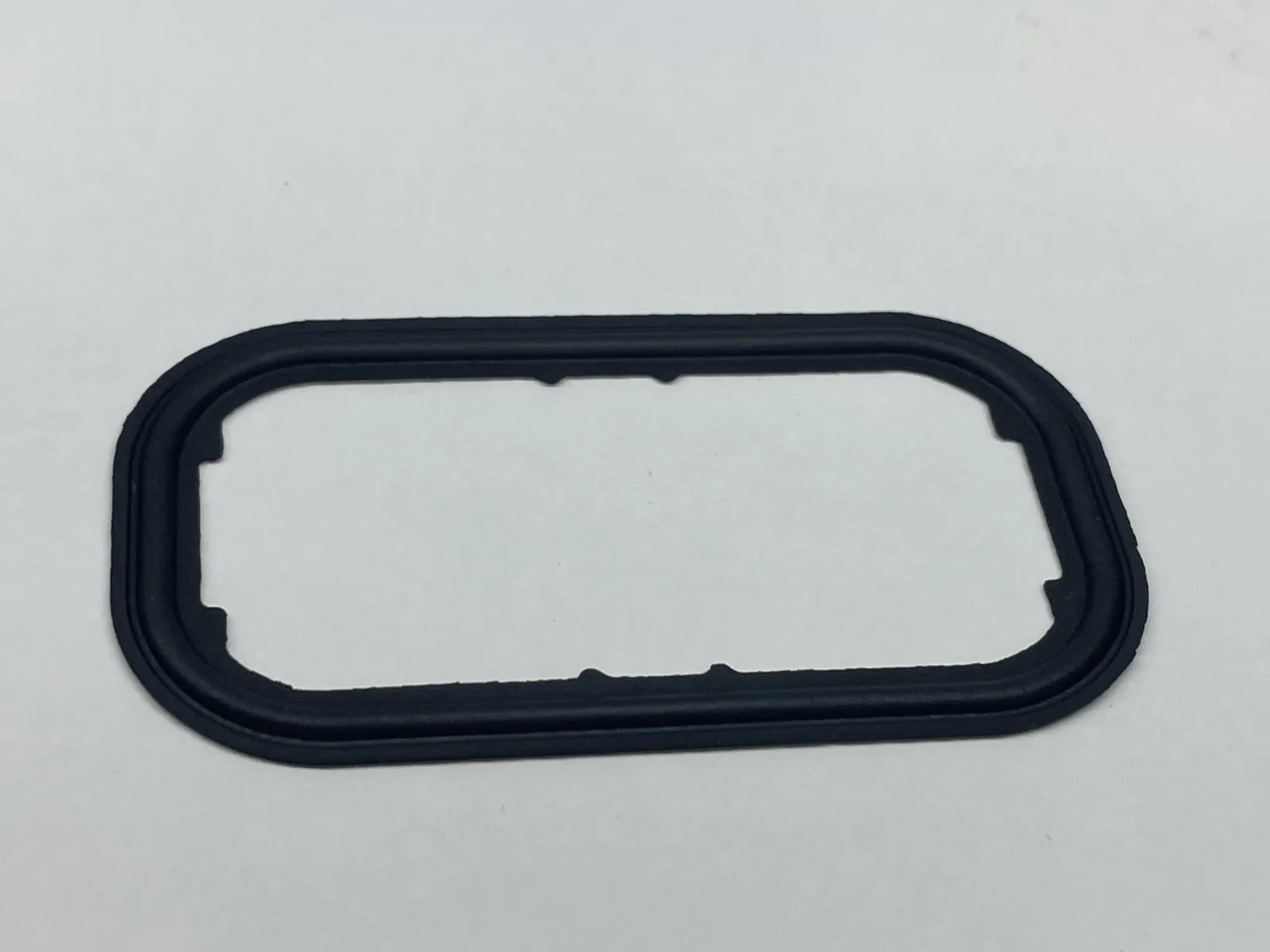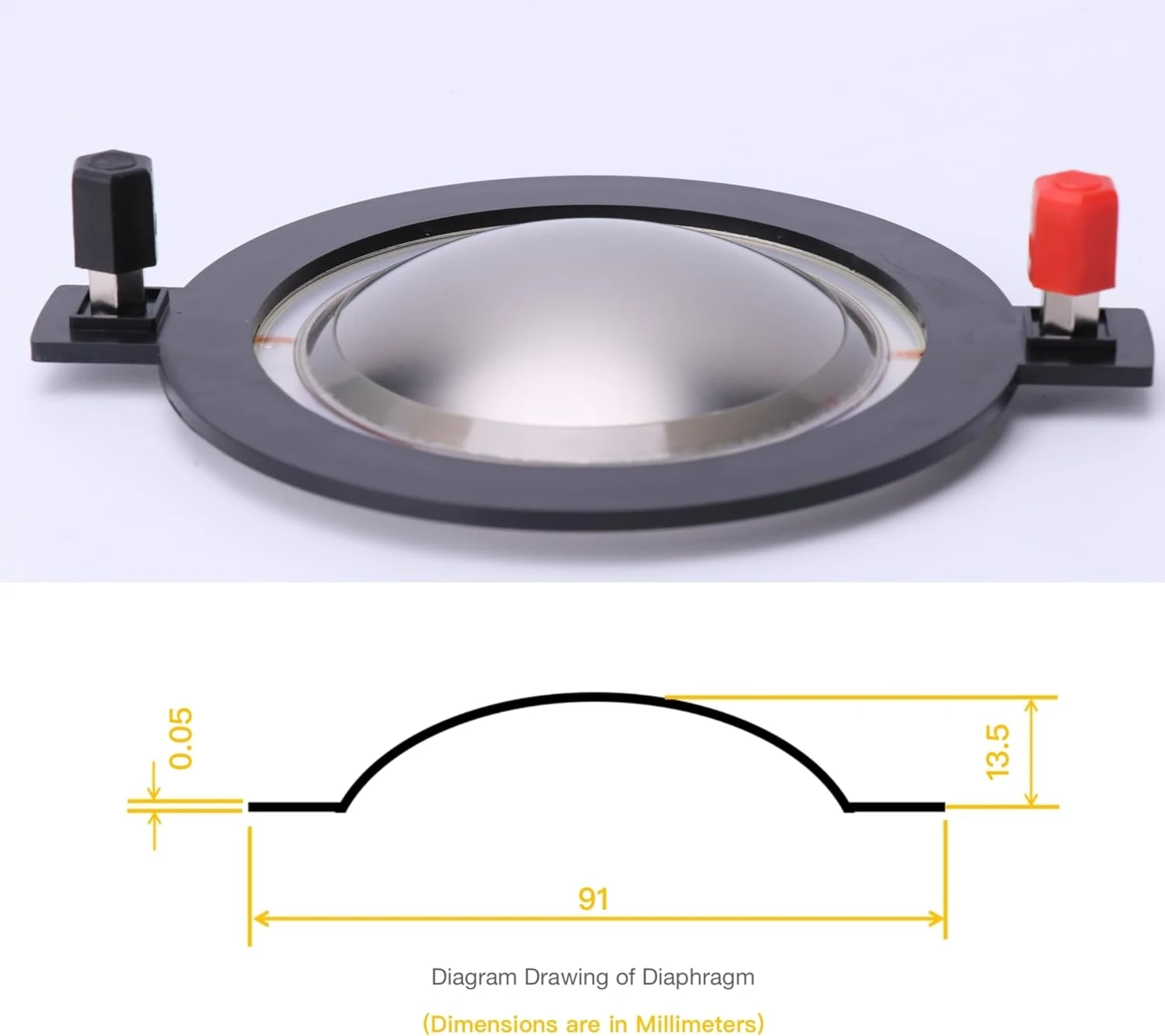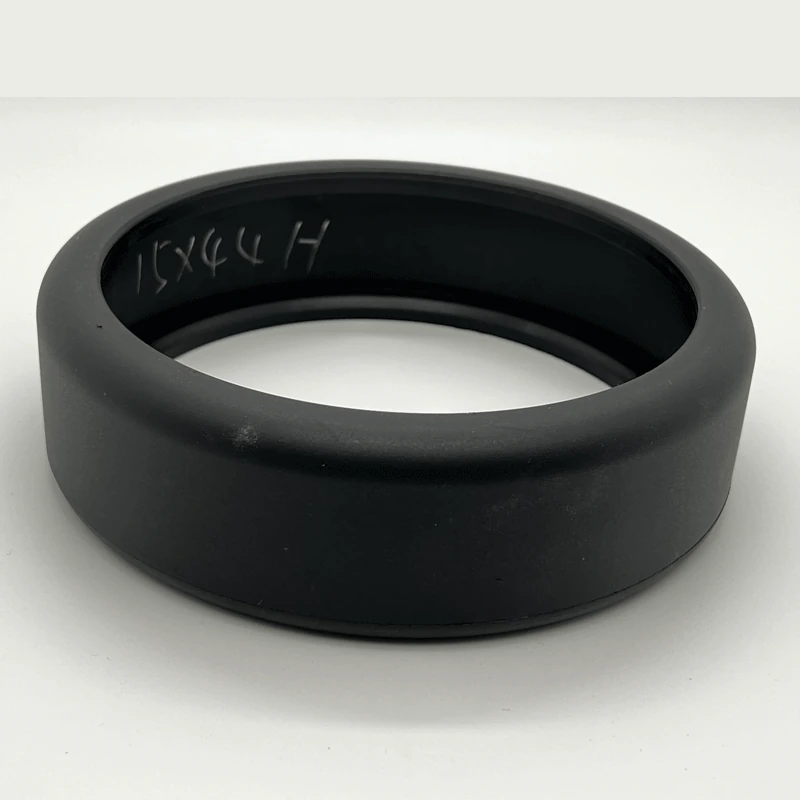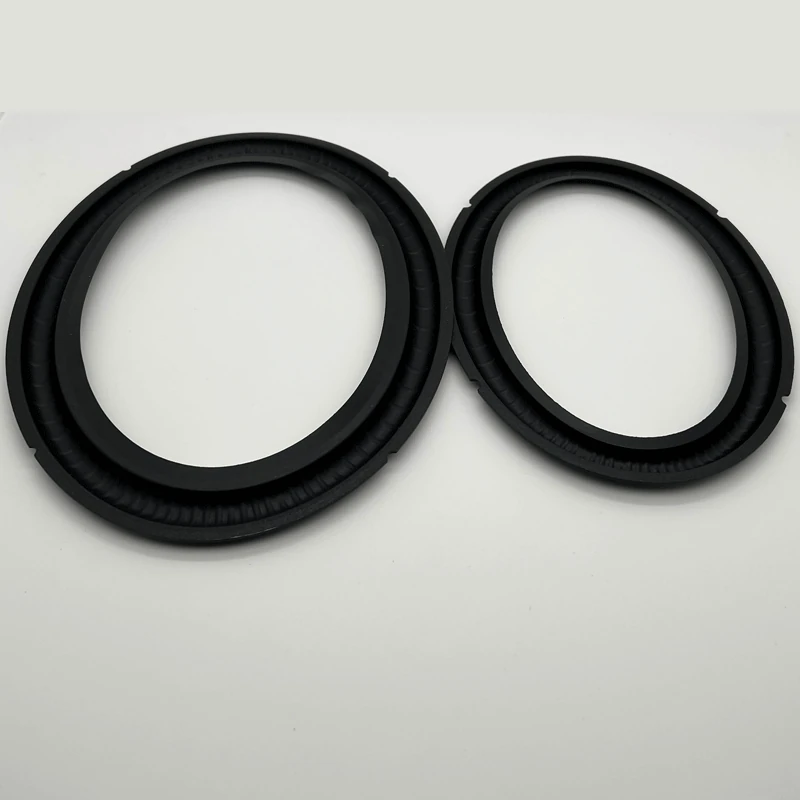
An engineer once sent us a spec sheet that read, in full: "surround, 8 inch, rubber, black." Three words and a color. We wrote back with eleven questions before we could quote it. That exchange is normal — most people who buy surrounds buy them rarely, and the spec sheet a driver actually needs looks nothing like the size printed on the woofer's frame.
A surround is a small part with an outsized job: it centers the cone, seals the enclosure, and sets how far and how cleanly that cone can move. Get one spec wrong and you don't get a slightly worse speaker — you get a rubbing voice coil, a soft low end, or a part that simply won't seat. Here's what each spec on the sheet actually controls, and how to write it so a quote comes back matching what you drew.
Nominal size is marketing, cone diameter is the spec
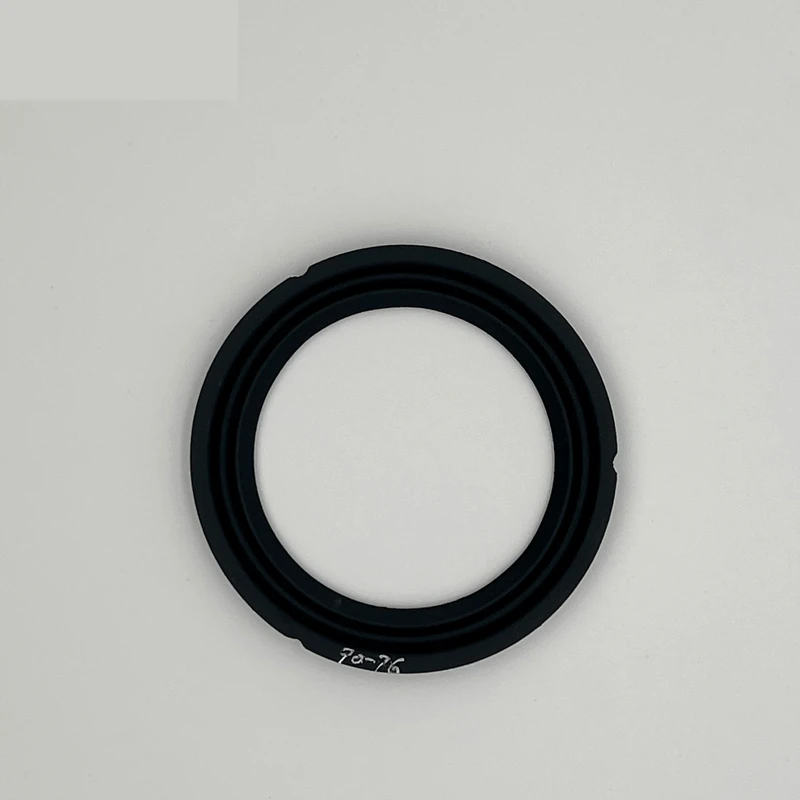
"10-inch woofer" describes the basket, not the part you're ordering. The number that matters is the cone's outer diameter — measured where the surround's inner edge meets the cone — and it's routinely an inch or more smaller than the nominal size on the box. Surrounds are produced across a 2" to 18" diameter range, and every quote should start from the measured cone diameter, not the catalog name of the driver.
The specs, at a glance
| Spec | What it controls | How to specify it |
|---|---|---|
| Diameter | Fit to the cone and basket; whether the part seats at all | Measured cone OD, not the driver's nominal/marketed size (2"–18" range) |
| Roll width | Available linear travel — how far the cone can move before the surround runs out of give | Width across the roll, or a physical sample/drawing if matching an existing part |
| Roll profile | The shape of the compliance curve — how stiffness builds through the excursion | Match-to-sample, or state target excursion (Xmax) and let engineering propose a profile |
| Material | Damping, weight, and resistance to heat, UV and humidity | Name the compound (NBR, SBR, IIR/butyl, EPDM, foam) or describe the environment (outdoor, marine, indoor consumer) |
| Shore A hardness | Stiffness and damping precision within a material family | A hardness value or range, verified on a Shore A durometer against your sample |
| Thickness | Moving mass added to the cone, and long-term durability | State thickness directly, or leave it open and specify only the target moving mass |
Roll width and profile: the part everyone skips
Diameter gets all the attention because it's easy to measure. Roll width and profile are why two surrounds of the identical diameter can behave nothing alike. Width is simply how much rubber or foam is folded into the roll — more width means more travel before the material runs out of stretch, which is what lets a subwoofer hit a deep Xmax without the surround bottoming out or tearing at the fold.
Profile is the shape of that fold — a shallow half-roll versus a deeper roll — and it changes how stiffness builds as the cone moves: linear and predictable, or progressively firmer near the limit. Neither is right or wrong on its own; it has to match what the motor and spider were designed around. If you're replacing an existing part, the fastest route to a correct match is sending the old surround, or a section of it, rather than describing the curve in words.
Material and Shore A hardness
Material sets the baseline: NBR and SBR are the economical general-purpose choices, IIR (butyl) damps better and holds up under heat, EPDM shrugs off UV, ozone and humidity for outdoor or marine use, and foam trades all of that for very low mass and softer compliance. We also run flame-retardant, light-transmitting and custom-color formulations where the application calls for it.
Shore A hardness is the dial within whichever material you pick — a few points of durometer either way shifts damping and how the surround resists deforming under load, which matters more on a repeat production order than on a one-off. We test every batch against target hardness as part of incoming, in-process and outgoing QC, alongside tensile, salt-spray, UV-aging and constant-temperature-humidity testing, and every acoustic part gets checked for resonance consistency on an F0 tester and profiled on 2D optical measurement equipment. Read more on how compound choice plays out in practice in our guide to choosing surround material, or see rubber against foam head to head in rubber vs foam surrounds.
Thickness: the spec buyers forget to ask about
Thickness is easy to overlook because it doesn't show up on a basic diameter-and-material spec sheet, but it does two things at once: thicker material generally lasts longer and resists tearing at the fold, while also adding mass to the part of the driver that has to move freely. For a replacement job matching an original part, thickness usually gets inherited from the sample. For a new design, it's worth stating explicitly rather than leaving it to a default.
Putting a spec sheet together
A complete RFQ needs, at minimum: measured cone diameter, roll width, a sample or profile description, material family, target Shore A hardness, and thickness if it's known. Everything else — MOQ, sample lead time, tooling for a non-standard size — depends on how close the request sits to an existing part versus a fully custom one. If you're specifying from scratch rather than matching a replacement, our custom service team will turn a partial spec into a complete one before tooling starts; browse standard diameters and materials on the products page to see where your part likely falls.
FAQ
What size range of surrounds can be made?
2" to 18" in diameter, measured on the cone rather than the driver's nominal size, across rubber, foam and specialty compounds including flame-retardant, light-transmitting and custom-color options.
Do I need to specify Shore A hardness, or can the factory pick it?
If you're matching an existing part, send a sample and hardness gets matched to it. For a new design, stating a target range up front avoids a second sample round — hardness is verified on a Shore A durometer against whatever value is agreed.
Why does roll width matter if the diameter already matches?
Diameter only confirms the part fits the cone and basket. Roll width determines how much linear travel the surround actually allows, so two parts at the same diameter with different roll widths can support very different excursion before the surround runs out of give.
What happens if I only know the driver's nominal size, not the exact cone diameter?
Measure across the cone where the old surround meets it, or send the original part — nominal driver sizes are marketing figures and are routinely off from the actual cone diameter by an inch or more.