Take the back panel off almost any powered speaker and you'll find more rubber than you expected. Not just the surround flexing around the woofer — a gasket under the driver flange, four soft feet on the base, a grommet where the power cable enters the housing, maybe a foam pad glued behind the port. None of it is glamorous. All of it is the difference between a cabinet that seals and survives five years on a shelf, and one that buzzes, rattles or lets moisture in around the driver mount.
A speaker is mostly an air-sealing problem wearing a design. Every unsealed seam leaks pressure the driver worked to build, and every hard surface touching another is a path for a rattle to travel. That's the job description for the smaller molded parts on this list — done by the same acoustic-rubber factory that makes surrounds, not a different one.
Seals and gaskets: keeping the pressure where it belongs
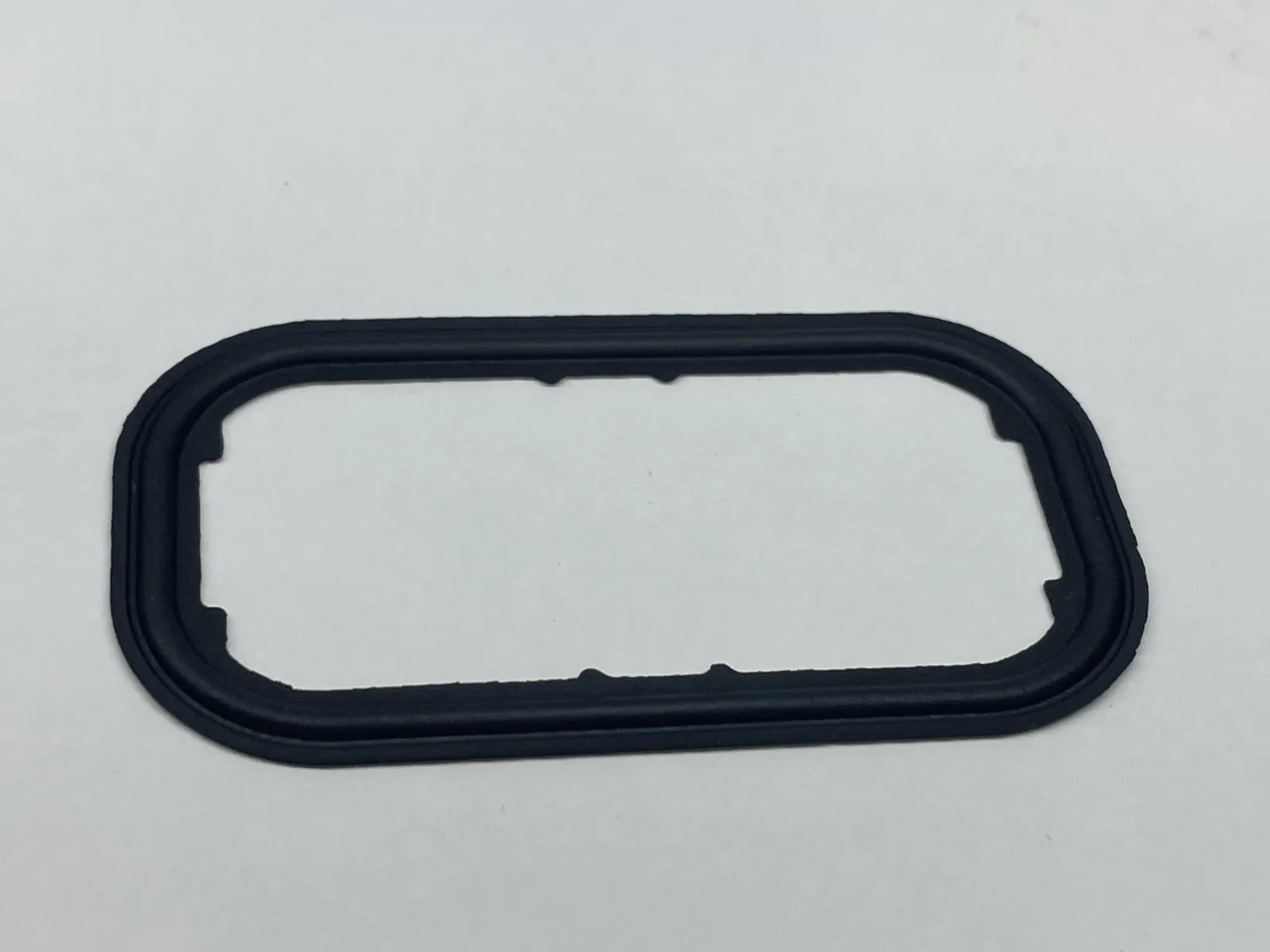
The driver-to-baffle gasket is the one most people never see, compressed between the woofer basket and the cabinet cut-out, doing nothing more exciting than stopping air from sneaking around the mounting flange instead of moving through the cone. Get that seal wrong — too thin, wrong durometer, uneven compression set — and the enclosure's designed tuning leaks away as a soft hiss you can't quite place. The same logic covers weatherproof enclosures for outdoor and marine speakers, where an EPDM gasket is doing double duty against moisture and UV, not just air.
These are compression- or precision-molded to the enclosure's own tolerances, leaning on the same dimensional toolset used for surrounds — two-dimensional optical measurement to hold profile and outer diameter, Shore A hardness testing so compression force stays consistent run to run. A gasket a few points softer or harder than the approved sample will still look fine on a bench and still leak six months into the field.
Die-cut and structural parts: the stuff that isn't round
Not everything inside a speaker cabinet is a ring. Die-cut adhesive parts — foam or rubber pads cut to an outline rather than molded as a circle — show up behind ports, around connector panels, and as damping layers glued to a cabinet wall to kill a resonant frequency the enclosure would otherwise ring at. Structural and damping parts follow the same idea in three dimensions: small molded brackets, spacers and clips that hold a crossover board off the cabinet floor or isolate a tweeter faceplate from the baffle, so vibration from the woofer doesn't couple into the tweeter's mounting.
Unglamorous engineering — but the kind that shows up as a review complaint if it's missing, "sounds a bit boxy" or "buzzes on certain tracks," long before anyone thinks to blame a missing damping pad.
Anti-vibration feet and grommets
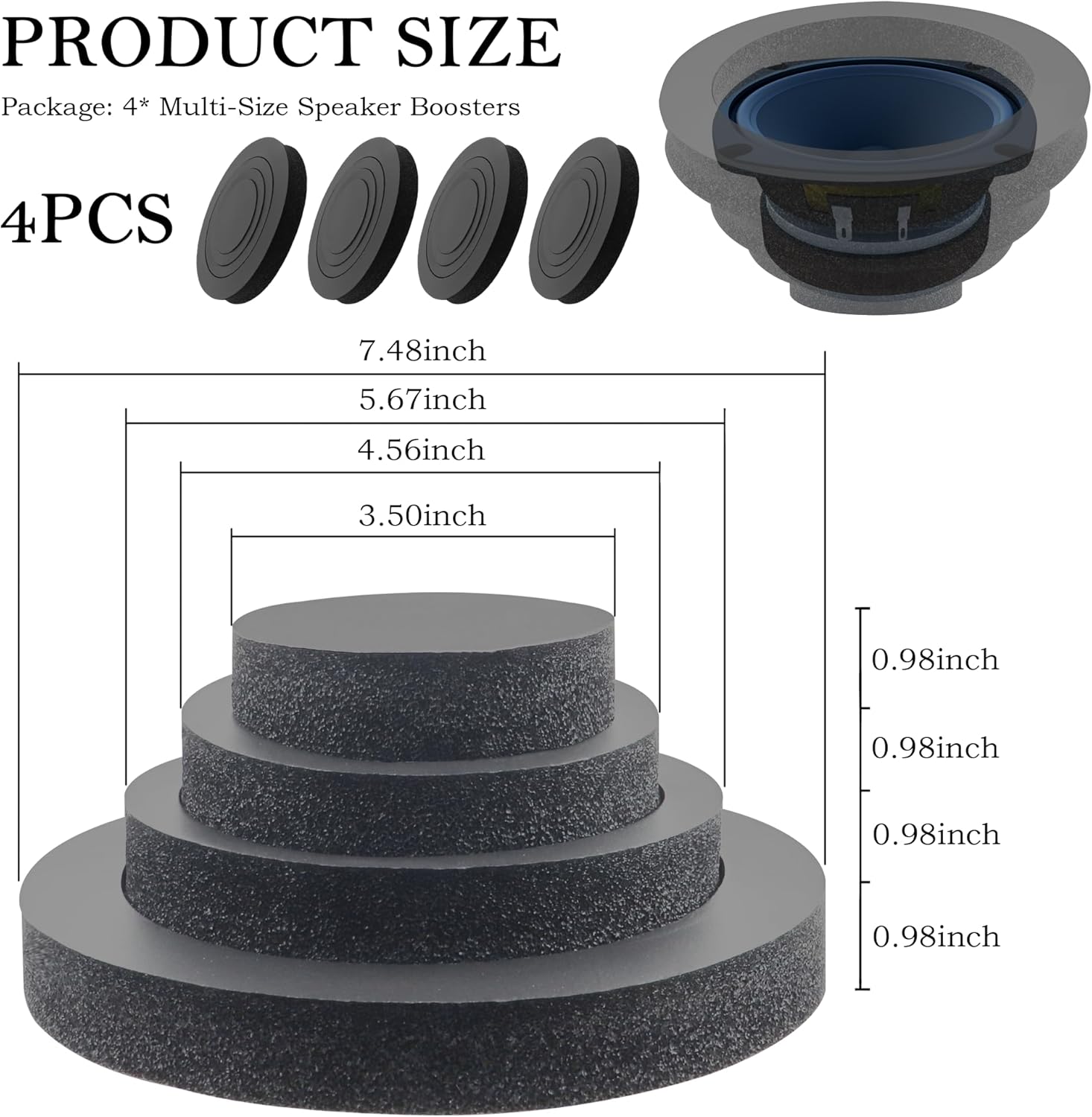
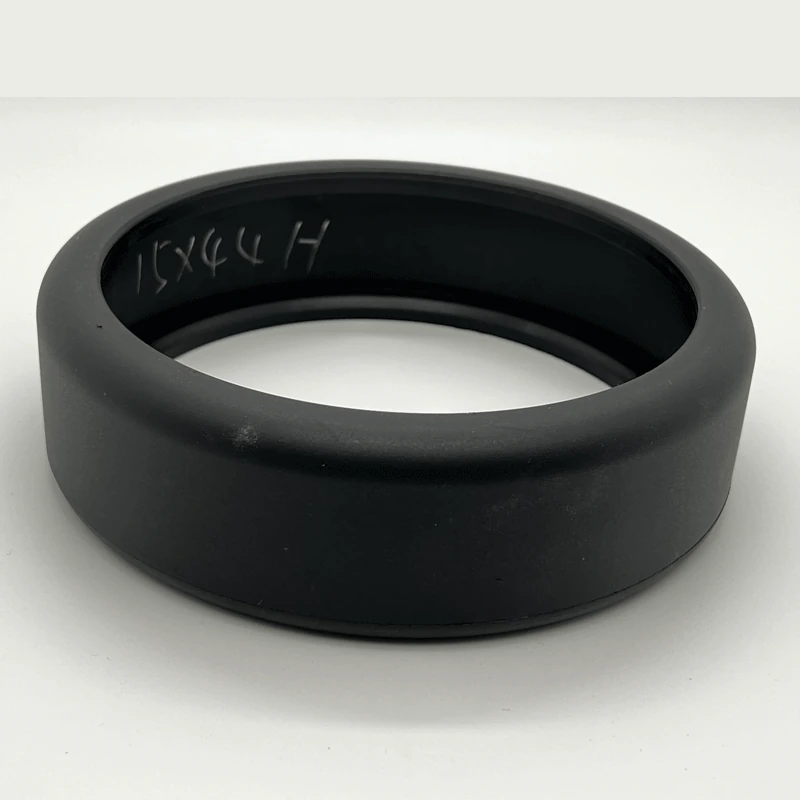
Feet and grommets solve a related but separate problem: getting vibration out of the path between the speaker and whatever it's sitting on, or the cable and whatever hole it passes through. A soft rubber foot under a subwoofer decouples cabinet resonance from a wooden floor, which is the difference between bass you feel in the chest and bass you feel rattling a picture frame on the wall. A grommet at a cable entry does the same isolation job while sealing that one hole in an otherwise weatherproofed housing. Both are ordinary parts on paper and easy to get wrong on Shore hardness — too firm and they don't damp anything, too soft and they compress flat under the cabinet's own weight over time.
Matching color, flame-retardant grade and compound to the part
Not every molded part uses the same compound, and audio brands increasingly want more than "black rubber." Custom color matching lets a foot or grommet disappear into a cabinet finish instead of standing out as an obviously bolted-on part. Flame-retardant compounds matter wherever a part sits near electronics or inside a sealed enclosure with limited airflow. The base compound choice still comes down to the job:
| Compound | Where it earns its place |
|---|---|
| EPDM | Outdoor/marine gaskets, weather and ozone exposure |
| NBR | General-purpose seals, oil/grease resistance near electronics |
| IIR (butyl) | High-damping gaskets and feet, low air leakage |
| SBR | Economical structural and general seals |
| Foam | Lightweight damping pads, die-cut acoustic fill |
Made to spec, not made to look right
Compression molding and precision molding both start from the same discipline: a part that matches the approved sample, batch after batch, not just the first one off the tool. That's a compound question as much as a molding one — the same rubber-mixing lines that supply surround stock also run the batches for seals, feet and structural parts, so hardness and cure are controlled from the raw compound forward, not patched after the fact.
Verification runs incoming, in-process and outgoing, on the same measurement floor across every part type: two-dimensional optical imaging for profile and outer-diameter accuracy, tensile and Shore A hardness testing, salt-spray and UV-aging chambers for anything destined for an outdoor cabinet, and constant temperature-humidity testing for parts that live somewhere hot and damp for a decade — the same rigor applied to F0 resonance testing on surrounds, just aimed at a gasket's compression set instead of a woofer's frequency response.
Speccing a driver-mount gasket, cabinet feet, or a custom-color grommet alongside a surround order? Our custom service team matches compound and durometer to the part instead of defaulting to whatever's on the shelf. Full ranges are on our products page, and the tooling and QC floor behind them is on our factory page. Shopping surrounds only for now — see our rubber vs foam surrounds guide.
FAQ
Do you make more than speaker surrounds?
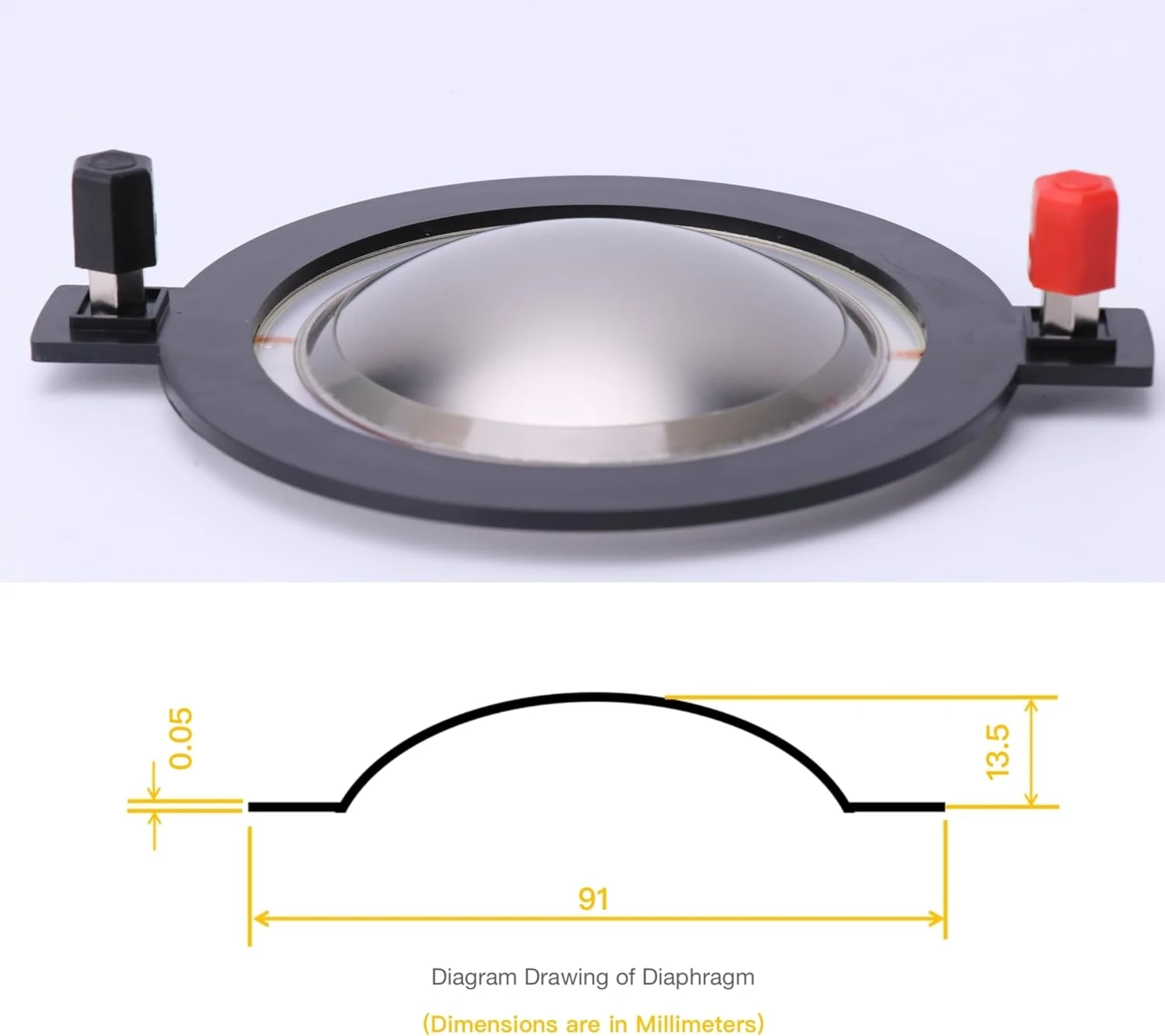
Yes. Alongside rubber and foam surrounds and passive radiator diaphragms, we mold seals and gaskets, die-cut adhesive parts, anti-vibration feet and grommets, and structural/damping parts for audio enclosures — all from the same compound and molding lines.
Can these parts be custom colored or flame-retardant?
Yes, both are compound-level options. Custom color lets a foot or grommet match a cabinet finish instead of defaulting to black, and flame-retardant grades are available for parts that sit near electronics or inside sealed housings.
Do you produce cones, voice coils or complete speaker drivers?
No — we produce the molded rubber and silicone components (surrounds, gaskets, feet, structural parts) that go around and inside a driver or enclosure, not the cone, voice coil or assembled driver itself.
What sizes and quantities can you handle for gaskets and feet?
Roughly the same range as surrounds — 2" to 18" for round parts, trial orders around 100 units, standard MOQs near 500 per SKU for catalog items; custom tooling for a new profile runs higher. Sampling typically takes 3–7 days.