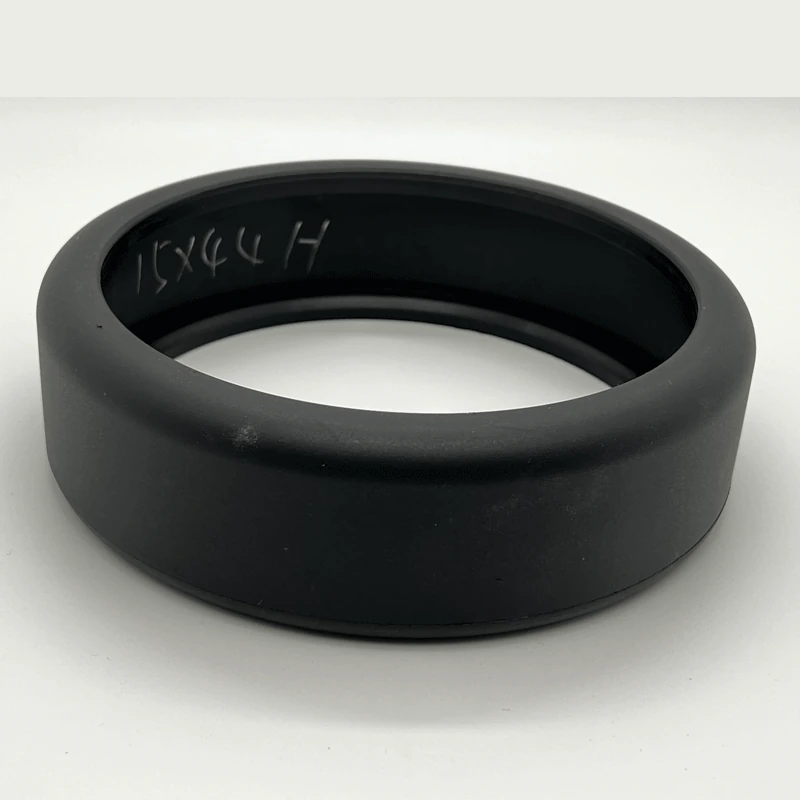
A speaker gasket is the stationary sealing or spacing part between the speaker frame and the surface it mounts to. It is not the surround: the surround flexes with the cone, while the gasket normally stays clamped between two fixed interfaces. Depending on the design, it can seal air, cushion vibration, protect a frame edge, create spacing or present a finished front surface.
A missing, compressed or mismatched gasket can leave an air path around the frame. Possible symptoms include reduced low-frequency output, an air noise near the mounting edge or an enclosure that no longer behaves as designed. Those symptoms are not proof by themselves—loose fasteners, a damaged surround, cabinet joints and ports can create similar noises—so inspect the complete mounting interface before replacing a part.
First identify which gasket you mean
- Frame-to-baffle seal: sits behind the basket flange and closes the mounting joint.
- Front trim gasket: sits on the visible side of the frame and may combine spacing, protection and appearance.
- Enclosure or panel gasket: seals terminal plates, passive-radiator frames or other removable interfaces.
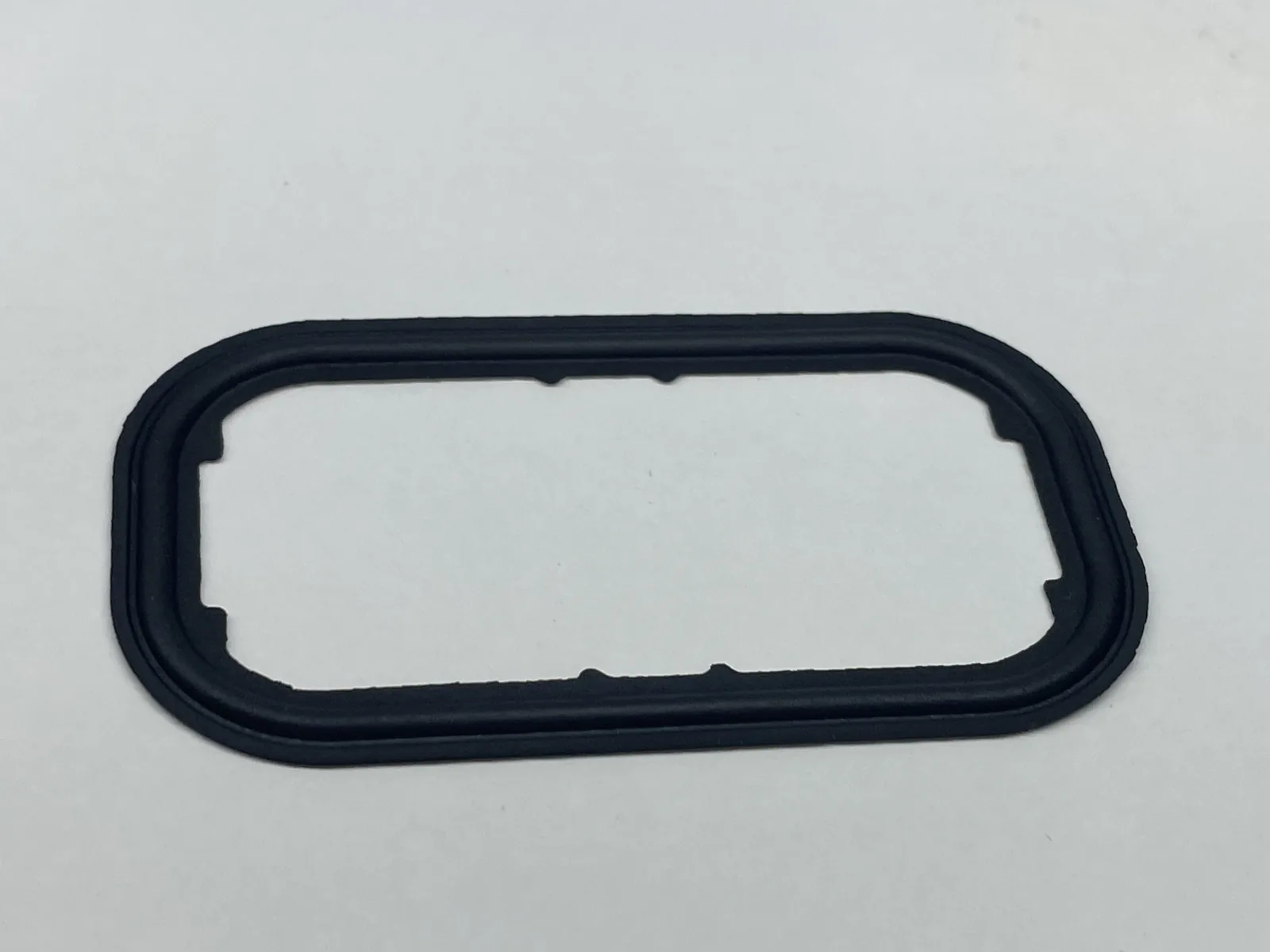
- Custom spacer/seal: uses a molded or die-cut profile where flat sheet cannot provide the required compression or location.
Why a leaky frame costs you bass, not just volume
A sealed or ported enclosure is designed around a specific trapped volume of air, and that volume is what gives a woofer its low-frequency control. Air escaping around the frame isn't the same failure as a bad crossover or a torn cone — it changes the box's effective alignment mid-use. The cone has to work harder to build the same pressure, low-end output drops first because that's where the pressure differential matters most, and whatever air is leaking usually isn't leaking quietly. Installers hear it as a hiss or a light buzz that seems to come from nowhere, because nothing is torn or rattling — it's just air finding the one path of least resistance around an unsealed edge.
This is also why gasket failure gets misdiagnosed. A crumbling foam surround looks obviously bad; a compressed or missing gasket looks like nothing at all, so the fault gets chased through the amp and the wiring before anyone pulls the driver and checks the seal.
Materials, thickness, and the tradeoff underneath both
Gaskets get die-cut from sheet or precision molded, and the compound choice can draw from NBR, SBR, IIR (butyl), EPDM or closed-cell foam. Thickness matters, but it cannot be selected without the joint: the useful question is how the material compresses under the actual clamp load and how much it recovers after time in service. A gasket that is too soft can compress until it no longer maintains contact; one that is too firm may bridge over an uneven baffle instead of sealing it.
| Compound | Where it earns its keep |
|---|---|
| NBR | Oil resistance, general-purpose sealing, cost-effective |
| SBR | Economical, standard indoor mounting |
| IIR (butyl) | Low air permeability — the tightest seal for pressure-critical enclosures |
| EPDM | UV, ozone and weather resistance — outdoor and marine mounting |
| Foam | Light-duty seals, cushioning, cost-sensitive volume runs |
Butyl's low air permeability is worth calling out on its own: it is the same property that makes it useful in pressure-sensitive acoustic applications. Flame-retardant, light-transmitting and custom-colour compounds can be reviewed when a design calls for them, but a material change may require new sampling and validation.
OEM shapes: it's rarely just a plain ring
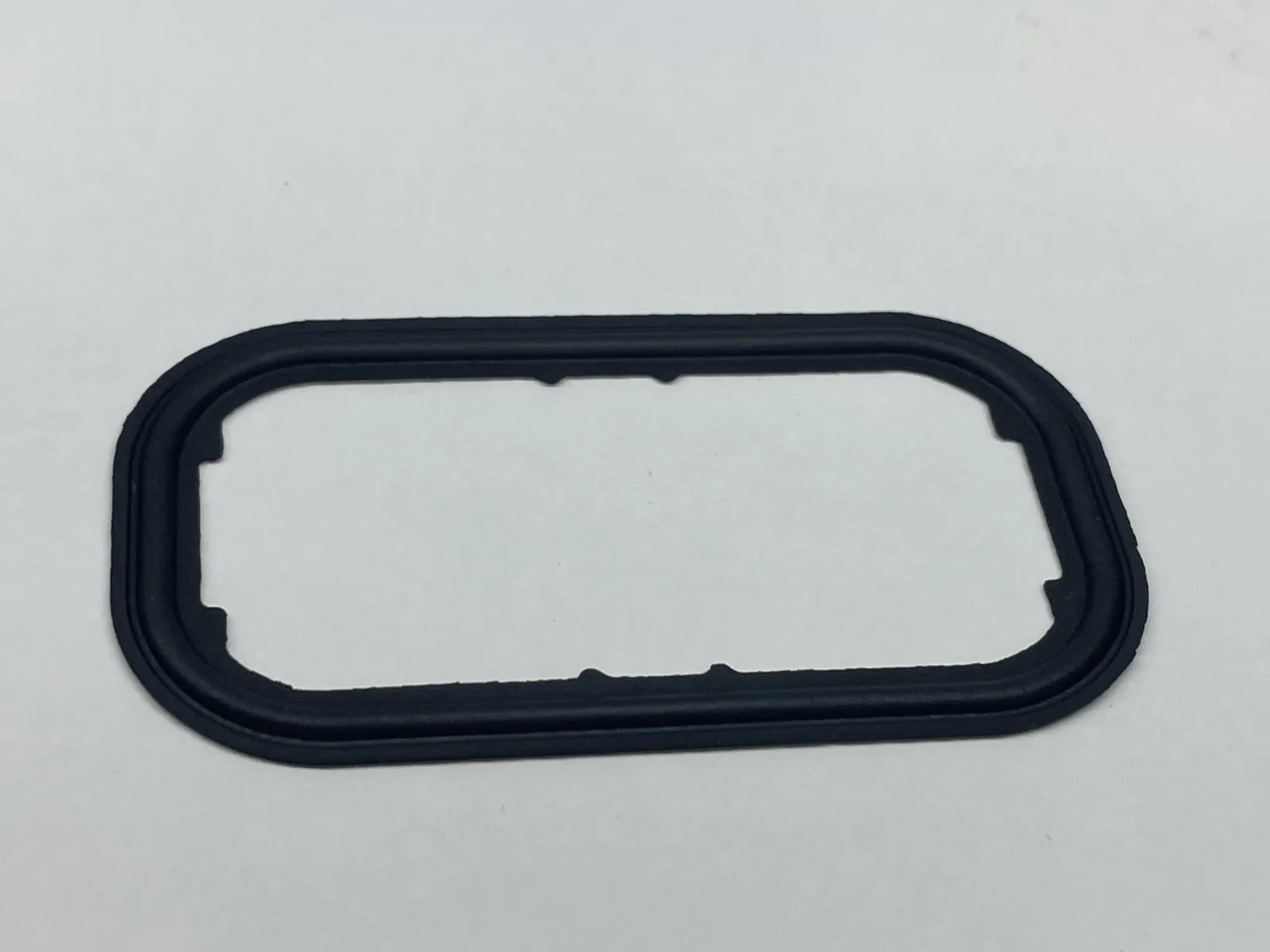
Round woofers get round gaskets, but plenty of drivers do not have a round frame — oval mid-bass units in car doors, D-shaped or rectangular frames in soundbars and custom enclosures, plus parts with cutouts or mounting bosses that must align with the interface underneath. Die cutting handles flat sheet outlines; raised beads, steps and other three-dimensional sections usually need molding. Adhesive backing can simplify assembly on a suitable substrate, but it remains an application decision rather than a default.
Because the gasket connects two interfaces, the RFQ should identify the inner and outer geometry, thickness, compression direction, mounting holes or cutouts, adhesive requirement, material target and operating environment. A drawing is best; a physical gasket plus the frame or baffle interface can also start a review. Measurement, hardness, ageing or other checks are selected from the actual failure risk and agreed requirement—not automatically applied as one generic test package.
MOQ, sample timing and tooling depend on whether a suitable die or mold exists, the material and thickness, dimensional requirements and the validation plan. If the gasket is specified alongside a surround or passive radiator, provide the complete enclosure interface so sealing and moving-part requirements are not reviewed in isolation.
Start with the existing gasket and speaker-accessory products, or send a drawing, sample and mating interface through custom development. For project-specific inspection planning, see Quality & Validation.
If you are deciding between a flat die-cut part and a molded profile, see how speaker gaskets are made and which production route fits each interface.
FAQ
What does a speaker gasket actually seal?
The joint between the speaker frame and whatever it mounts to — a baffle, an enclosure panel, or a car door — so air can't leak around the outside of the driver. It's separate from the surround, which seals the cone to the frame.
Can a bad gasket really affect bass output?
Yes. A sealed or ported enclosure depends on a specific trapped air volume; a leak around the frame changes that volume while the speaker is playing, softening low-end output and often adding a faint hiss or buzz that gets mistaken for an electrical fault.
What material should a speaker gasket be made from?
NBR and SBR cover general indoor use, EPDM handles UV and weather for outdoor or marine mounting, and butyl (IIR) gives the lowest air permeability for pressure-critical enclosures. Foam works for lighter-duty seals where cost matters more than longevity.
Can gaskets be made in custom shapes for non-round speakers?
Yes — die-cut and molded gaskets can match oval, D-shaped, or rectangular frames, including cutouts for terminals or mounting bosses, as long as the profile is confirmed against the baffle cutout and frame tolerances.