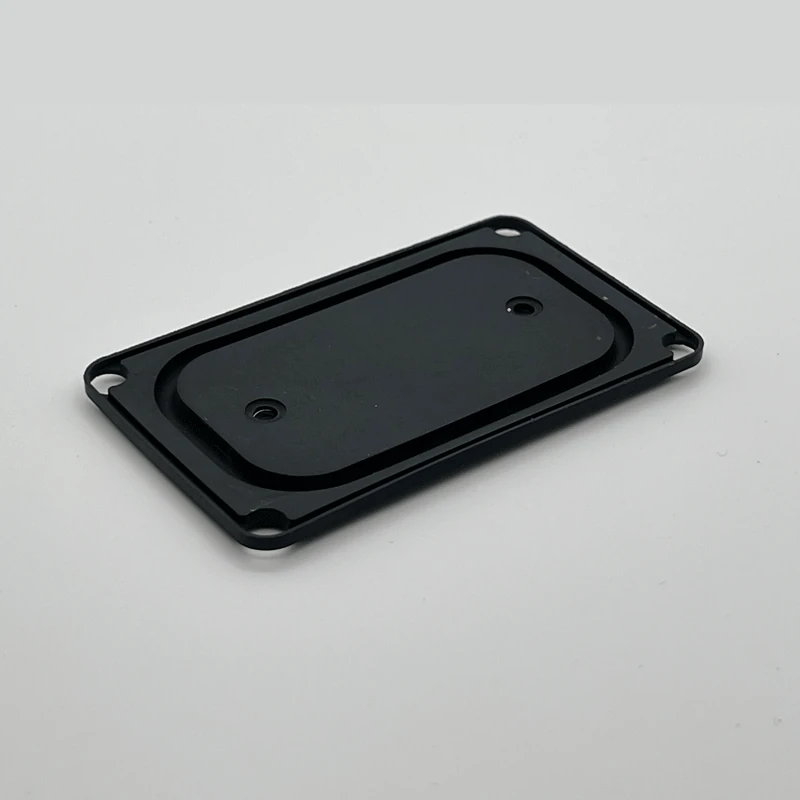
Pick up a compact soundbar or a portable speaker and flip it over. Somewhere on the back or the bottom there is a second cone-looking thing, sitting flush in its own cutout, doing absolutely nothing when you play a track — no visible cable running to it, no terminal, nothing. Push on it with a finger and it gives, springs back, and settles. That unpowered driver is a passive radiator, and the fact that it looks like a speaker but isn't one is the whole point.
A driver with the motor removed
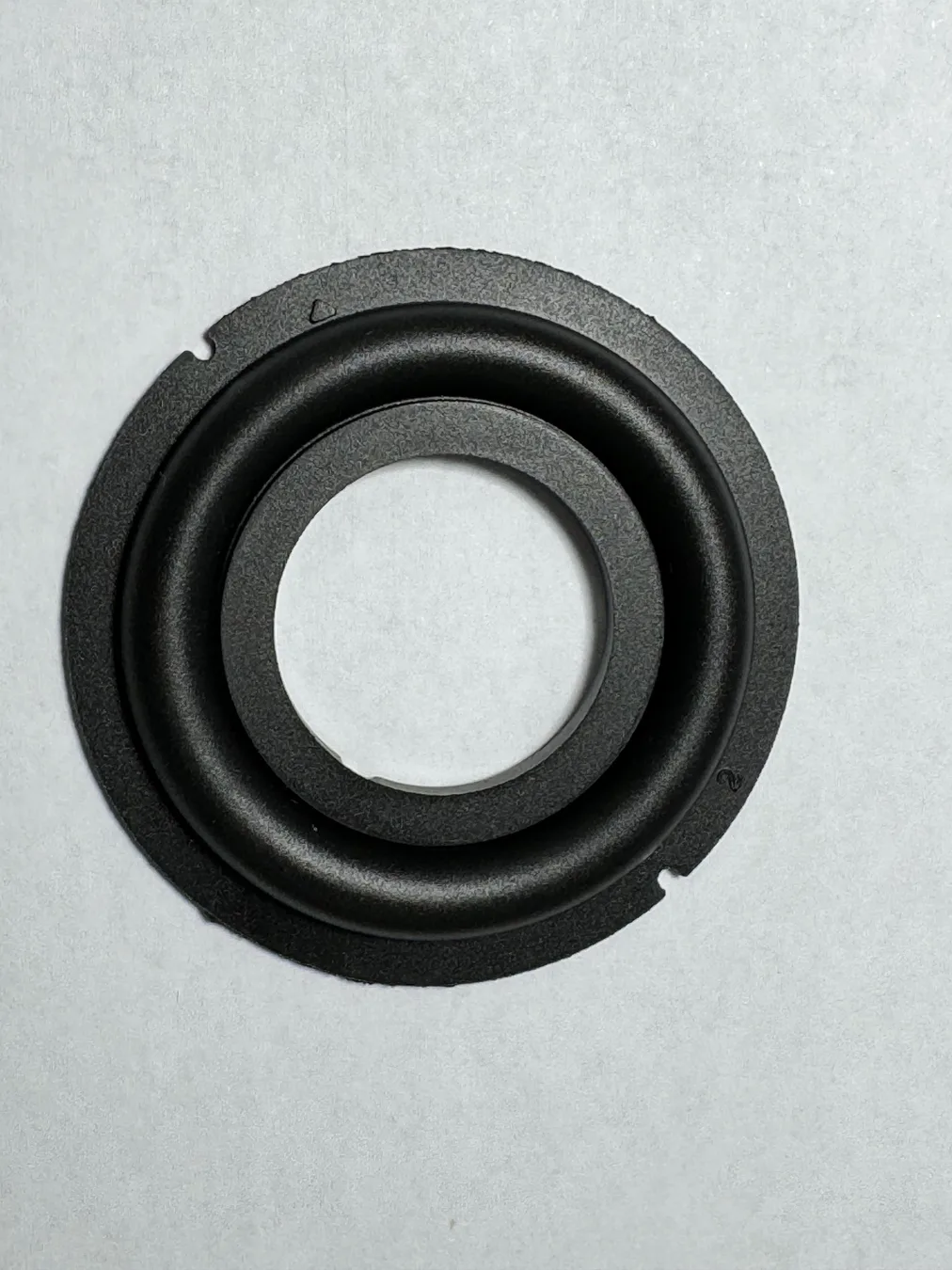
Strip a normal woofer down and you have a cone, a surround holding the cone's edge to the basket, a spider centering the voice coil, and the voice coil itself sitting in a magnetic gap. Take away the magnet and the coil — no motor, no electrical connection at all — and what's left is a diaphragm with mass, sitting on a compliant surround, free to move back and forth. That's a passive radiator (PR). It doesn't produce sound from an amplifier signal. It produces sound because the air pressure inside a sealed cabinet pushes it, driven by the real woofer working a few inches away.
Inside a sealed box, the active woofer's motion compresses and rarefies the air behind it. Normally that trapped air just acts as a spring, stiffening the whole system and rolling off the deepest bass. Give it a second diaphragm to push on instead of a rigid wall, and it moves — out of phase with the woofer, low and heavy, right in the bass band the box was choking off. Tune the PR's moving mass and its surround's stiffness to match the enclosure volume and the paired driver, and it resonates exactly where you want more output.
Why brands choose a passive radiator over a port
A vented (ported) box does something similar with a tube of air, and it's cheaper. So why do so many soundbars, smart speakers, and slim subwoofers use a PR instead? Space and noise, mostly. A port needs a certain length to tune to a given frequency, and in a shallow enclosure that length doesn't fit without folding the duct or chuffing audibly at high excursion. A passive radiator does the same tuning job in the footprint of a second driver — exactly the shape constraint compact products are built around — and stays quiet at the top of its excursion, with no air turbulence whistling out of a tube when someone leans on the bass. There's also no opening into the sealed cavity, so the enclosure keeps its dust and moisture resistance, which matters more than it sounds like it should in outdoor and portable gear.
None of that makes a PR "better" than a port in every case — it's a deliberate size-and-noise trade, and it only works if the diaphragm is built and tuned to spec.
How the diaphragm and surround get built
A PR diaphragm is a rubber or silicone molded part from the same compound family as speaker surrounds, just formed and weighted differently, with the surround built into the piece as the compliant hinge around its edge. The compound gets picked for the job: standard NBR or SBR for cost-sensitive consumer gear, or a specialty run with flame-retardant additive, light-transmitting silicone, or a custom color when the PR sits somewhere visible in the enclosure. Sizes scale the same way surrounds do, roughly 2" to 18", off the same compound-to-cure production line.
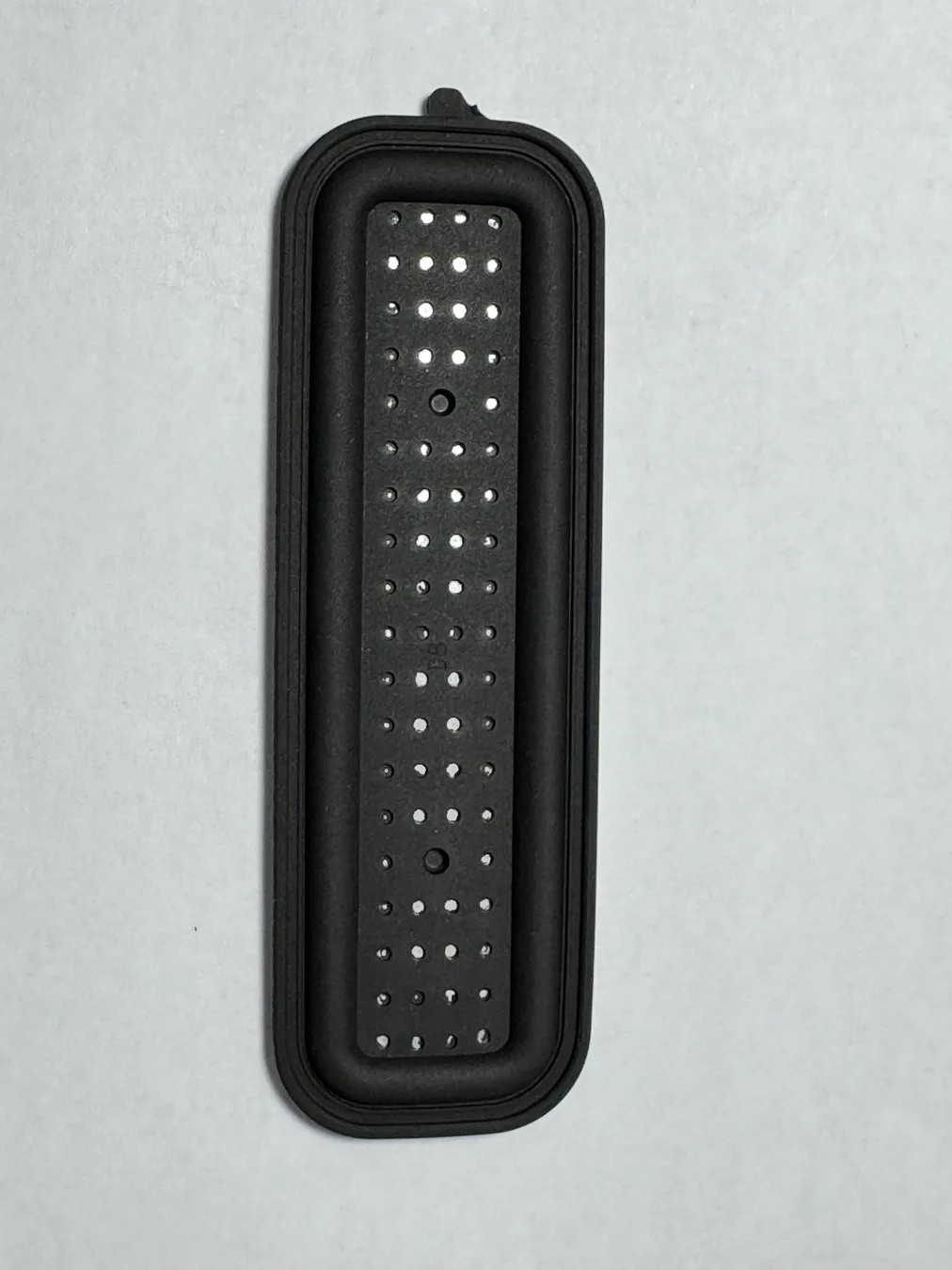

The tuning is where this differs from a generic rubber part. A PR is only useful if its moving mass and surround behavior fit the enclosure design. Dimensional, hardness, mass or functional checks can be included according to the approved baseline and project risk. Optical measurement, hardness, material and environmental equipment are available across the source-factory network, but the applicable factory, sampling plan, method and acceptance criteria must be confirmed for the project.
Worth being direct about scope: the relevant factory route covers the passive-radiator diaphragm and molded surround, not the active woofer motor. Browse passive-radiator product starting points, then use Tooling & Engineering for a new enclosure and Quality & Validation to define the approval baseline. Cabinet volume, paired driver, target tuning, moving mass and mounting geometry belong in the same review.
Passive radiator vs port, side by side
| Factor | Passive radiator (PR) | Port (vent) |
|---|---|---|
| Space needed | Footprint of a driver, shallow depth | Needs duct length to tune low frequencies |
| Noise at high excursion | Quiet — no airflow through an opening | Can chuff or whistle at high output |
| Enclosure sealing | Stays a sealed cavity — better dust/moisture resistance | Opens the cabinet to outside air |
| Tuning method | Diaphragm mass + surround compliance | Duct length + cross-section area |
| Typical use | Slim soundbars, portable speakers, compact subs | Bookshelf and tower speakers with room to spare |
| Unit cost | Higher — molded rubber part + tuning | Lower — a tube |
FAQ
Does a passive radiator need power or a wire connection?
No. It has no voice coil, no magnet, and no electrical connection at all. It moves purely from the air pressure changes created by the active woofer inside the sealed enclosure.
Is a passive radiator just a broken speaker?
No — the missing motor is deliberate. A PR is a diaphragm and surround tuned by mass and compliance to resonate at a chosen frequency, extending bass the way a port does but without an opening in the cabinet.
Why do compact speakers use passive radiators instead of ports?
Mainly space and noise. A port needs enough duct length to tune to low frequencies, which doesn't fit in a shallow enclosure without chuffing at high volume. A PR does the same tuning job in the footprint of a driver, and stays quiet at the top of its excursion.
Can the diaphragm material or color be customized?
Rubber or silicone material, color, mounting features and geometry can be reviewed by project. Required dimensional, material or functional validation should be stated during development rather than assumed to be identical for every order.