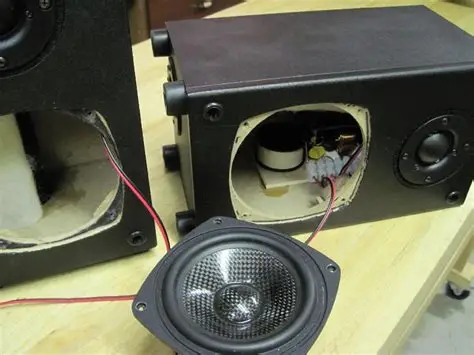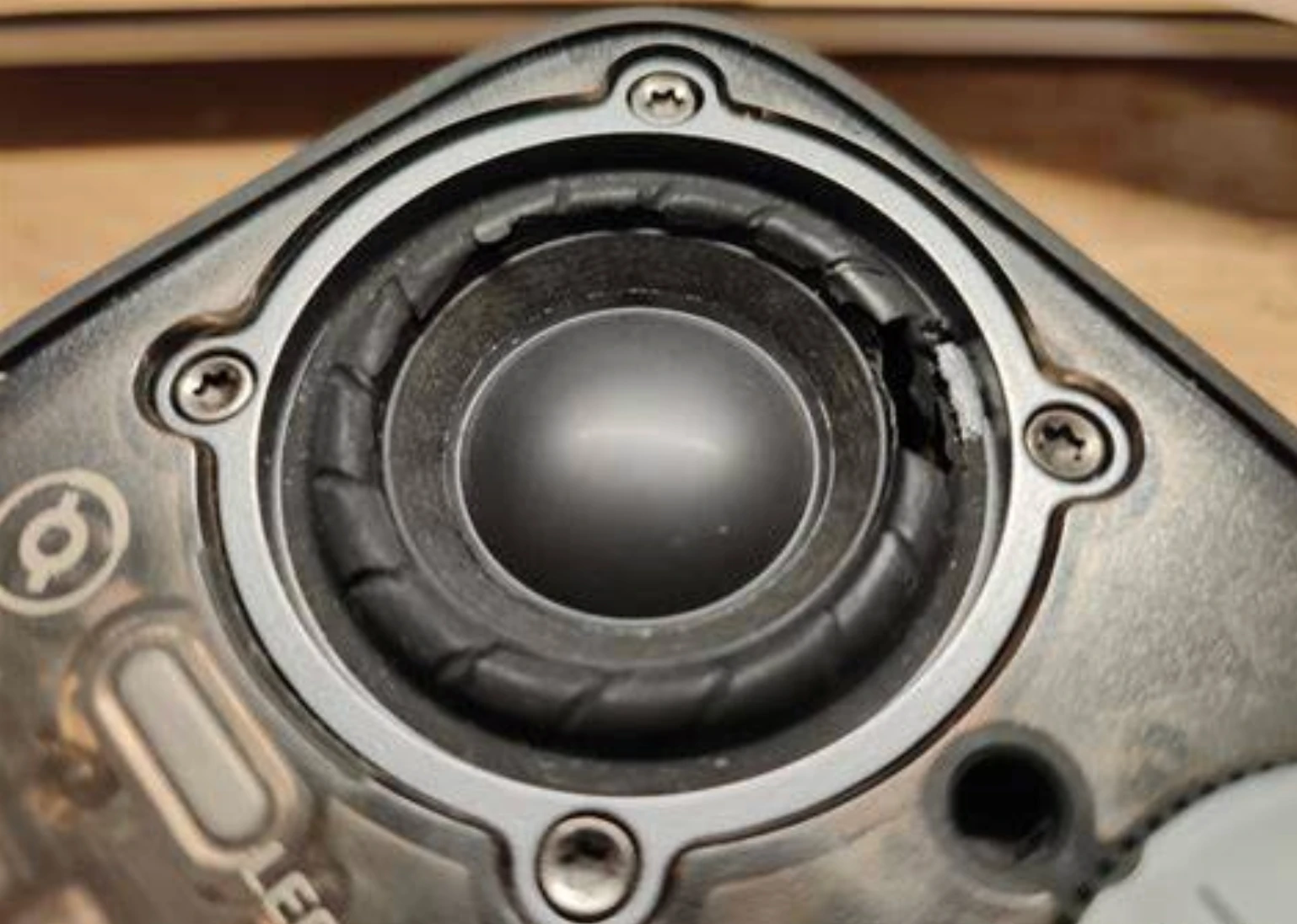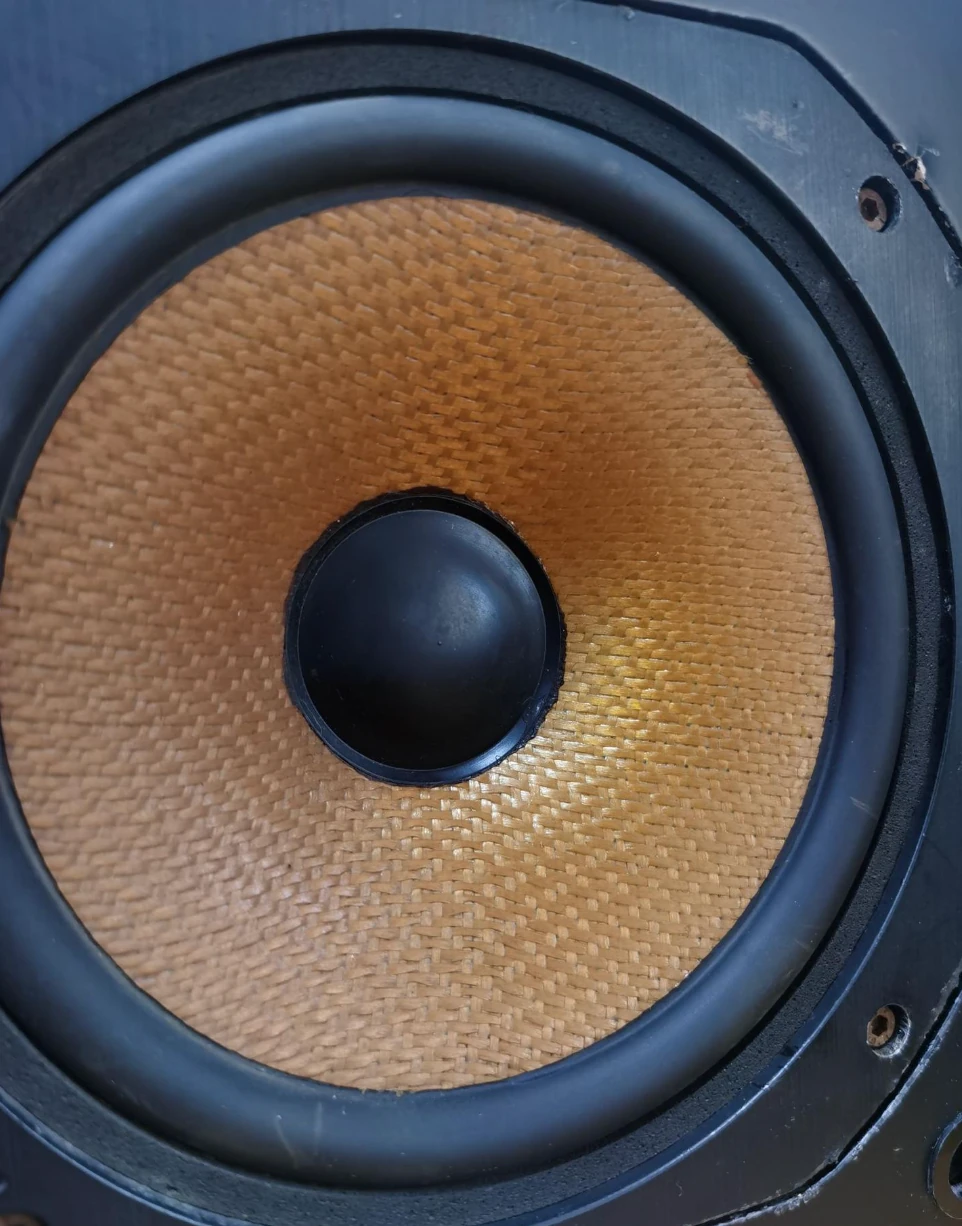
I found the pair at an estate sale, forty dollars for two, priced to move because "they don't work right." The seller wasn't lying. Every woofer had that telltale collapsed look, foam gone the color of a dead leaf, one edge torn clean through. Anyone flipping past would have kept walking. I didn't, because I've been burned by that assumption before — the surround looks like a corpse, but the corpse is wearing a very good suit.
Under a rotted surround, the parts that actually cost money to make are usually untouched. The magnet doesn't age. The cone, if it hasn't been punctured, is fine. The voice coil, tucked down in the gap where dust and UV never reach it, is fine too. Foam rot is a surface problem on a component that was never built to outlast the rest of the speaker — it's designed for cheap, consistent production, not for forty years in someone's basement. So when a vintage driver looks wrecked, the real question isn't "is this worth saving," it's "is the surround the only thing that died." Nine times out of ten, on anything from that era, it is.
What you're actually getting back
It's tempting to think of a new surround as cosmetic, like new tires that just make the car look less sad. It isn't. The surround is half of what controls how far the cone can move — the other half is the spider, up behind the cone, which usually survives fine. A collapsed or torn surround either won't let the cone move properly or lets it flop uncontrolled, and both wreck the bass long before they wreck the sound entirely. Re-edge it correctly, matched to the original size and profile, and you get the driver's actual designed excursion back. That's not an upgrade. That's the speaker doing what it was built to do, for the first time in years.
The part that surprised me the first time was how much of the original voicing comes back with it. These weren't designed as raw components — an engineer tuned that cone, that magnet, and that surround together as one system, decades ago. Put the wrong stiffness back on the edge and you've quietly changed the tuning. Put the right one back on, and the low end returns sounding like the speaker, not like a generic replacement. I've walked through the actual gluing-and-centring process elsewhere — the part where your heart rate spikes for about ten minutes — in re-foaming a woofer at home, if you want the hands-on version.
The decision nobody tells you about until you're holding the kit
Here's where it gets interesting, and where most write-ups skip past too fast: you don't have to put foam back on. You can go rubber instead. It's the one real fork in the road on a project that otherwise doesn't have many decisions to make.
| Foam | Rubber | |
|---|---|---|
| Feel | Matches the original — same compliance, same excursion character | Firmer; slightly tighter, more controlled cone movement |
| Longevity | Will rot again, just on a much longer clock than the first time | Resists UV and humidity — this is the "never do this again" option |
| Look | Original, unmodified appearance — matters if you're keeping it stock | Visibly different edge; some purists mind, most don't notice from a chair |
| Best for | Driver you want period-correct, or plan to sell as original | Driver you actually play, want to stop thinking about |
I went foam on the pair from the estate sale, because they're the kind of speakers you want to be able to say "yes, all original" about, foam included. But I've also re-edged a workhorse pair that lives in my garage and gets rained on through an open door more than I'd like to admit — those got rubber, no hesitation, because I was done babysitting them. Neither choice is wrong; they're answering different questions. If you want the fuller breakdown of compliance, damping and which rubber compound actually holds up outdoors, I put all of that together in rubber vs foam surrounds.
Matching the edge, not just the size
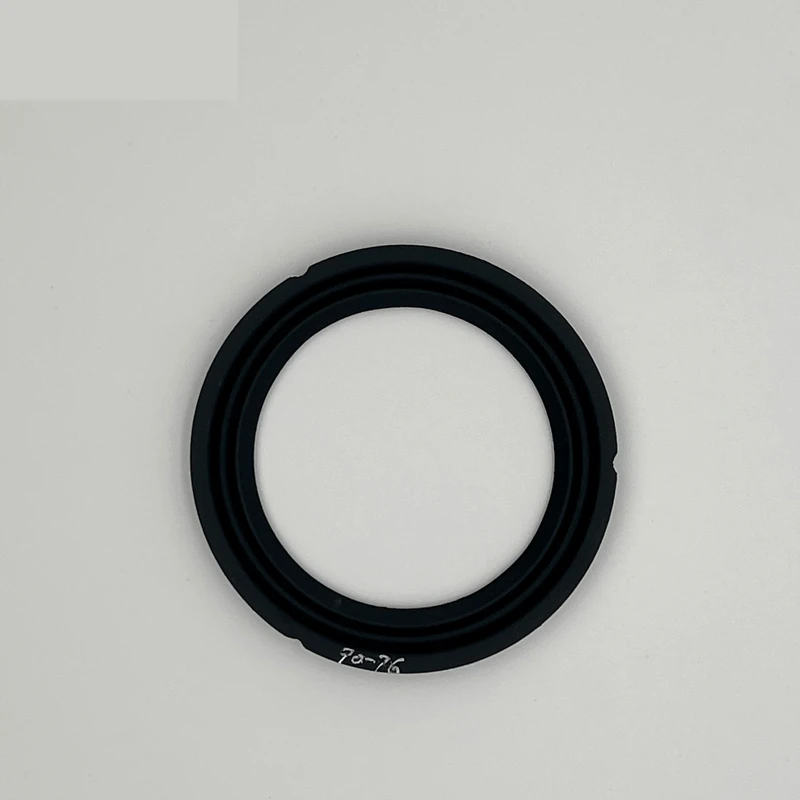
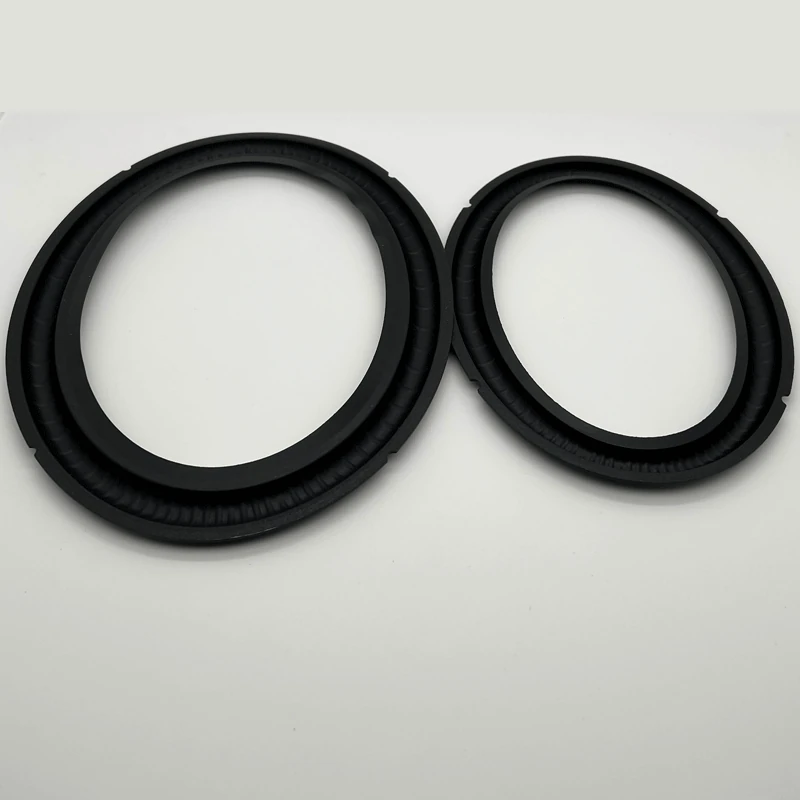
One thing worth knowing before you order anything: a vintage driver's cone rarely matches the diameter printed on the badge, and the roll profile — how the surround curves, how deep it sits — needs to match too, not just the width. Get the diameter right but the profile wrong and the cone binds or rubs at the extremes, which you will absolutely hear. If your driver is an odd size, or a shape nobody stocks off the shelf, that's a solved problem rather than a dead end — surrounds get made to match a driver, not the other way around, down to 2 inches and up to 18. Our custom service team will match a profile from a sample or a drawing if the stock sizes don't fit.
What I'd tell anyone standing in front of a "broken" pair of vintage speakers: check the surround before you write anything off. It's the cheapest part in the whole driver and, unglamorously, the part most likely to be the entire problem.
FAQ
How do I know a vintage speaker just needs re-edging and isn't actually dead?
Look at the surround first — cracked, collapsed, or crumbling foam is the classic sign, and it's a surface-level failure, not damage to the cone, magnet, or voice coil underneath. Push the cone straight down gently; smooth, silent movement means the rest of the driver is healthy and a re-edge alone will bring it back.
Does re-edging really bring back the original sound, or just make the speaker move again?
Both, if the replacement matches the original surround's size and stiffness. The surround is part of what the driver was tuned around, so matching profile and compliance restores the intended excursion and voicing — not just "a working speaker," but closer to how it sounded new.
Foam or rubber for a re-edge on an old driver?
Foam keeps the original feel and look, which matters if the speaker is a keeper you want period-correct. Rubber trades a bit of that original compliance for a surround that won't rot again — the better call for a pair you actually use hard, especially anywhere damp.
What if my vintage driver is an odd size nobody stocks?
Diameter and roll profile both need to match the original, and oddball vintage sizes are common enough that made-to-match is normal, not exotic. A custom surround run, matched from a sample or drawing, covers sizes from 2 to 18 inches in both foam and rubber.