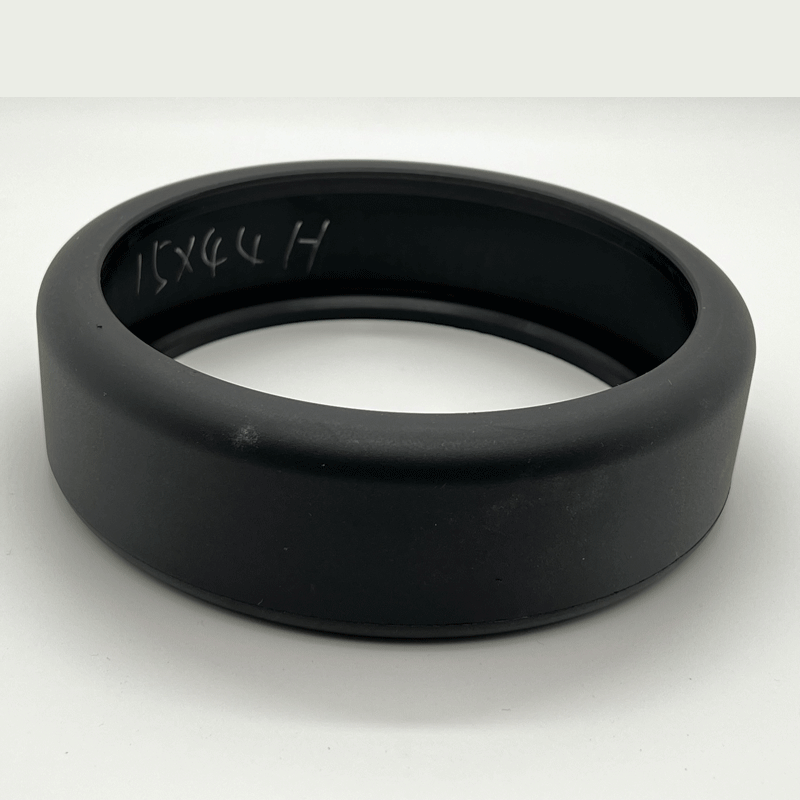
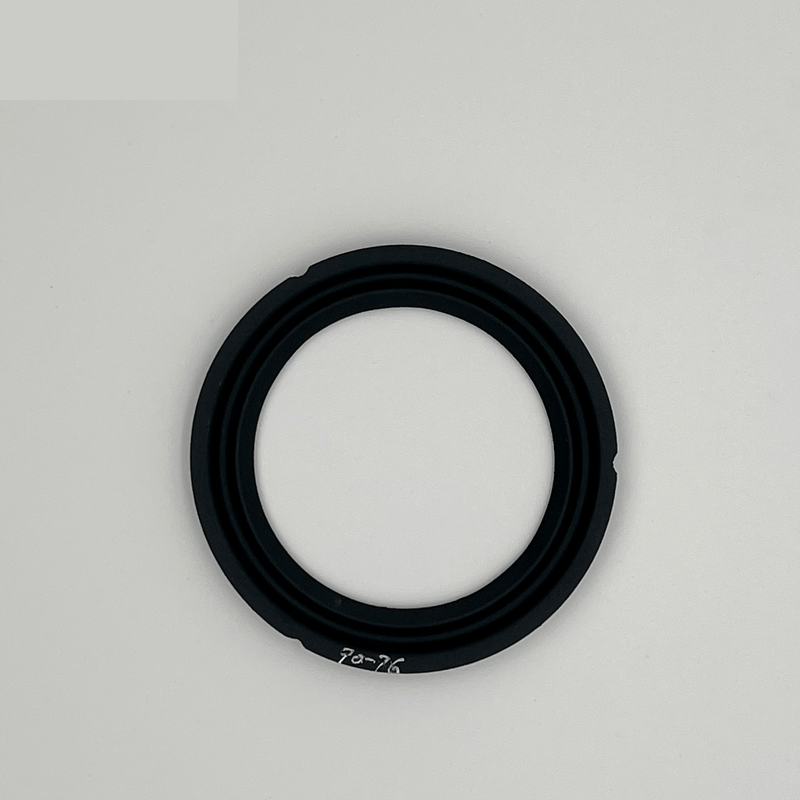
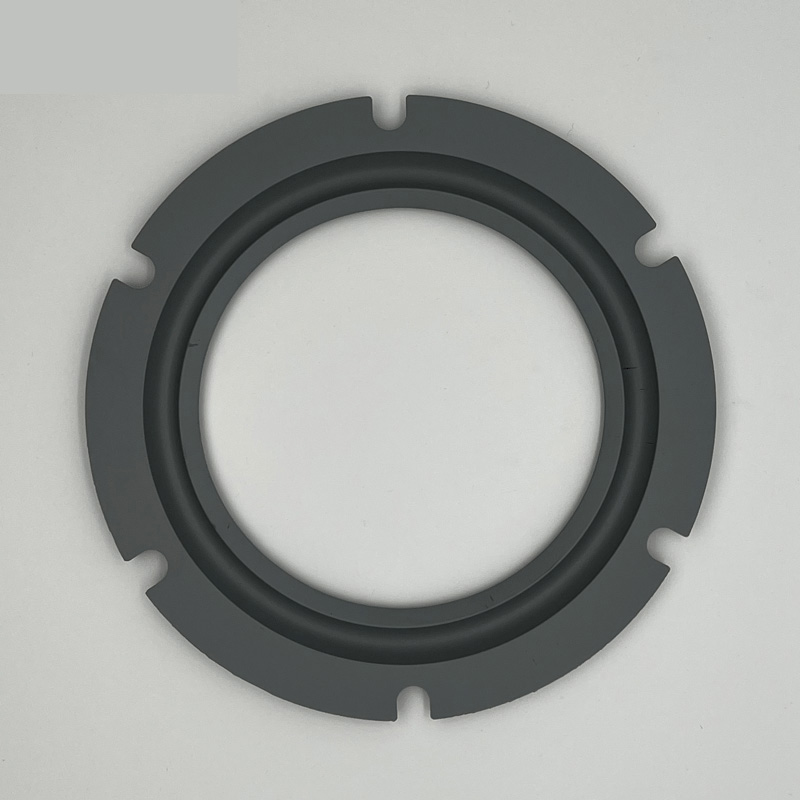
Ask someone who has just cracked open a blown speaker what that flexible ring around the cone is for, and you will usually get a shrug. "Padding," maybe. "Gasket." It looks decorative. It is not. Pull it off a working driver and the cone falls straight out of the basket. That ring is doing three jobs at once, and when it degrades, the speaker degrades with it — often long before the voice coil or magnet ever wears out.
The job: hinge, spring, and seal
A cone has to move thousands of times a second without wandering off-centre and dragging the voice coil against the magnet gap. The surround makes that possible: flexible enough to let the cone pump freely, anchored firmly enough at both the cone's outer edge and the basket's rim to keep everything centred through the whole excursion.
It has a second job that gets less attention: sealing the front of the cone from the back. Without an airtight ring there, air pressure from the rear leaks around to the front, cancelling out bass instead of reinforcing it. A surround with a pinhole crack does not just look bad — it audibly softens low end before anyone spots a visible fault.
The shape of that ring — its roll profile, the half-round or W-shaped cross-section moulded into it — is tuned to control how much it resists motion and how far it can travel before it runs out of give. Get the profile wrong for a given cone, and you get either a stiff, choked-off bass or a sloppy, uncontrolled one, independent of the material underneath it.
What surrounds are actually made from
Two families dominate: foam, and a handful of rubber compounds, each with a different personality once it is in a cabinet for a few years.
| Material | Character | Typically used for |
|---|---|---|
| Foam | Very light, soft, cheap | Vintage-spec drivers, cost-sensitive OEM runs |
| NBR | Oil-resistant, economical | General-purpose OEM surrounds |
| SBR | Economical, general-purpose | Entry-level and mid-tier drivers |
| IIR (butyl) | High internal damping, low air leakage | Premium woofers where clean bass matters |
| EPDM | Strong resistance to UV, ozone, weather | Outdoor, marine, automotive applications |
Hardness matters as much as compound family — the same butyl blend can be tuned soft or firm on the Shore A scale depending on how a driver needs to load and damp. Formulations can also be pushed for a specific brief: flame-retardant grades for enclosed OEM builds, light-transmitting rubber where a surround doubles as a lit accent ring, custom colour matching for a visible driver. None of that is exotic — it is what a line that mixes its own rubber from raw polymer, rather than buying pre-mixed stock, is set up to do.
We go deeper on how rubber and foam actually compare on sound and lifespan in rubber vs foam surrounds, if you are choosing between them for a build.
Why surrounds fail before anything else does
Foam has one structural weakness: it oxidises. Over years, UV exposure and ordinary atmospheric ozone break down the polymer chains, and the surround goes from spongy to crumbly to gone, sometimes leaving nothing but grey dust at the cone's edge. It is the single most common reason a perfectly good vintage driver goes quiet or buzzes — not the magnet, not the coil, just the ring around the edge.
Rubber compounds fail more slowly, but they still fail, and the mechanism is the same three villains: UV, ozone and humidity. A rubber surround exposed to direct sun or salt air will eventually harden and crack at the fold rather than crumble, which is why compound choice for outdoor or automotive gear is not a cosmetic decision — EPDM's ozone and weather resistance exists specifically to push that failure point out for years rather than months. Quality control on a surround built for durability leans on exactly these stress tests before it ships: accelerated UV ageing, salt-spray, constant temperature-and-humidity soak, and outdoor weathering racks that just let a sample sit in the elements and report back. Add a resonance-frequency (F0) check and 2D optical dimensional scanning on top, and you get surrounds that are consistently the right size and stiffness, driver to driver — the kind of consistency that matters when speccing parts for automotive or branded audio programs, not a one-off repair.
When to think about the surround specifically
If a driver has gone buzzy, dull, or visibly cracked at the edge, the surround is almost always the first suspect — and the fix is rarely the whole speaker. For OEM and ODM programs, it is also one of the cheapest places to retune a driver's final voicing without touching the motor structure: swap compound or roll profile and you shift compliance and damping without a new tooling cycle. Our surrounds and components catalogue covers rubber and foam across a 2"–18" size range, and if a project needs a compound, hardness, or profile outside the standard catalogue, that is exactly what our custom OEM/ODM service is for — matched to the spec, not the other way round, for parts used in drivers by leading audio and automotive brands.
FAQ
What does a speaker surround actually do?
It is the flexible ring joining the cone's outer edge to the speaker basket. It lets the cone move in and out freely, keeps it centred so the voice coil does not rub against the magnet gap, and seals the front of the cone from the back so air pressure does not leak around and cancel out bass.
Is a speaker surround rubber or foam?
Both exist, and each has trade-offs. Foam is lighter and cheaper but degrades faster, oxidising and crumbling over years of UV and ozone exposure. Rubber compounds like butyl (IIR), EPDM, NBR and SBR last considerably longer and can be tuned for damping, weather resistance or cost.
Why do speaker surrounds crack or rot?
UV, ozone, and humidity all attack the polymer over time. Foam breaks down fastest, going soft then crumbly; rubber resists longer but eventually hardens and cracks at the fold, especially outdoors or in direct sun. It is a materials-ageing problem, not a sign the rest of the speaker is failing.
Can the surround change how a speaker sounds?
Yes — its stiffness and roll profile set how far and how freely the cone can move, which shapes bass extension and control. A softer surround favours deeper excursion; a firmer, higher-damping compound like butyl favours tighter, cleaner bass. Changing the surround spec is one of the more direct ways to retune a driver's voicing.