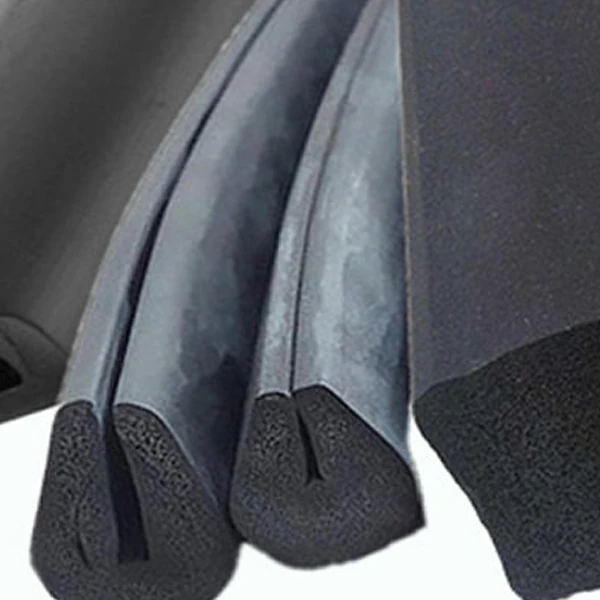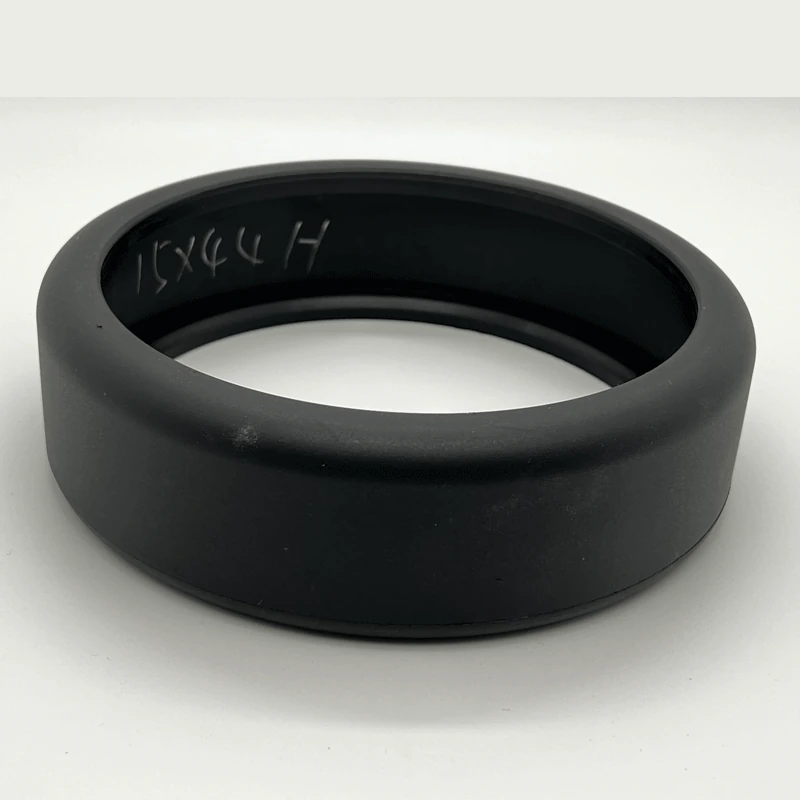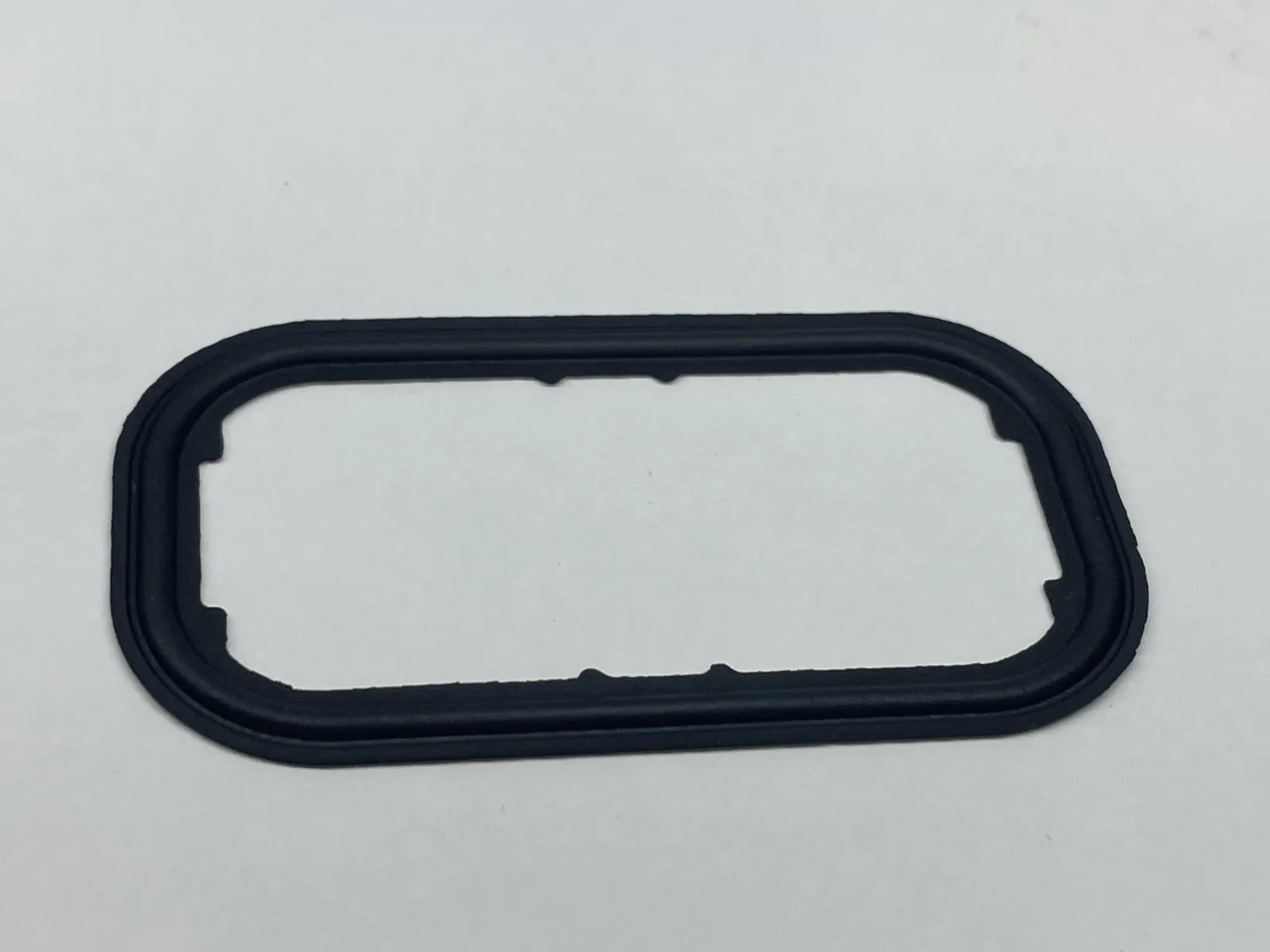
Choose a rubber speaker gasket when the joint needs a molded profile, controlled compression, weather resistance or repeatable long-term sealing. Choose closed-cell foam when the interface is relatively flat, loads are light and cost or easy die-cutting matters most. Neither material is automatically better: the correct choice depends on the two mating surfaces, compression, environment and expected service life.
One important distinction comes first. A speaker gasket is normally a stationary seal between the basket, baffle or enclosure. A speaker surround is the flexible suspension joining the moving cone to the frame. Search results often mix the two, but their material decisions are not interchangeable. If you are comparing cone-edge materials, use our rubber vs foam surrounds guide instead.
Rubber vs foam gasket: the practical differences
| Decision factor | Molded rubber gasket | Closed-cell foam gasket |
|---|---|---|
| Geometry | Supports ribs, lips, locating features and non-uniform sections | Best suited to flat die-cut profiles and simpler contours |
| Compression control | Compound hardness and molded section can be tuned around the joint | Easy to compress, but grade and density strongly affect recovery |
| Air sealing | Useful where a defined sealing line or low-permeability compound is needed | Closed-cell grades can seal broad, flat interfaces effectively |
| Environment | Compound can be selected for ozone, UV, oil or temperature exposure | Performance depends heavily on foam chemistry, skin and adhesive |
| Tooling and changes | A custom molded profile may require a mold | Flat shapes are generally faster to revise with cutting tooling |
| Typical fit | Outdoor audio, automotive interfaces and shaped OEM assemblies | Indoor cabinets, trim seals and cost-sensitive flat joints |
Do not specify “rubber” alone
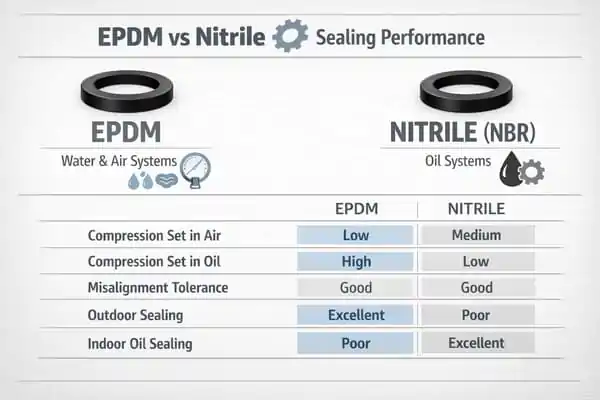
Rubber is a material family, not a complete specification. EPDM is often considered for weather and ozone exposure; NBR may suit interfaces exposed to oil; IIR (butyl) is useful when low gas permeability matters. The final compound still needs to be checked against temperature, hardness, compression set, odor, color and any market-specific restricted-substance requirements.
The same caution applies to foam. “Foam gasket” does not tell a supplier whether the part is open-cell or closed-cell, how dense it is, how much it should compress or whether an adhesive backing must survive heat and ageing. For an acoustic enclosure seal, open-cell material may allow air paths and should not be substituted without validation.
Start with the interface, not the catalogue size
A gasket works only as part of an assembly. Before selecting a stock ring or asking for a custom tool, examine the basket flange, baffle flatness, screw pattern, surface finish and available compression. A gasket that looks correct on a table may bridge a recess, interfere with a mounting boss or squeeze into the acoustic opening after tightening.
For round drivers, record the inner diameter, outer diameter, thickness and mounting-hole positions. For oval, rectangular or irregular frames, a 2D drawing or dimensioned scan is safer than a nominal “3 inch” or “3.5 inch” label. Those labels describe a product class, not every sealing interface within that class.
What buyers should include in a gasket RFQ
- Application: speaker frame, passive radiator, terminal panel or another enclosure joint.
- Geometry: drawing, STEP file or physical sample, including holes, notches and locating features.
- Mating parts: basket and baffle dimensions, surface condition and fastener layout.
- Compression: installed gap, target compression or clamp condition rather than thickness alone.
- Environment: indoor, automotive, outdoor or marine use; temperature, UV, ozone, oil and moisture exposure.
- Material constraints: preferred compound or foam grade, hardness/density, color, odor and compliance needs.
- Assembly: adhesive backing, release liner, orientation marks and packaging requirements.
- Commercial context: prototype quantity, forecast volume and required approval samples.
How to validate the choice
Validation should reproduce the actual joint. Check fit and interference first, then confirm the seal at the intended screw torque or clamp load. Depending on the application, the approval plan may also examine compression recovery, air leakage, dimensional stability and ageing after heat, humidity or weather exposure. Tests should be agreed from the product risk rather than copied from an unrelated gasket.
A useful sample review answers three questions: Does the part locate consistently? Does the assembled joint remain sealed? Does the material recover or remain stable after the expected environment and fastening cycle? Record the approved material, dimensions and assembly condition so production lots are compared with the same reference.
When a custom molded gasket makes sense
Custom tooling becomes valuable when a flat cut gasket cannot locate itself, the frame needs a sealing lip, the section changes around corners, or assembly needs poka-yoke features. The drawing review should connect tooling dimensions with material shrinkage, parting line, flash limits and the actual mating assembly. See Tooling & Engineering for the development path and Quality & Validation for approval planning.
To review an existing option, browse gaskets and other rubber products. For a new profile, send the drawing or sample, mating interface, environment and forecast quantity through custom development. RubbLink can route the project to a suitable source factory and keep the technical and commercial information in one request.
FAQ
Is a rubber speaker gasket the same as a rubber surround?
No. The gasket normally stays fixed and seals the driver frame to a mounting surface. The surround moves with the cone and is part of the driver suspension.
Does rubber always seal better than foam?
No. A suitable closed-cell foam can seal a broad, flat joint well. Molded rubber is more useful when the design needs a defined sealing rib, locating geometry or a compound selected for a demanding environment.
Can I order by speaker size alone?
Not reliably. Two drivers sold under the same nominal inch size can have different basket profiles, mounting holes and gasket dimensions. Send measured inner and outer geometry or a drawing.
Which rubber is best for an outdoor speaker gasket?
EPDM is commonly considered because of its resistance to ozone and weathering, but the correct compound depends on the full temperature, UV, moisture, compression and compliance requirements. Validate it in the actual joint.