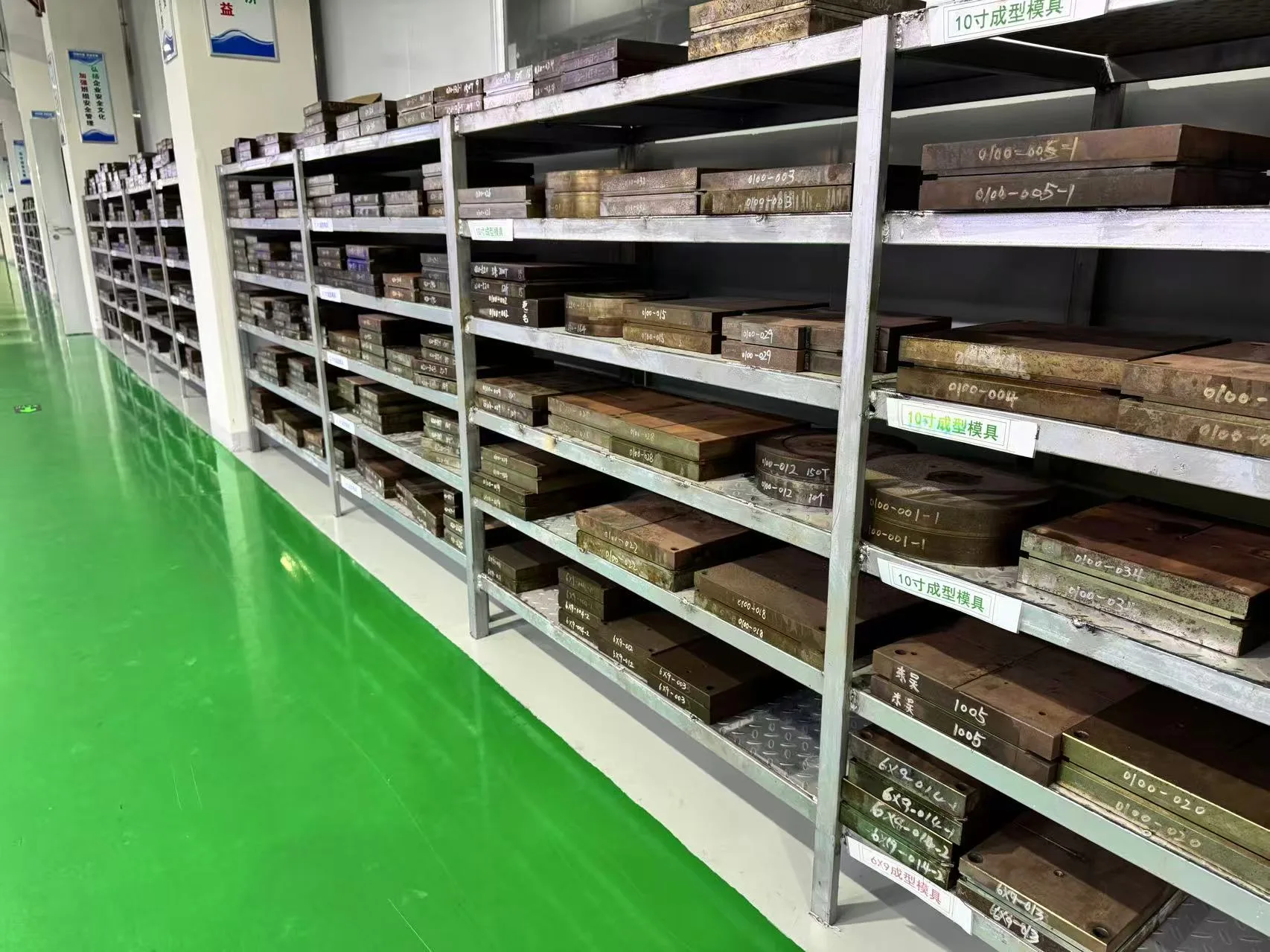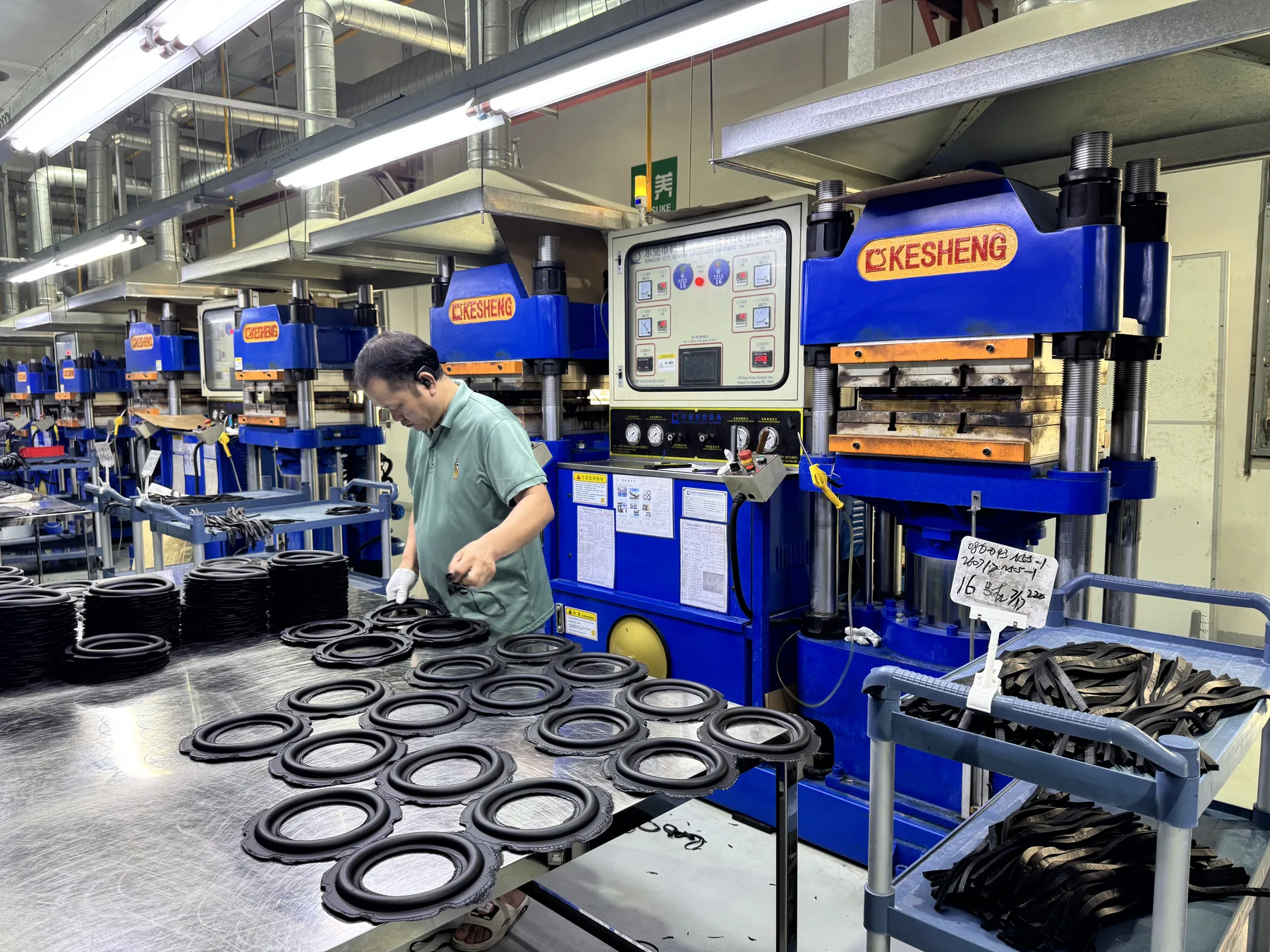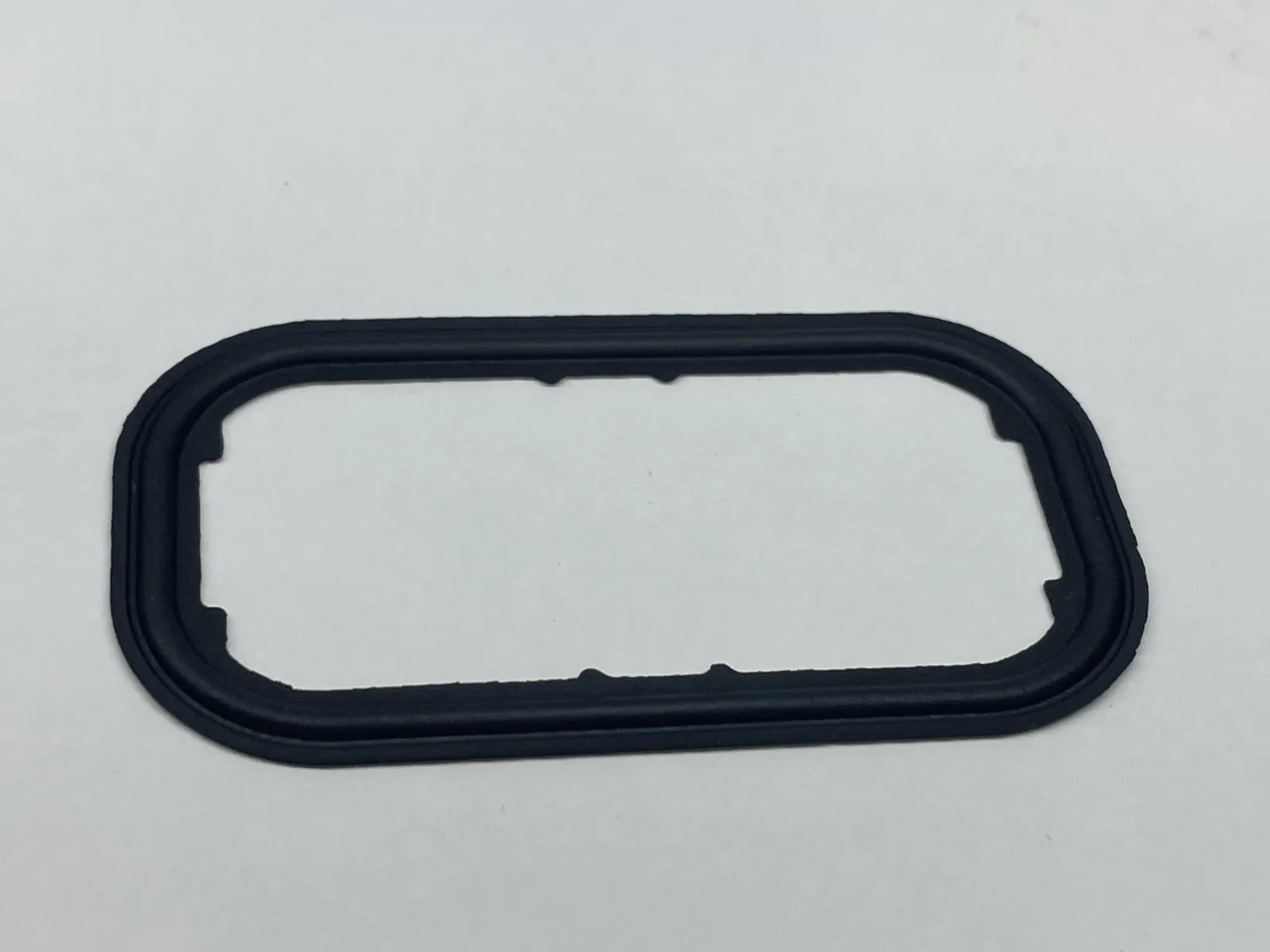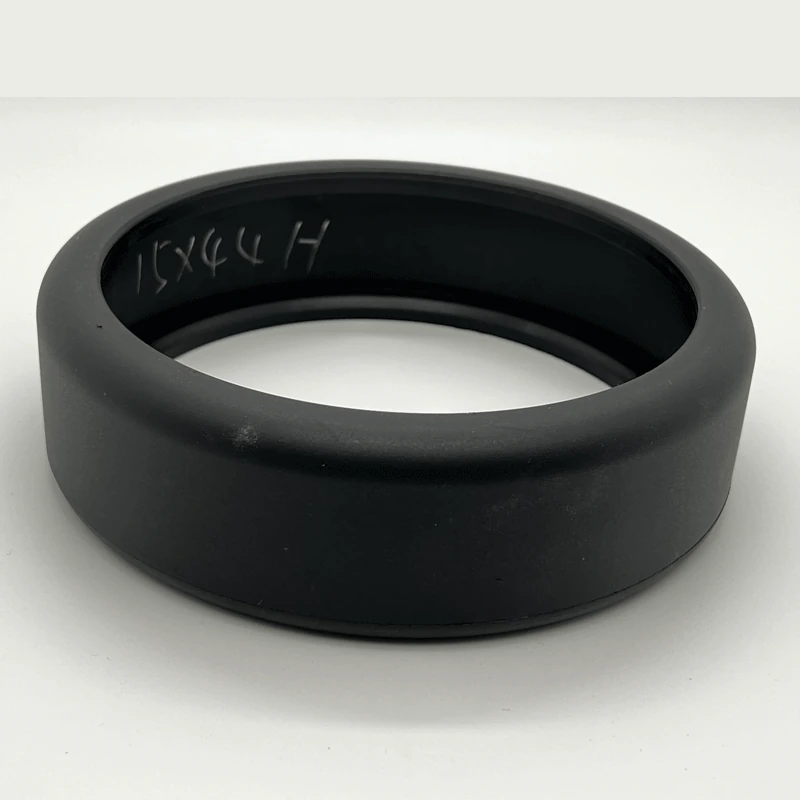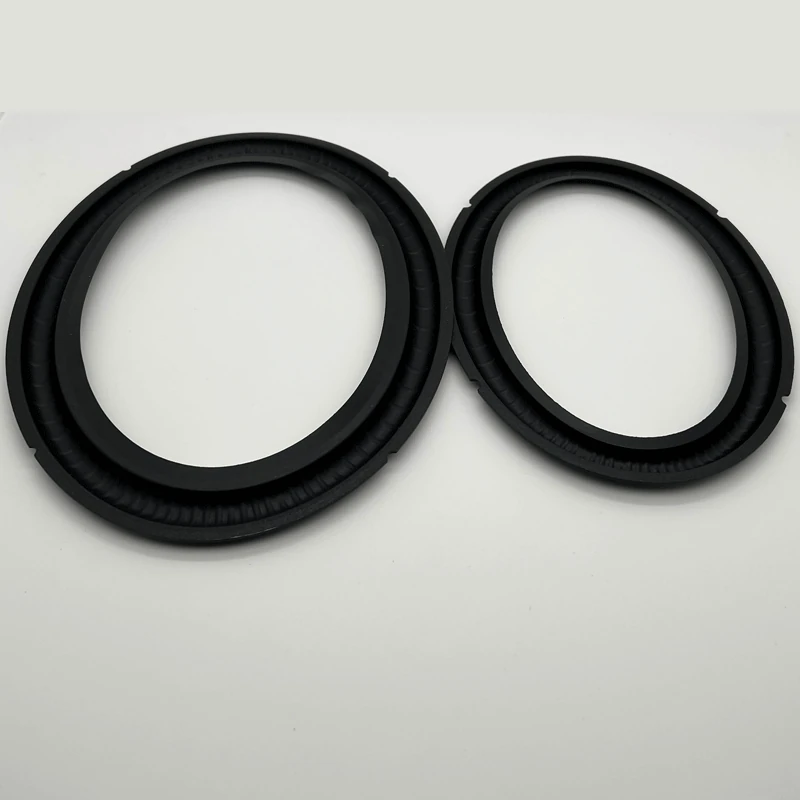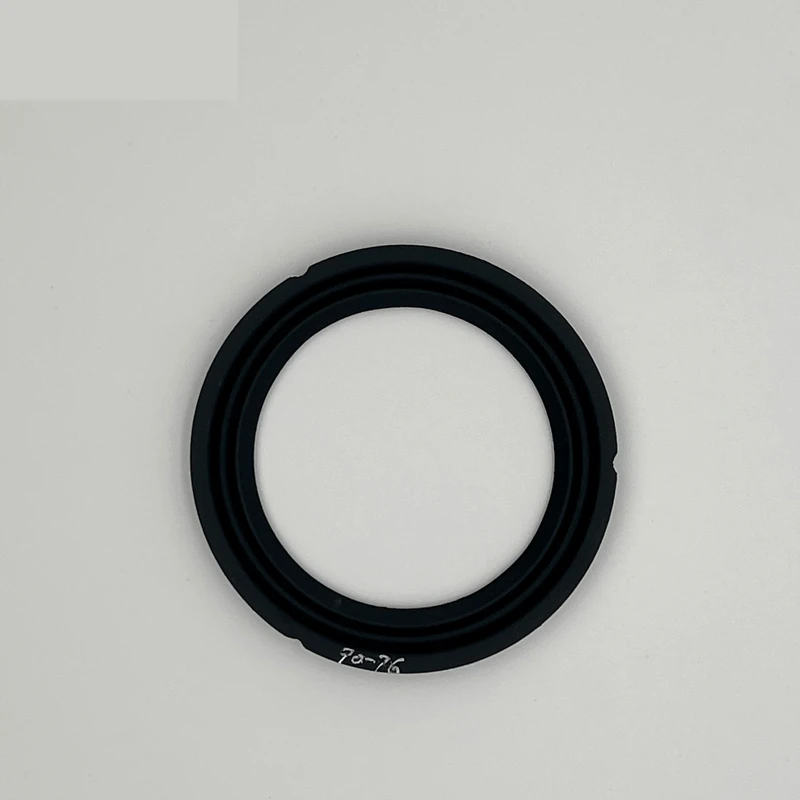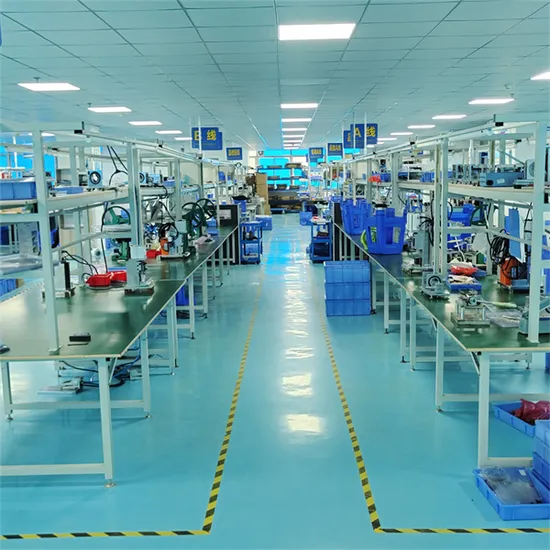
To verify a Chinese speaker-parts manufacturer before you order, confirm five things in measurable terms: which production steps are in-house, how the factory controls its rubber compound, what acoustic-grade testing it can run, whether it locks a written sample-to-bulk record, and how it packs for export. A catalog and a low quote prove nothing on their own — a real molded-parts factory can show exactly how raw compound becomes repeatable parts.
This matters most for importers, distributors and audio brands sourcing speaker rubber surrounds, foam surrounds, cones and gaskets: the risk is not the sample looking good, but the bulk order arriving with an inconsistent roll profile, off-target resonance, or the wrong Shore hardness. Verification is how you close that gap up front.
Factory or trading company? How to tell
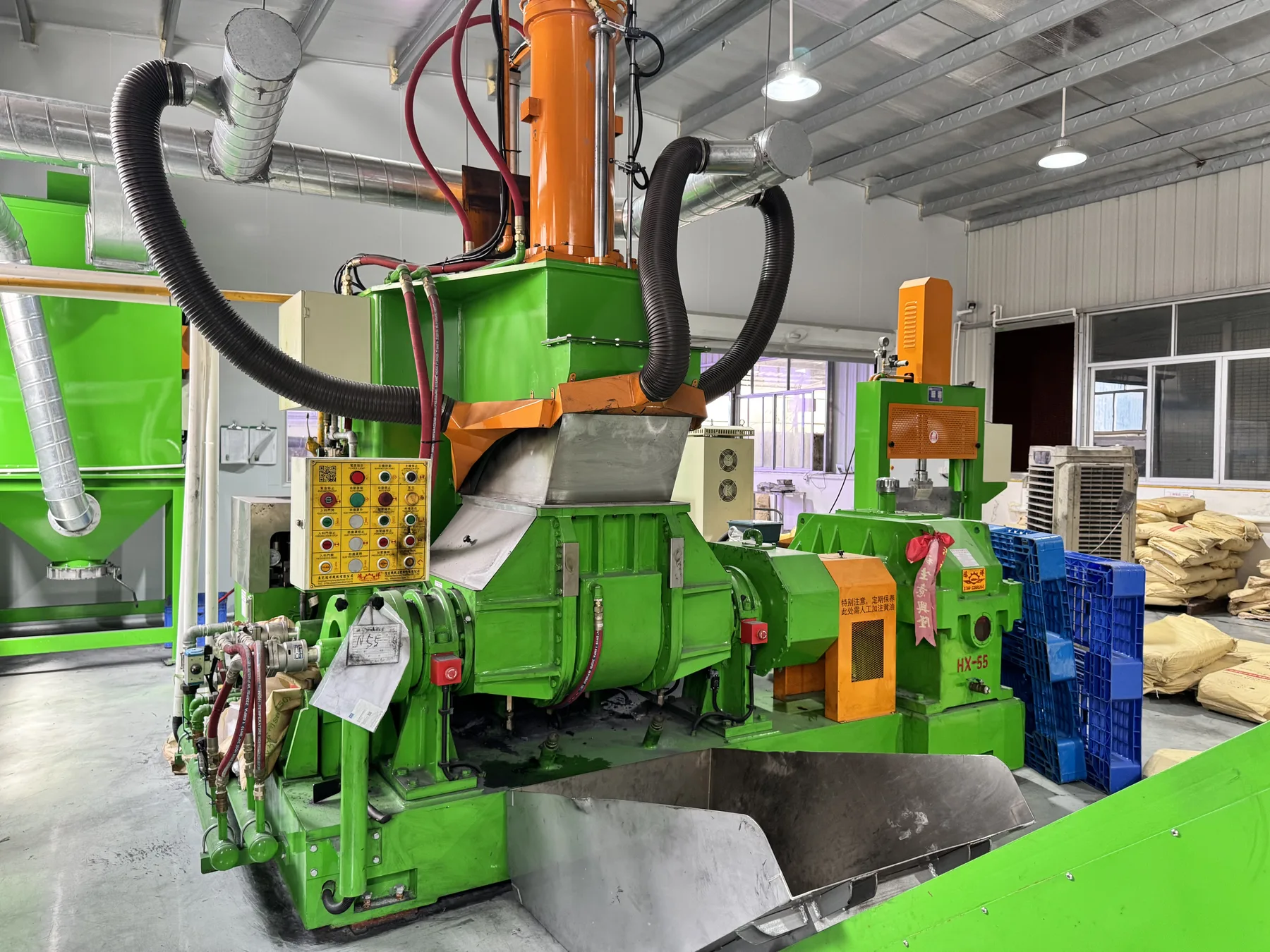
The single most useful question is: which steps do you run in-house? A genuine acoustic-rubber factory compounds its own rubber, molds and vulcanizes in-house, slits and finishes, and inspects at every stage. Ask for process photos or a short video of the internal mixer, roll mill and vulcanizing press — a trader cannot produce them for its own floor.
| Signal | Real factory | Trading company |
|---|---|---|
| Compounding (mixing) | Own internal mixers & roll mills | Buys finished compound or parts |
| Molding / vulcanizing | In-house presses (dozens) | Outsourced, cannot show floor |
| Defect discussion | Explains causes & limits precisely | Vague, deflects to "supplier" |
| Custom compound | Adjusts formula to your spec | Offers only catalog stock |
Material and compound control
Speaker surrounds are only as good as their compound. Ask which base rubbers the factory runs and how it matches them to your driver and market:
| Compound | Best for |
|---|---|
| IIR (butyl) | High internal damping, low air leakage — premium woofers |
| EPDM | Weather and ozone resistance — outdoor / marine |
| NBR | Oil resistance, cost-effective general use |
| SBR | Economical general-purpose surrounds |
| Foam | Lightweight, high-compliance surrounds |
A specialist can also formulate custom compounds — flame-retardant, light-transmitting or color-matched — and control Shore A hardness, thickness and roll profile. If a supplier can only offer one generic rubber, it is not controlling production deeply enough for OEM work. See the range on our custom OEM/ODM service.
Acoustic-grade QC — the real differentiator
Any rubber shop can mold a part. A speaker-parts factory proves consistency with acoustic-specific testing that generic suppliers do not own. Ask what the QC lab actually has:
- F0 resonance-frequency tester — verifies each batch holds its target resonance, the property that most affects how a surround performs in the driver.
- 2D optical measurement — precise dimensional and profile checks, not just calipers.
- Rubber tensile & Shore A hardness — mechanical consistency batch to batch.
- Salt-spray, UV aging, constant temperature & humidity, weathering — durability for the destination climate.
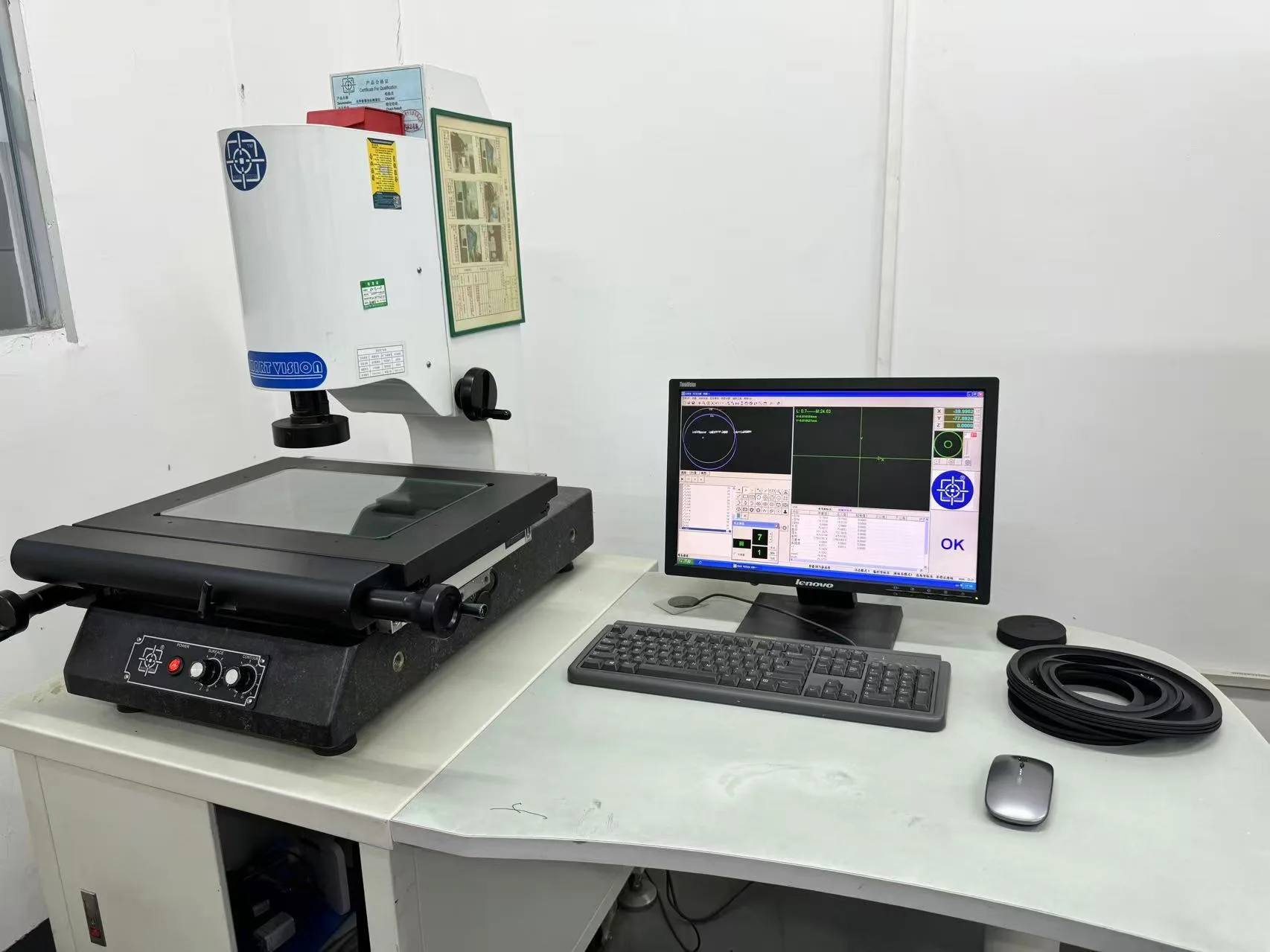
Pair suitable tests with a three-stage inspection — incoming material, in-process and outgoing — plus compound and sample development. Not every test belongs on every order, so ask which checks apply to your drawing, application and approved sample. A factory that can explain that workflow is a very different partner from one that only sends photos. See the production evidence across our source-factory network.
Lock the sample-to-bulk record
Most sourcing complaints trace to one pattern: the sample was approved by eye, but the measurable details were never locked. Before a bulk order, turn sample approval into a control record:
- Diameter and roll profile, compound and Shore A hardness, thickness, color range
- F0 / resonance target where relevant, and the acceptable tolerance
- Clearly versioned samples (v1, v2…) so the floor builds to the latest spec, not an old one
Typical timing: samples in 3–7 days; mass production in 15–30 days after sample approval and deposit, depending on quantity, compound and tooling.
MOQ, tooling and size range
Separate product MOQ from packaging MOQ, and ask what a trial run looks like. As a guide for catalog parts: standard MOQ around 500 pcs per SKU, trial orders from 100 pcs, and custom-tooled parts carrying a higher MOQ tied to the new mold (a one-time tooling cost that is often creditable against bulk orders). A capable surround factory covers roughly 2" to 18", from micro-driver parts up to subwoofer and pro-audio surrounds and passive radiators.
Export readiness
Finally, confirm the supplier ships like an exporter, not a domestic vendor: RoHS / REACH-compliant compounds with material declarations, third-party testing (SGS / Intertek) on request, Incoterms such as FOB / CIF / DDP, and export packing planned around carton marks, labels and part weight. Factories that already supply parts used by leading audio and automotive brands will treat this as routine.
8-point verification checklist
- In-house compounding, molding and vulcanizing (with process photos/video)
- Named base compounds + custom formulation ability
- Shore A, thickness and roll-profile control
- Acoustic QC: F0 tester, 2D optical, tensile, hardness
- Durability testing: salt-spray, UV aging, temp/humidity
- Three-stage inspection (incoming / in-process / outgoing)
- Export compliance and packing (RoHS/REACH, Incoterms, carton plan)
- Versioned sample-to-bulk approval record
FAQ
How can I tell a Chinese speaker-parts factory from a trading company?
Ask which production steps are in-house and request process photos or video of the internal mixer, roll mill and vulcanizing press. A real factory compounds, molds and inspects on its own floor and can discuss defects in measurable terms; a trader outsources and stays vague.
What tests should a speaker surround factory be able to run?
For acoustic parts, look for an F0 resonance-frequency tester and 2D optical measurement, plus rubber tensile, Shore A hardness, salt-spray, UV aging and constant temperature & humidity testing — backed by three-stage incoming, in-process and outgoing inspection.
What is a typical MOQ and lead time?
As a guide, catalog parts run about 500 pcs per SKU with trial orders from 100 pcs; custom-tooled parts carry a higher MOQ. Samples are usually ready in 3–7 days and mass production in 15–30 days after sample approval and deposit.
Can I get samples before placing a bulk order?
Yes. Confirm an existing-profile or custom sample first, then lock a written approval record covering size, compound, Shore A hardness, thickness, color range and any resonance target before mass production begins.