The email came in at 11:40pm her time, subject line just "surrounds — need a number by Friday." Elena ran product for a mid-size audio brand that had spent two years building a decent soundbar line and one bad year discovering that their surround supplier's "premium rubber" was whatever compound was cheapest that quarter. Batch three shipped with a visibly different roll profile than batch two. Nobody caught it until returns started climbing.
She wasn't looking for a supplier anymore. She was looking for a partner who'd put a name on the box and stand behind it.
The compound conversation nobody skips
The first call wasn't about price. It was about EPDM versus butyl (IIR), and it ran forty minutes longer than scheduled. Jun, the engineer on the other end, asked questions Elena's old supplier never had: what climate do these ship into, what's the target Shore A, does this design leak air at the surround if damping runs too soft.
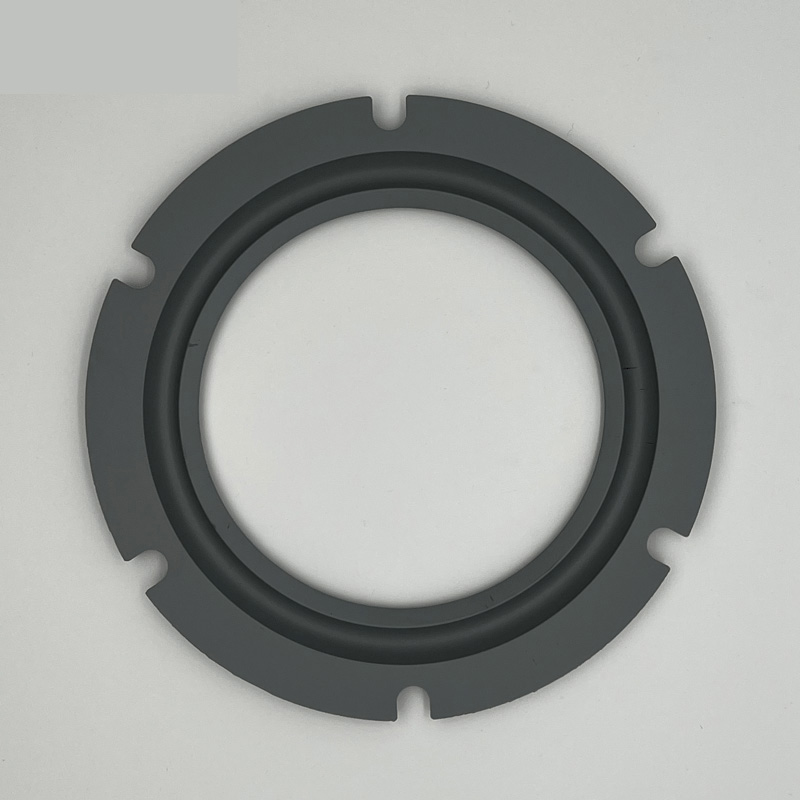
The brand's flagship woofer needed the low-distortion damping butyl gives a driver under real excursion — the line their reviews lived or died on. The outdoor speaker in the same catalog needed EPDM's weather resistance more than butyl's acoustic edge. Two products, two compounds, one supplier willing to say "these shouldn't be the same rubber" instead of upselling one formula to both.
"I've never had a factory tell me no to an easier order," Elena said on the follow-up call. Jun's answer was blunt: it's cheaper to fix a compound choice on a call than on a container.
Tooling for a size that doesn't exist in anyone's catalog
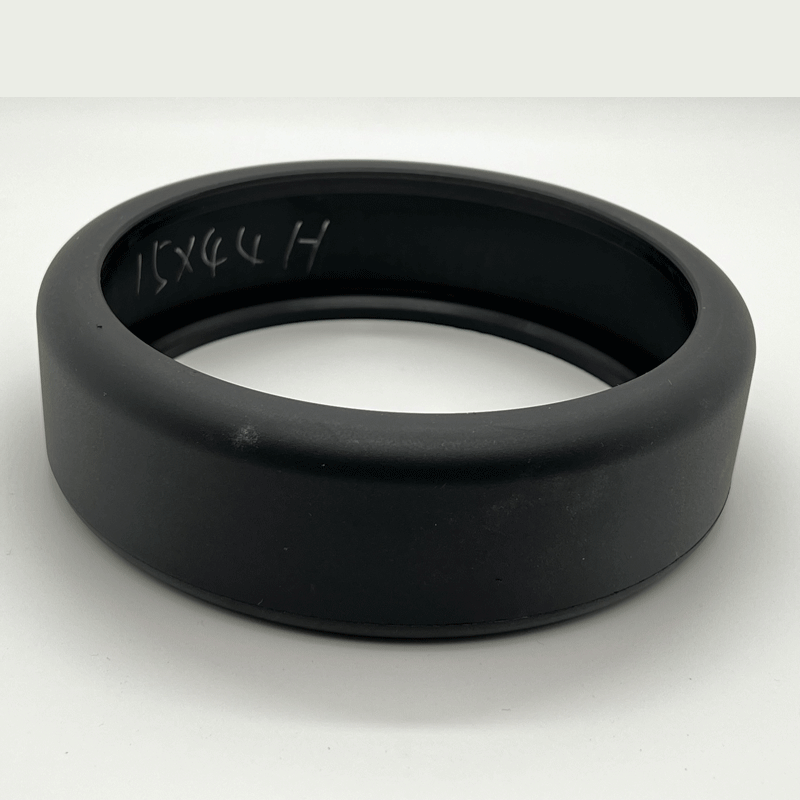
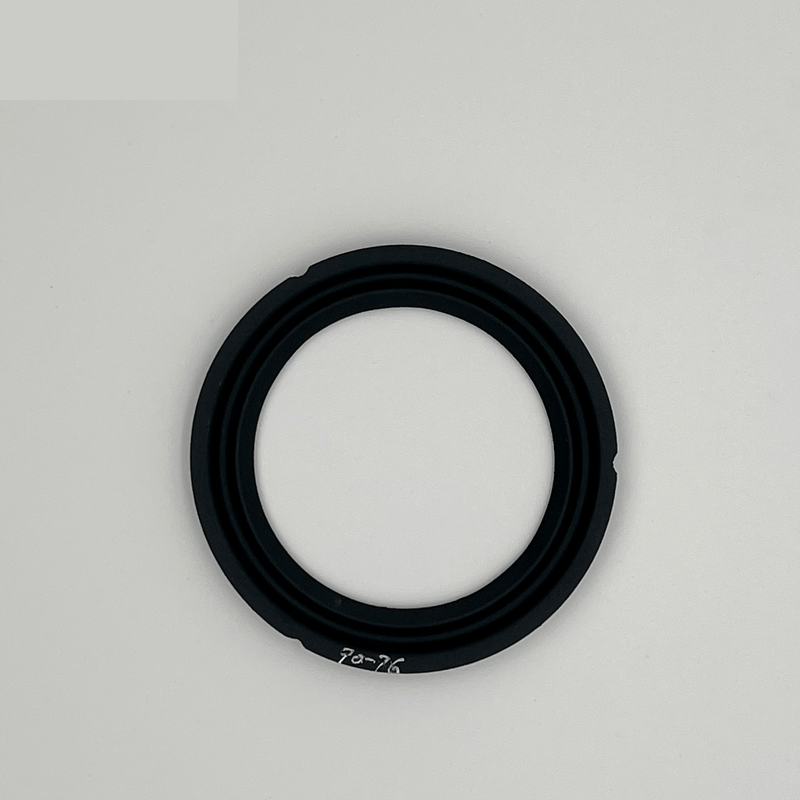
Both drivers used odd diameters — a 6.5" surround with a roll profile shallower than any stock mold, and a passive radiator diaphragm sized to a chassis nobody else was making. Nothing in the standard 2"–18" catalog fit either one exactly. That meant new tooling, and new tooling means everyone waits.
Custom mold lead time isn't a number the sales page publishes — it depends on tool complexity and how forgiving the tolerance is. Elena's team wanted a tolerance tight enough that a sloppy mold would show up as assembly-line rejects six months later, not as a return. The compound & sample development group ran the roll profile on paper first, catching a wall-thickness issue before it became a mold revision.
Three rounds, and why the second one still wasn't right
Sampling on existing tooling runs 3–7 days. Custom tooling resets that clock with every revision, and this project needed three rounds before sign-off.
| Round | What came back | Verdict |
|---|---|---|
| 1 | Surround profile correct; PR diaphragm too stiff at target Shore A | Rejected — compound ratio adjusted |
| 2 | Diaphragm compliance fixed; surround showed a faint mold line at the roll's outer edge | Rejected — mold surface re-polished |
| 3 | Both parts within spec on F0 and optical measurement | Approved |
"Round two was the frustrating one," Elena admitted later. "It looked fine to the eye. It was the optical scan that flagged the mold line, not us." That's the point of a two-dimensional optical measurement pass on samples — the defect that fails a driver in the field is rarely the one you can see holding it up to a window.
The QC gate before a single unit ships in bulk
Once samples were approved, production ran through the same three-stage inspection every order does: incoming checks on the raw compound, in-process checks during molding, outgoing checks before the crates get sealed. For an acoustic part, outgoing checks mean more than a visual pass — every batch gets an F0 resonance test, because a surround with the right shape but the wrong stiffness still throws a driver's tuning off. Tensile, Shore A hardness, and — since one line was headed to a hot, humid market — salt-spray and UV aging pulls from the same batch.
Elena's QA lead flew out for the first bulk run and watched a sample pulled off the line get checked on the F0 tester. He asked, half-joking, whether every factory did that. Jun didn't dodge it: no — only the ones set up specifically for acoustic parts, not general rubber shops.
Packaging that says nothing about the factory
Private label meant no factory branding anywhere a competitor's teardown could find. Cartons carried the brand's own artwork, part numbers matched their internal SKU scheme instead of a factory code, and inner trays were sized to their assembly line rather than a generic export box. None of that is exotic, but it has to be specified before the first production run — carton tooling and print plates run their own lead time, in parallel with the mold work, not after it.
The first container
The pilot order was a 100-unit trial batch per SKU, enough to run a full assembly-line trial without committing to a container. It cleared. The real production order followed the standard 15–30 day bulk cycle once samples and deposit were locked, landing near 500 units per SKU on the catalog-adjacent sizes and a higher minimum on the fully custom tooling, to spread mold cost across a run that made sense.
A couple of months after that 11:40pm email, a container left with parts carrying no name but the brand's own. Elena's return-rate problem from the year before didn't come up again. Weighing rubber against foam for your own line first? The trade-offs are in our rubber vs foam surrounds guide. Ready to talk compound, tooling and MOQs for your driver? That conversation starts on our custom service page — standing catalog sizes are on our products page.
FAQ
How long does a private-label surround or PR diaphragm launch actually take?
Catalog sizes sample in 3–7 days, then bulk production runs 15–30 days after approval and deposit. Custom tooling adds mold lead time and usually two to three sampling rounds before sign-off — budget several extra weeks for a fully custom size.
What's the minimum order for a private-label line?
Catalog-size SKUs run around 500 units per SKU for a standard order, with 100-unit trial batches available to validate fit first. Custom-tooled sizes carry a higher minimum to spread the mold cost across the run.
Can two products in the same line use different rubber compounds?
Yes, and often should. A woofer chasing low-distortion bass usually wants butyl (IIR); a product headed outdoors or into humidity is better served by EPDM's weather and ozone resistance. Match compound to environment rather than standardizing on one formula for convenience.
How is quality actually verified before a bulk shipment goes out?
Through incoming, in-process, and outgoing checks. For acoustic parts, outgoing checks add an F0 resonance test and optical measurement alongside tensile, Shore A hardness, and — where the application calls for it — salt-spray and UV aging.