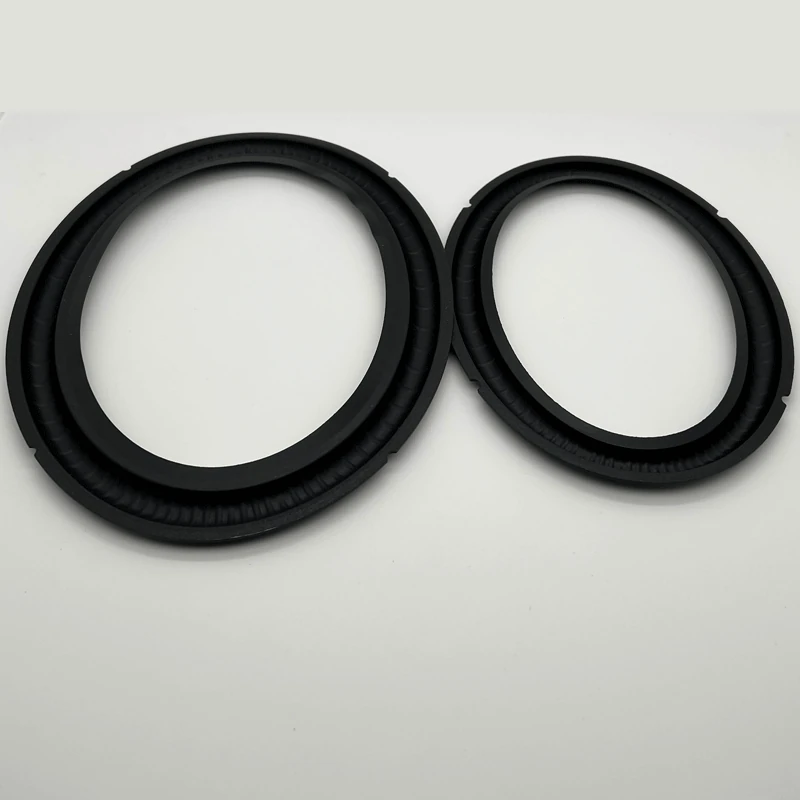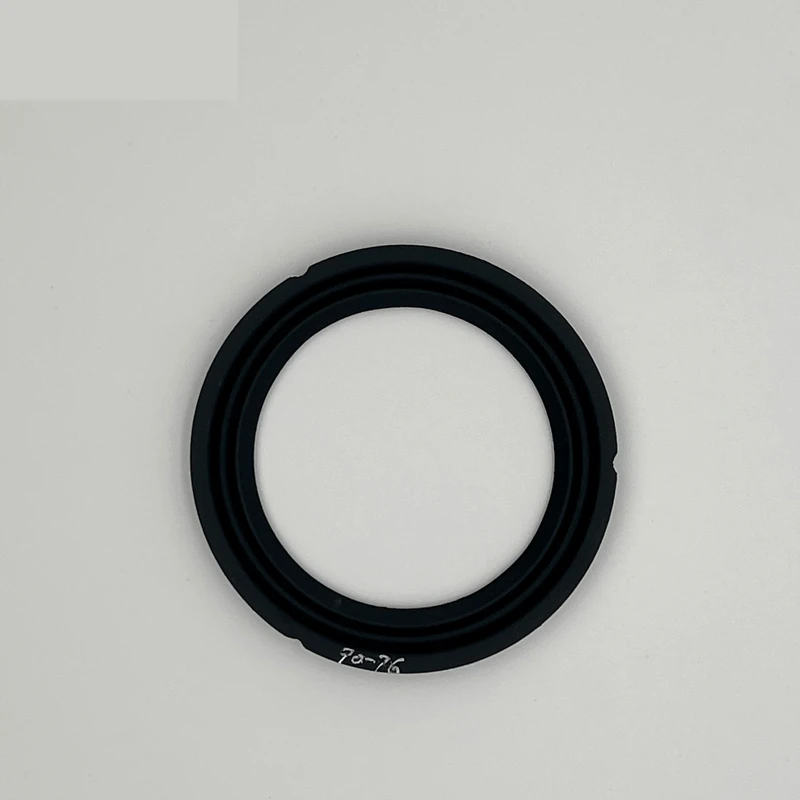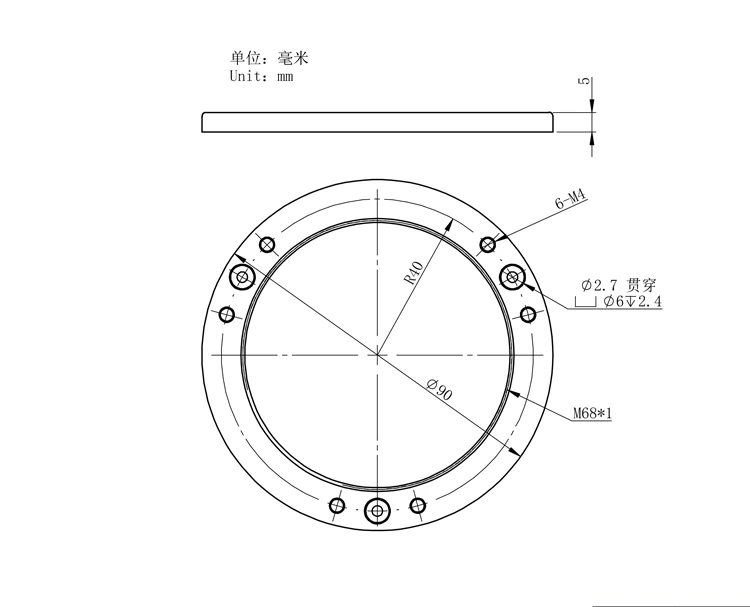
The email had a PDF attached, and the PDF had a hand-annotated roll profile with three numbers circled in red. "These are the ones that matter," the note said. "The rest we can negotiate." That is usually how it starts — not a spec sheet nobody reads, but an engineer trying to explain, in one page, why this driver is different from the last one.
Priya was the sourcing engineer on the brand's side, requalifying a mid-size woofer for a next-generation soundbar. Wei ran process engineering on the factory floor. Neither had met in person; most of this project lived in a shared folder and a few calls, which is a fairly normal way for a surround to get made.
A drawing is not a mould yet
Priya's brief had a target Fs, a compliance range, and that roll profile — half-roll, specific width, specific durometer. It did not have a material call. "Butyl gives you the damping you're after," Wei wrote back, "but check the excursion budget against your voice coil gap first. Need more compliance than that, and we should talk foam instead." Bouncing a target spec against real compound behavior is most of what a good OEM/ODM conversation actually is — nobody was selling anything yet, they were arguing about physics.
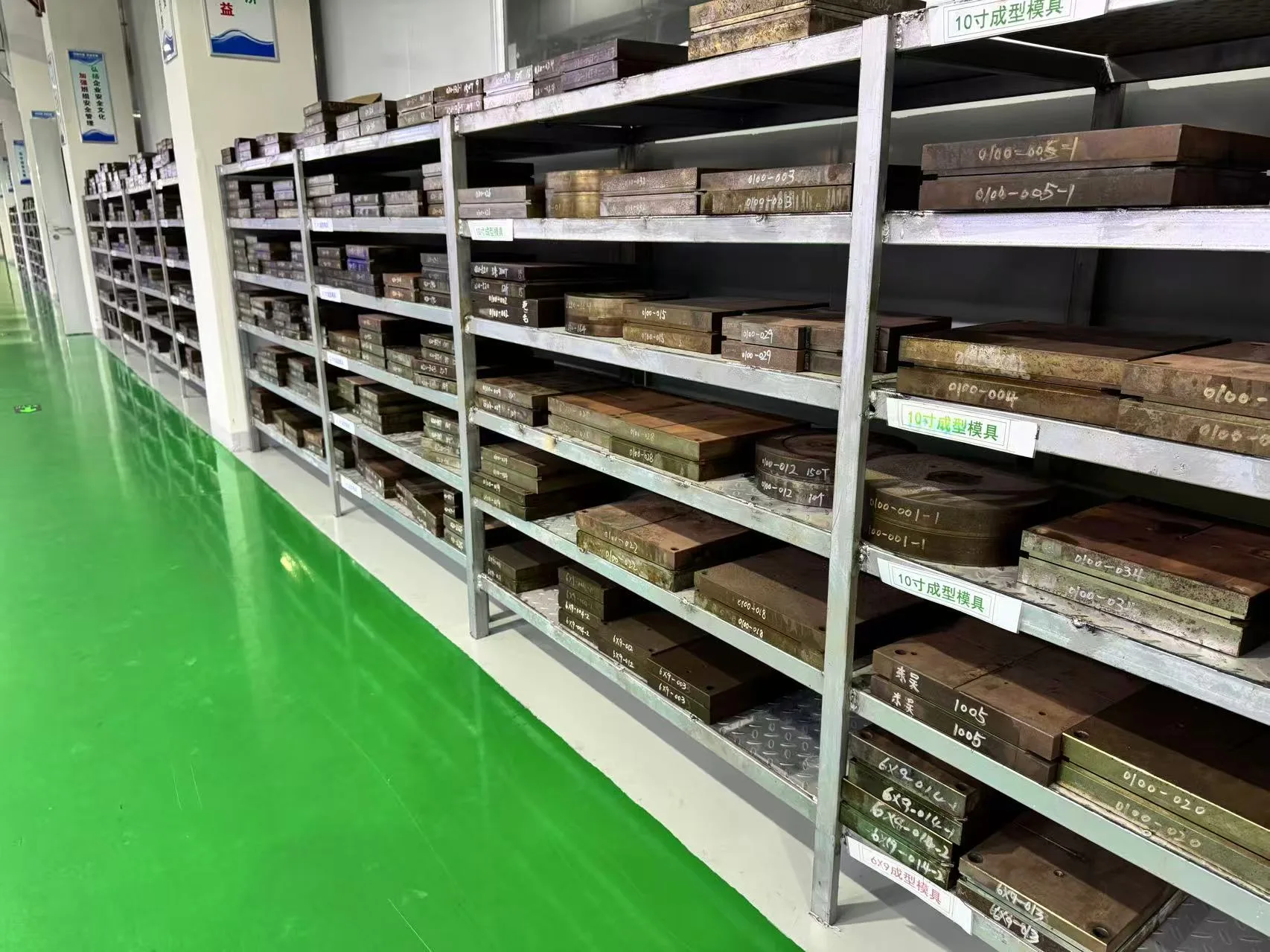
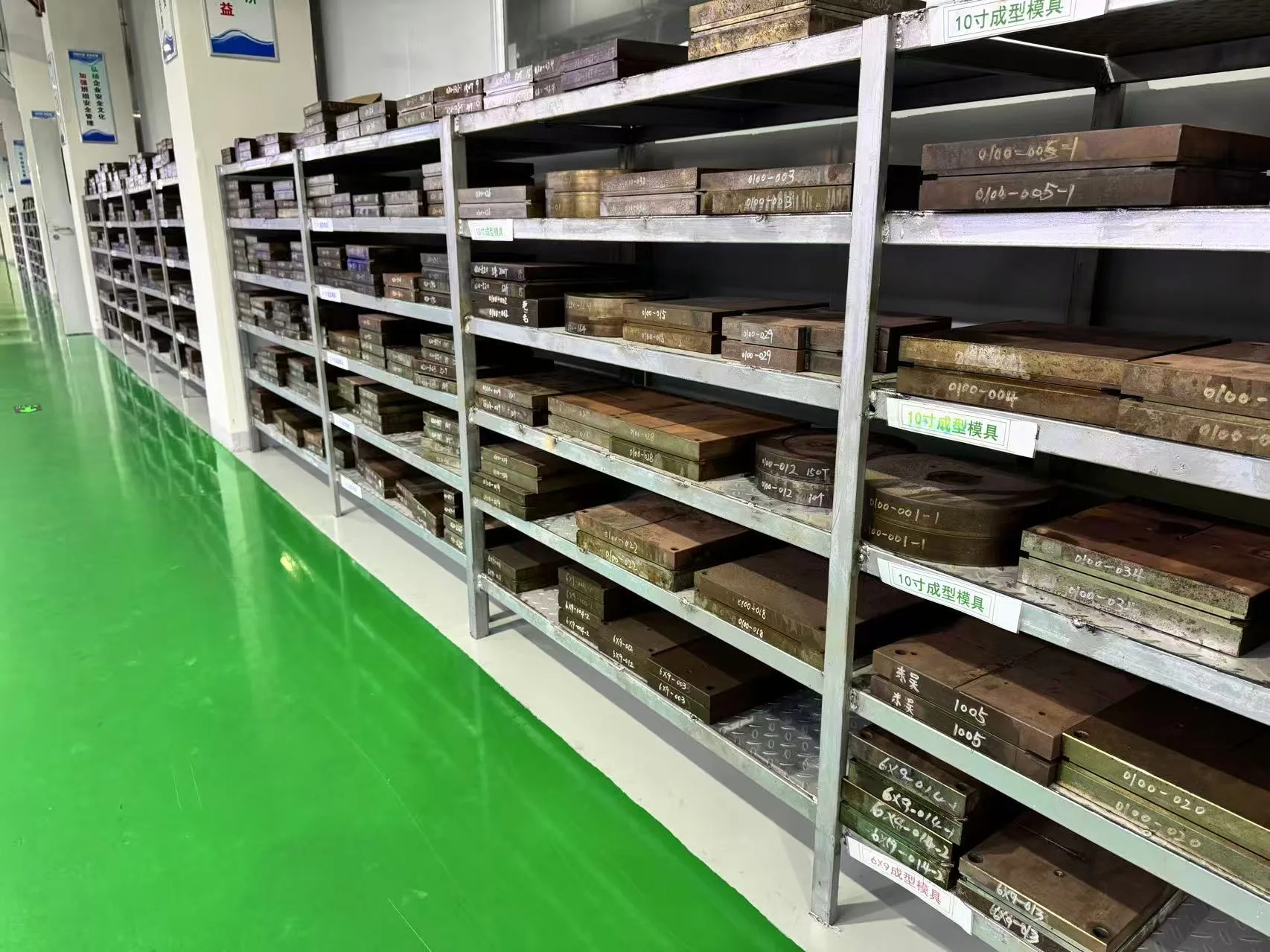
They landed on an EPDM blend for the outdoor-rated variant and a softer NBR for the indoor SKU — same roll geometry, two compounds. Once the profile and material were locked, the factory cut the mould. For a new roll profile that means real tool-making time, not an edit to an existing die, and it's the step that decides everything downstream: get the profile wrong here and every sample after it inherits the mistake.
The first sample, and what F0 actually tells you
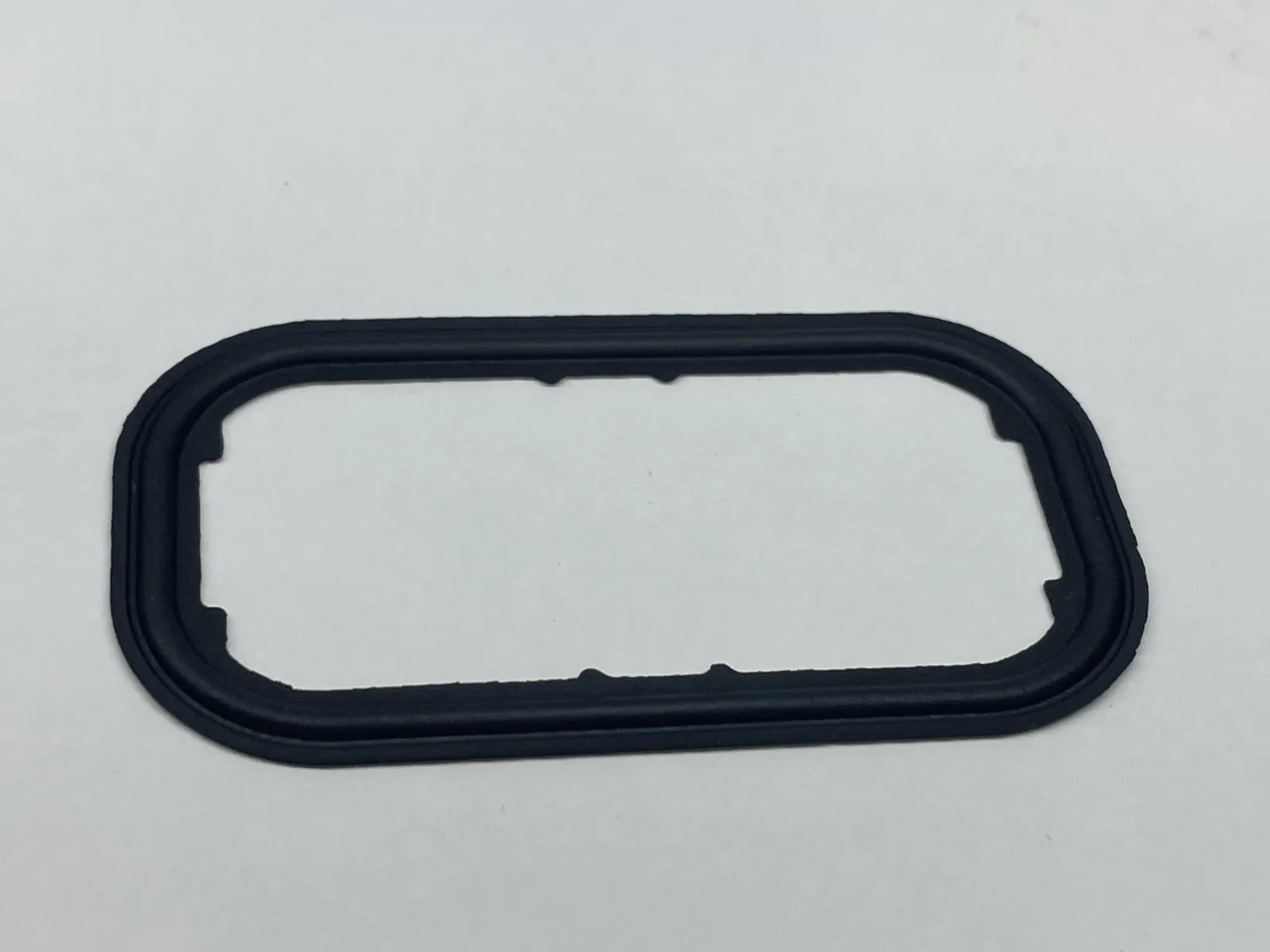
First samples came back inside a week. Priya mounted one on a test rig the same afternoon it arrived. This is the part people underestimate: a surround can look correct — right diameter, right roll, right color — and still be wrong in a way you can't see, which is exactly why an F0 resonance-frequency test exists as a separate step from a visual check. It measures how the surround behaves once it's doing its job, not how it looks on a bench.
The first round measured close but not clean. Fs drifted slightly high across the batch, and a 2D optical measurement pass showed the inner bead running undersized against the drawing — small enough to slip past a caliper spot-check, large enough to change how the surround seated against the cone.
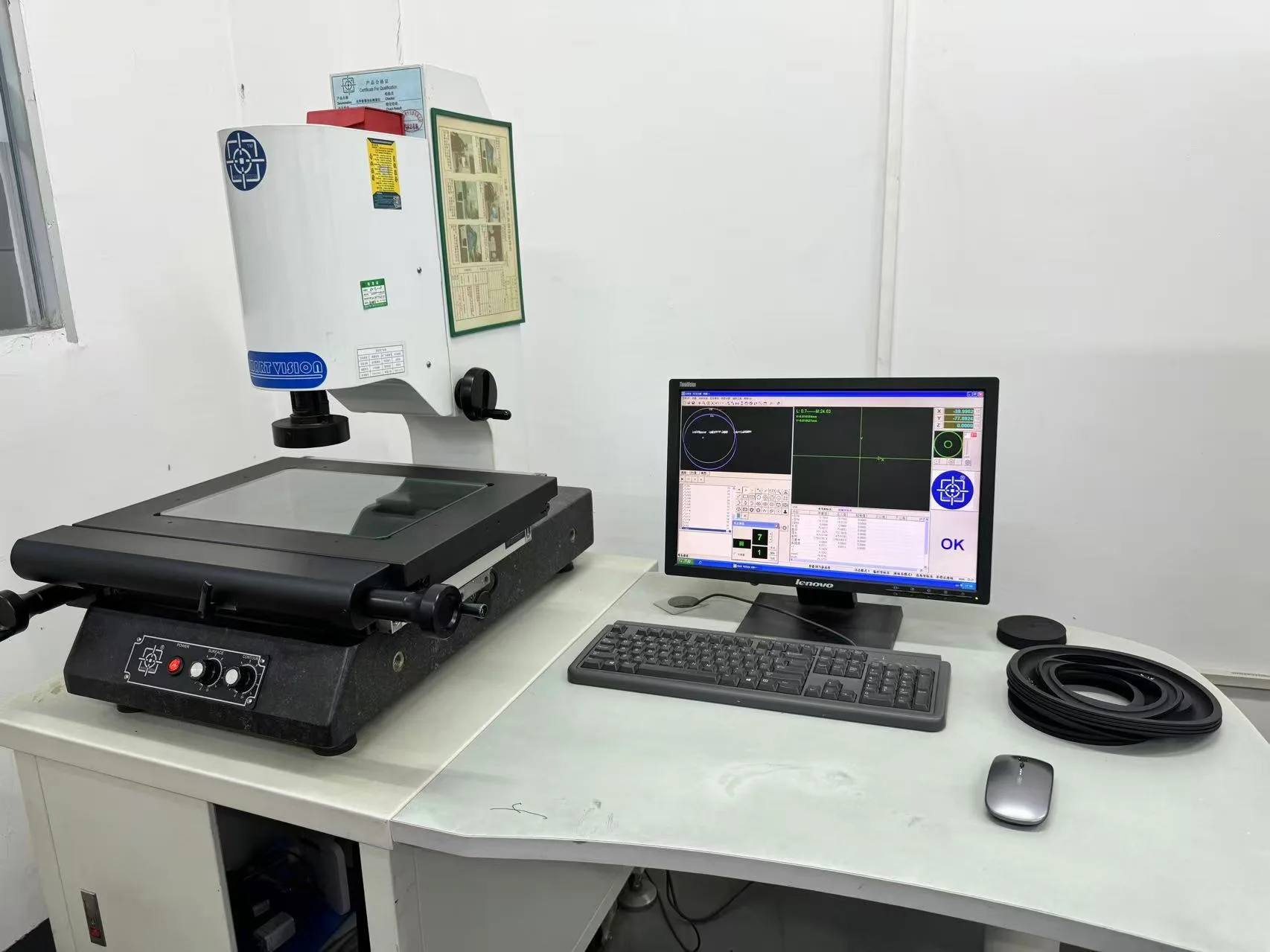
"Your Fs numbers are creeping high on three of the five." — Priya
"Send me the optical data, not just the acoustic. I want to see if it's the bead or the roll thickness." — Wei
The revision round nobody skips
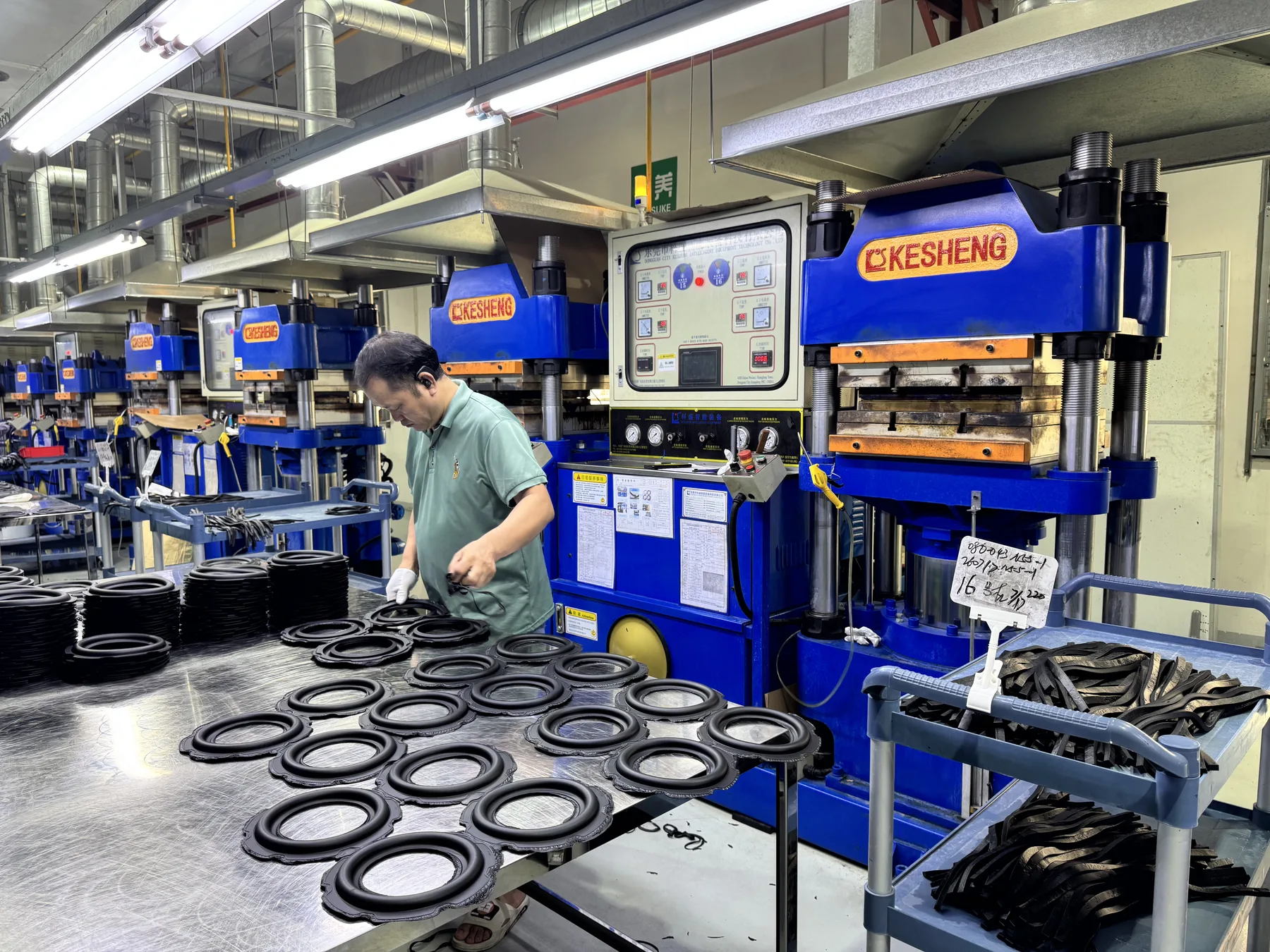
Tooling got a targeted adjustment to the bead dimension, not a full rebuild — the roll profile itself was fine. A second sample batch went through the same pair of checks, plus tensile and Shore A hardness pulls, and this time everything cleared. Two rounds is typical for a profile this specific; a simpler geometry sometimes clears in one, and a genuinely novel roll can run a third. The point isn't hitting round one — it's not shipping a container before the numbers agree with the drawing.
With samples approved and a deposit placed, the project moved to bulk — fifteen to thirty days is the usual window from approval to a shipped batch, depending on volume and whether both compound variants run the same week.
Bulk isn't just "make more of the sample"
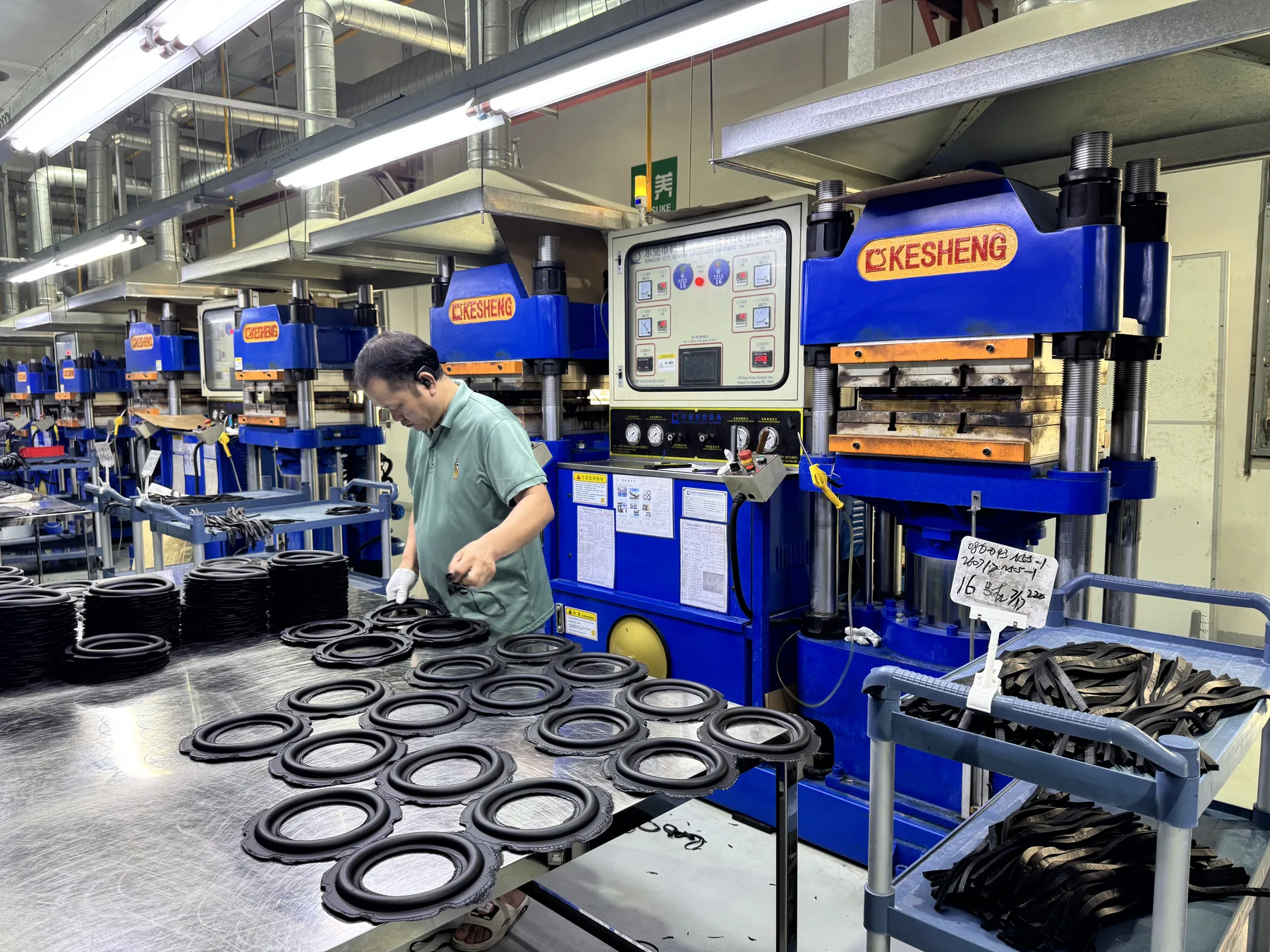
Scaling a sample to volume runs through the same three-stage discipline applied to every order: incoming material check, in-process monitoring, and outgoing inspection before anything is packed. Shore A hardness gets spot-checked through the run, not just at the ends, and a portion of every batch still goes back through F0 and optical measurement — the same two checks that caught the bead issue on round one, now applied as a floor rather than a discovery tool.
| Stage | What happens | Typical timing |
|---|---|---|
| Brief & material match | Spec and roll profile matched to a compound | Days, back-and-forth |
| Tooling | Mould cut to the agreed profile | Varies by complexity |
| First sample | Produced, shipped for testing | 3–7 days |
| F0 & optical check | Resonance and dimensional verification | Same week as sample |
| Revision round(s) | Tooling adjustment, re-sample if needed | Usually 1–2 rounds |
| Approval + deposit | Sample signed off, order confirmed | — |
| Bulk production & QC | Incoming / in-process / outgoing checks | 15–30 days |
| Export packing | Batch packed and shipped | Within that window |
Priya's containers cleared outgoing inspection on schedule, with the EPDM and NBR variants run on staggered weeks so neither held up the other. Brief to bulk ran a little over six weeks including the revision round — an ordinary timeline for a profile that didn't exist as a tool eight weeks earlier.
This account is illustrative — it walks through how a typical development runs at our factory rather than naming a specific client, since we don't publish project details for the audio and automotive brands we work with. If you're staring at a drawing with numbers circled in red, the process starts the same way: send it to custom service. Browse the base ranges on our products page first, or read up on choosing a surround material before you commit to one.
FAQ
How long does a custom surround take from first contact to bulk shipment?
First samples typically ship in 3–7 days once the mould is cut. After sample approval and a deposit, bulk production runs 15–30 days depending on volume. A revision round adds time for a second sample and another F0/optical pass before bulk starts.
Why does a sample need an F0 test if it already looks correct?
A surround can match the drawing visually and still resonate off-target once mounted, since Fs depends on the whole moving system, not just the surround's shape. F0 and 2D optical measurement check two different things — acoustic behavior and physical dimension — and a real development often needs both to catch a drift the other misses.
How many sample rounds are normal before approval?
One or two is typical; a genuinely new geometry can run a third. The goal isn't a fast first pass — it's a sample that clears F0, optical, tensile and Shore A hardness checks before bulk tooling commits to it.
What happens during the three-stage QC on a bulk order?
Incoming inspection checks raw compound before it enters production, in-process checks (including Shore A hardness spot-checks) run through the batch, and outgoing inspection verifies finished parts — including a sampled F0 and optical pass — before packing for export.