A buyer sends a speaker-frame drawing with one line marked “gasket.” No thickness, compression target, adhesive note or view of the baffle. The shape can still be quoted. Whether it will seal is another question.
Speaker gaskets are usually made in one of two ways: cut a flat shape from foam or rubber sheet, or mold a three-dimensional rubber profile under heat and pressure. Die cutting is efficient for flat interfaces and adhesive-backed parts. Molding earns its cost when the gasket needs a raised bead, locating features, controlled corners or a profile that cannot come from sheet stock. The correct route starts with the two mating surfaces, not with a preferred machine.
First confirm that the part is a gasket
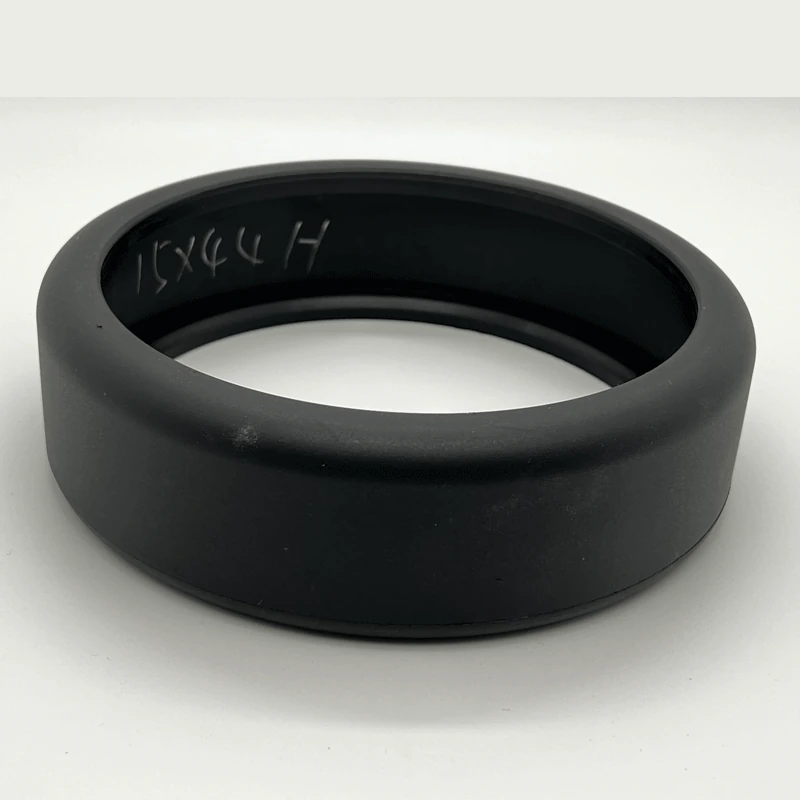
A speaker gasket is normally clamped between stationary surfaces: the driver basket and baffle, a passive-radiator frame and enclosure, or a removable panel and cabinet. A speaker surround is different. It joins the moving cone or diaphragm to the frame and flexes on every cycle. The two parts can both look like black rings, but their jobs, materials and approval criteria are not interchangeable. Our speaker gasket guide shows the common locations and failure signs.
Die-cut foam or molded rubber?
| Decision | Die-cut foam or sheet | Molded rubber |
|---|---|---|
| Interface | Flat, relatively even mounting faces | Uneven faces or geometry needing a shaped sealing bead |
| Geometry | Two-dimensional outline, holes and cutouts | Raised ribs, lips, steps, bosses and controlled corner sections |
| Assembly | Often supplied with pressure-sensitive adhesive and release liner | Can locate mechanically; adhesive remains project-specific |
| Tooling | Cutting die or digital cutting route | Dedicated compression mold or suitable existing tooling |
| Best fit | Cost-sensitive volume, trim rings and flat frame seals | Outdoor, automotive or repeat-assembly interfaces needing a defined profile |
Closed-cell foam is a common starting point because it can conform under clamp load without providing an open air path through the material. Density, thickness and adhesive still need testing on the real substrate. A soft material may compress too far, while a firm strip may bridge over a warped baffle.
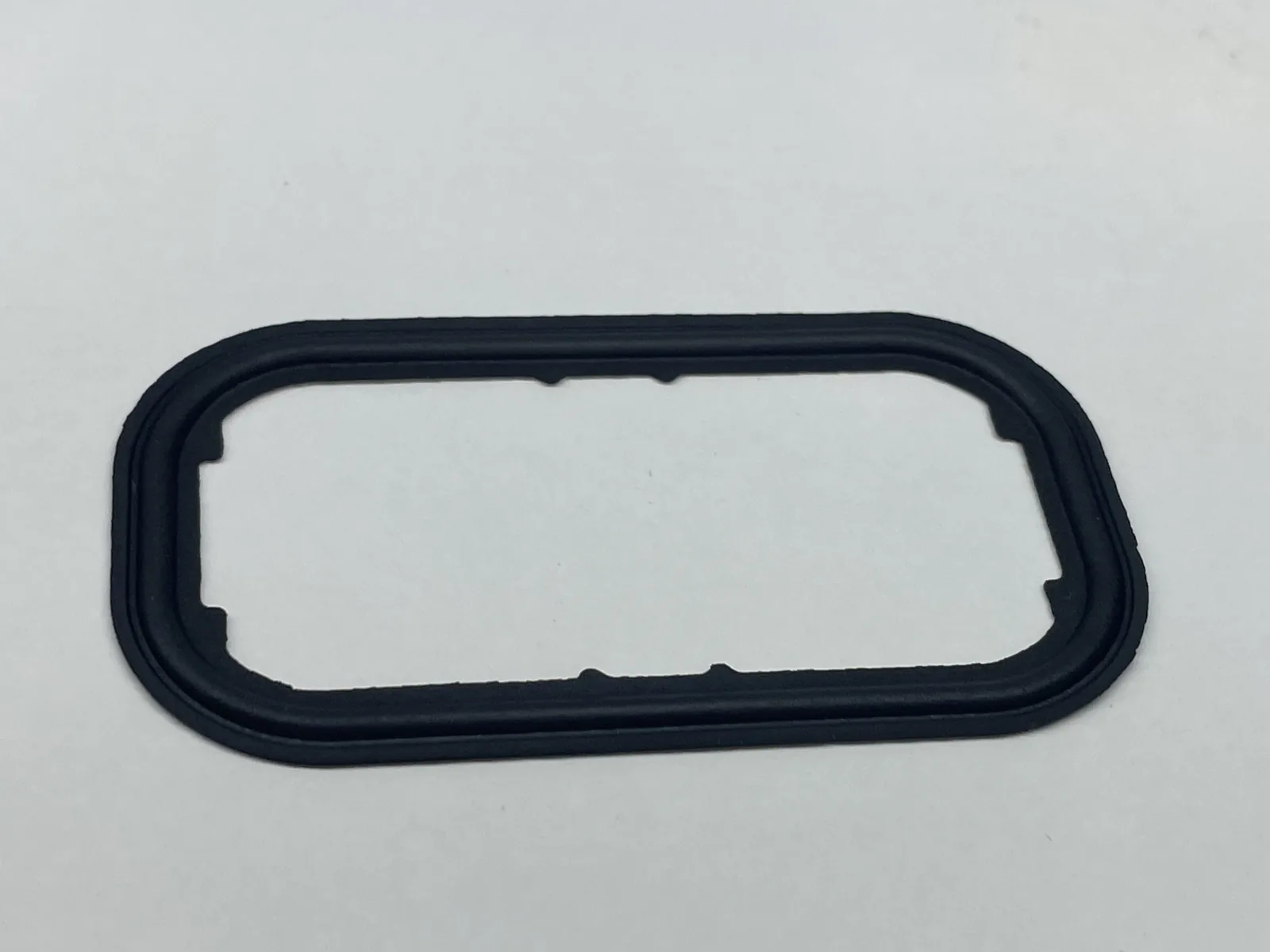
Molded rubber gives the designer another tool: geometry. A narrow sealing rib can concentrate contact pressure. Locating notches can keep a non-round gasket from shifting during assembly. A stepped section can follow the frame rather than forcing the housing to flatten a uniform sheet. NBR, SBR, IIR and EPDM provide different combinations of cost, air permeability, oil resistance and weathering; the application decides which trade matters.
How a molded speaker gasket moves through production
For a molded part, the drawing or sample is reviewed against the mating interface first. The useful dimensions are not only overall length and width. The review needs the sealing path, cross-section, thickness, corners, holes, notches, compression direction and any surface that controls location.
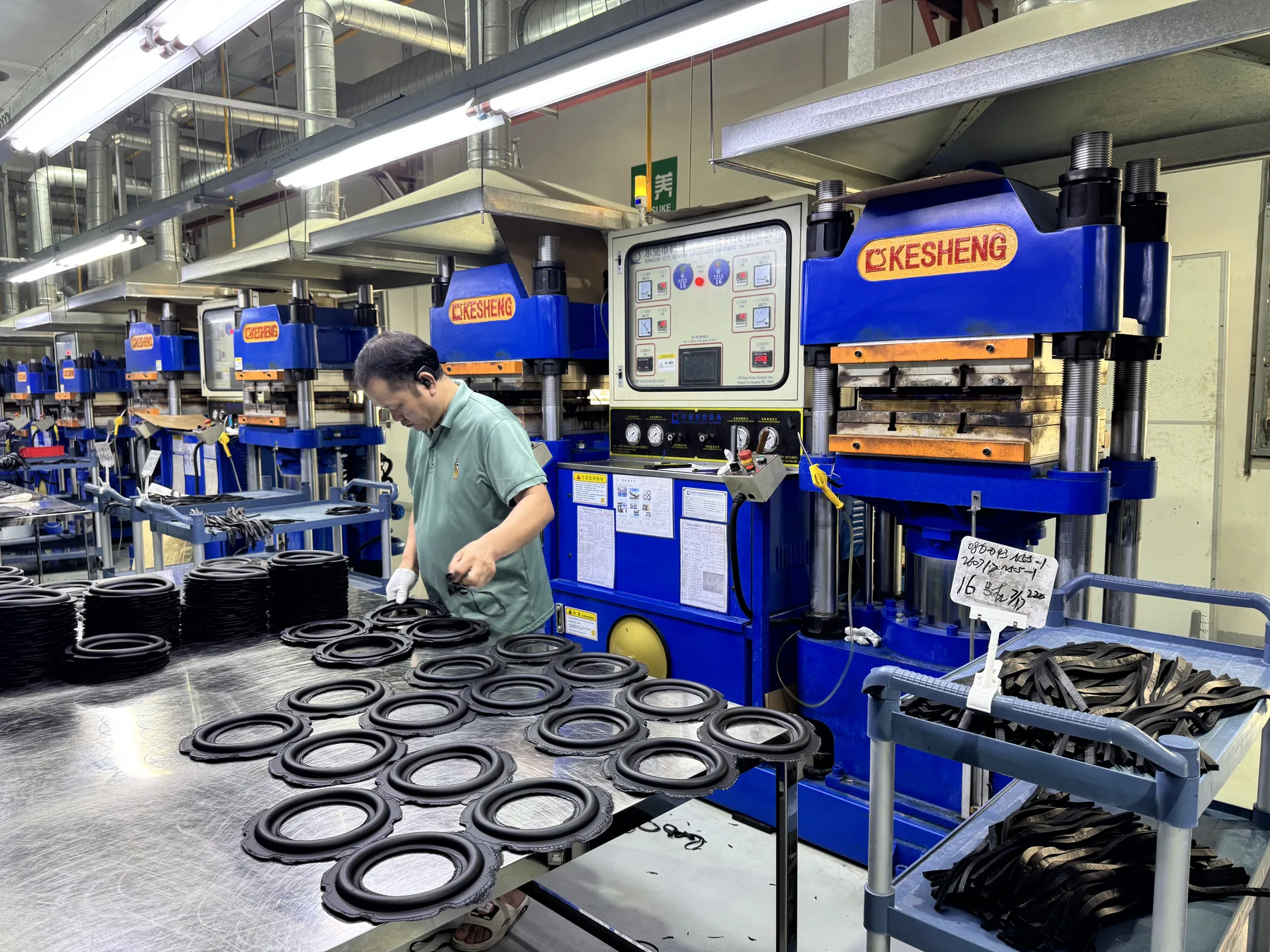
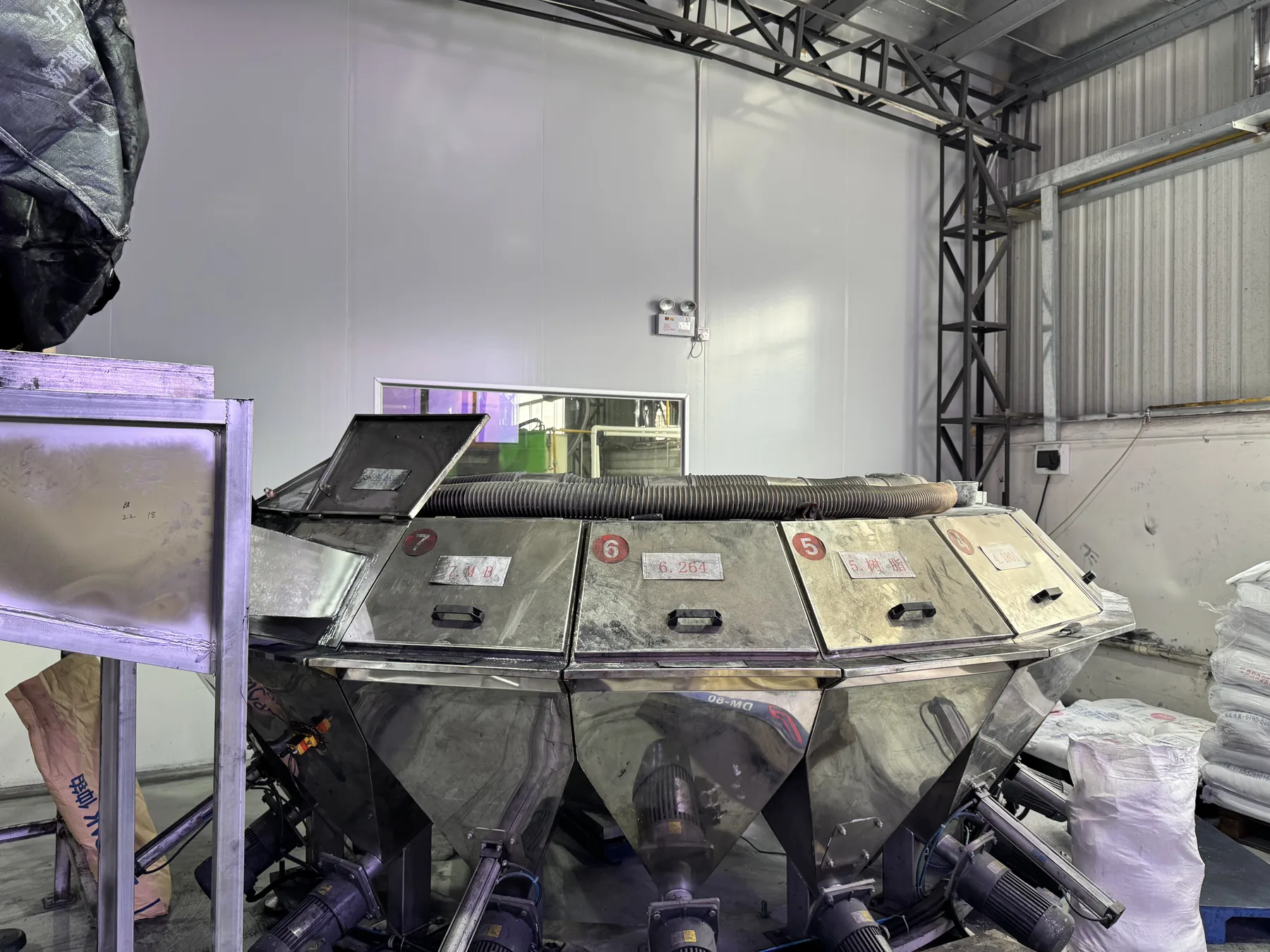
Once the compound and geometry are agreed, rubber ingredients are weighed and mixed. Controlled weighing reduces one source of variation, while internal mixing and open-mill processing prepare the material for molding. The buyer-facing baseline is the approved material requirement and physical sample.
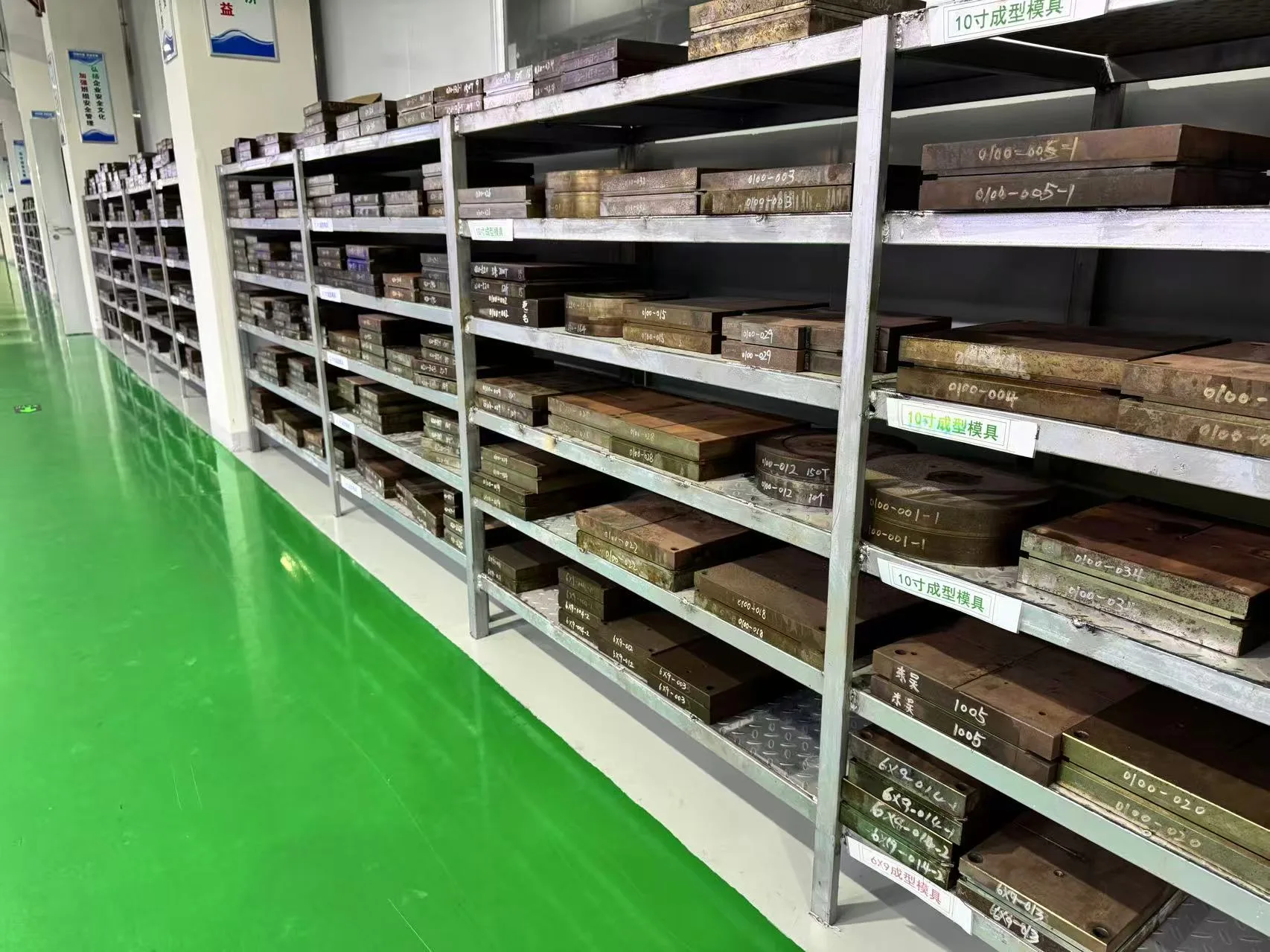
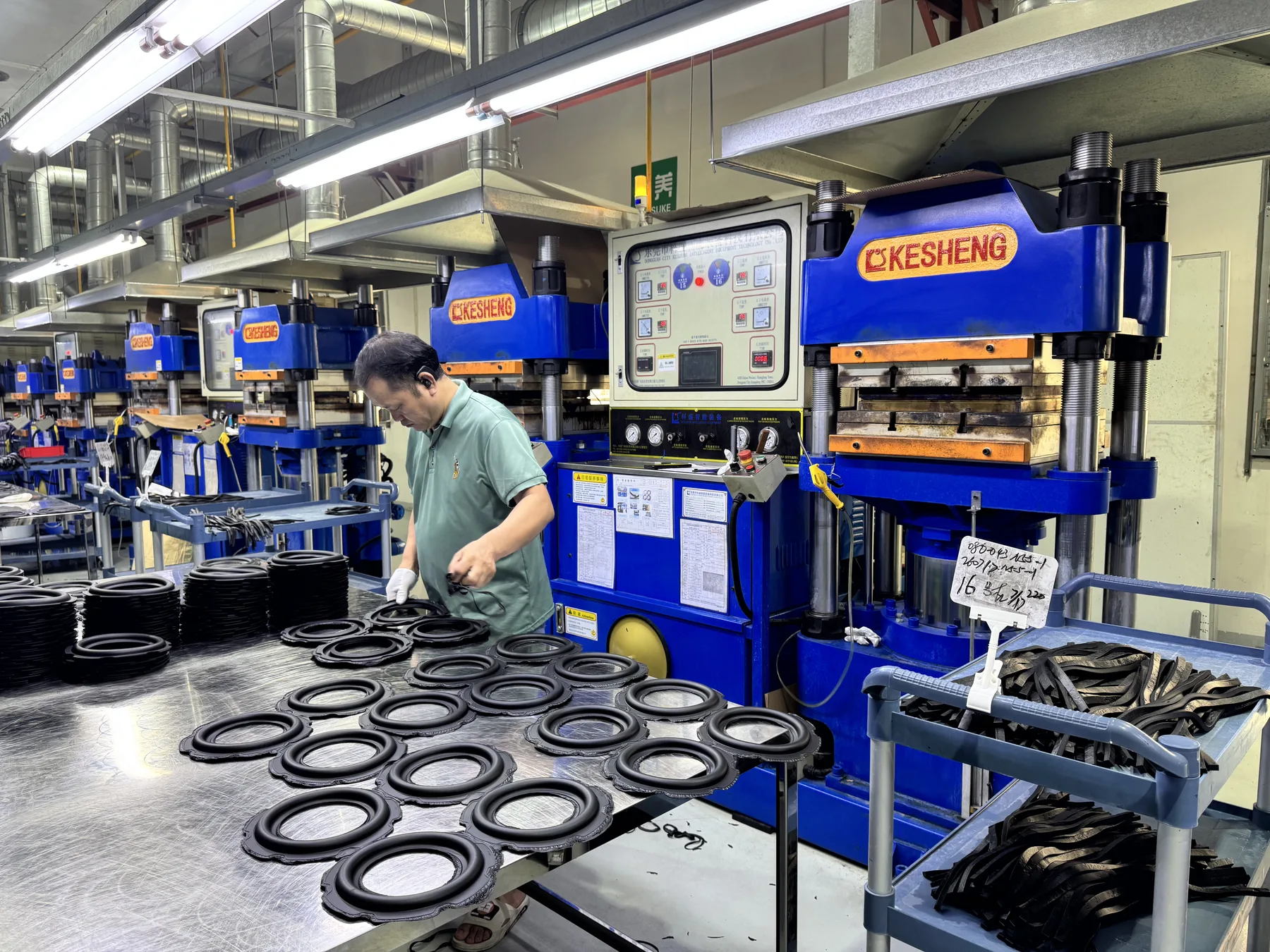
A prepared rubber charge then enters the mold. Heat and pressure form the profile and cure the elastomer. Tool geometry creates the sealing bead, corner radius and locating details. Similar outside dimensions do not prove that an existing mold will work: the cross-section, material behaviour, ownership and mating surfaces must also match.
What should be inspected?
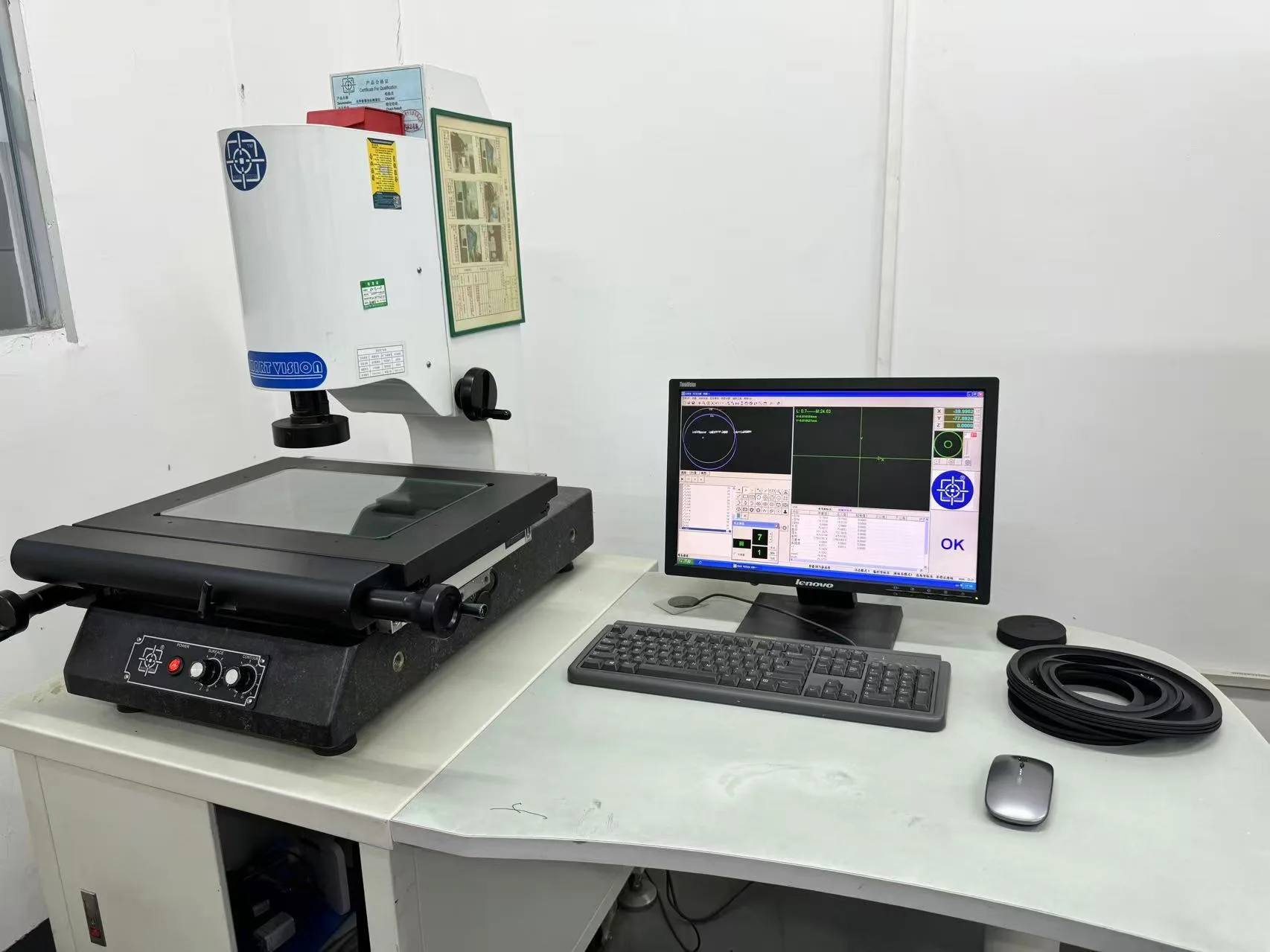
A gasket does not need an acoustic F0 test; it is stationary. Its risk lies in fit, compression and material behaviour. Visual inspection can find incomplete fill, flash, damaged edges, contamination and poor trimming. Calipers, thickness gauges or 2D optical measurement can check the outline and profile where the drawing makes those features critical.
Material checks may include Shore hardness, tensile properties or cure characteristics. UV, temperature-and-humidity or other environmental tests are selected when the application requires them. A photograph of a test chamber proves that equipment exists; it does not prove that every gasket receives the same test. Method, sample condition, duration and acceptance criteria belong in the project plan.
What to send for a replacement or OEM gasket
- Both mating surfaces: show the driver frame and baffle, enclosure or panel it seals against.
- Complete geometry: provide OD and ID for a round part, or length, width, radii, holes and notches for a custom outline.
- Cross-section and thickness: identify whether the part is flat or has a bead, lip, step or spacer function.
- Compression direction: show where fasteners apply load and whether the joint will be opened repeatedly.
- Environment: state indoor, automotive, outdoor or marine exposure and the relevant temperature, weather or fluid risks.
- Assembly method: note adhesive backing, release liner, locating features and the substrate material.
- Quantity and approval plan: distinguish a one-off repair from a repeat production order and define what the sample must prove.
A used gasket can start the review, but measure it with care: years under clamp load may have changed its thickness and outline. For a repeat program, the mating parts or their controlled drawings are stronger references than the compressed seal alone. Existing product families are available on the gasket and accessory page; non-standard interfaces can start with a drawing or sample through custom development.
FAQ
Is closed-cell foam better than rubber for a speaker gasket?
Not universally. Closed-cell foam is efficient for flat interfaces and adhesive-backed seals. Molded rubber is useful when the joint needs a shaped bead, locating details, weather resistance or more controlled geometry. Test the actual material and compression on the mating surfaces.
Can a speaker gasket be made from an old sample?
Yes, an old sample can begin the review, but it may be permanently compressed, stretched or damaged. Include the speaker frame and baffle dimensions so the new specification is based on the intended interface rather than only the aged part.
What dimensions are needed for a custom speaker gasket?
Provide the inner and outer geometry, thickness or full cross-section, corner radii, holes, notches, sealing path and compression direction. Add the mating surfaces, material target, environment, adhesive requirement and expected quantity.
Does a speaker gasket need F0 resonance testing?
No. F0 testing applies to moving acoustic components such as surrounds and passive-radiator diaphragms. A stationary gasket is normally approved through fit, profile, material, compression and application-specific environmental checks.